Podcast: Play in new window | Download (Duration: 31:16 — 21.6MB) | Embed
Subscribe: Apple Podcasts | Spotify | Amazon Music | Android | Pandora | iHeartRadio | JioSaavn | Podchaser | Gaana | Podcast Index | Email | TuneIn | Deezer | Anghami | RSS | More
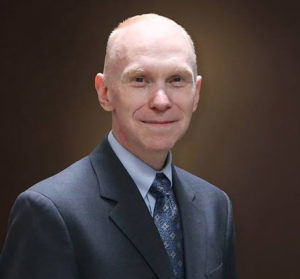
Dr. Matthew Bunson discusses the life, times and teachings of St. Peter Chrysologus
-
Born: 406 AD, Imola, Italy
-
Died: July 31, 450 AD
Peter was born in Imola, where Cornelius, bishop of Roman Catholic Diocese of Imola, baptized him, educated him, and ordained him a deacon. He was made an archdeacon through the influence of Emperor Valentinian III. Pope Sixtus III appointed Peter as Bishop of Ravenna (or perhaps archbishop) circa 433, apparently rejecting the candidate whom the people of the city ofRavenna elected. The traditional account, as recorded in the Roman Breviary, is that Sixtus had a vision of Pope Saint Peter the Apostle and Saint Apollinaris of Ravenna, the first bishop of that see, who showed Sixtus a young man, the next Bishop of Ravenna. When a group from Ravenna arrived, including Cornelius and his archdeacon Peter from Imola, Sixtus recognized Peter as the young man in his vision and consecrated him as a bishop.
People knew Saint Peter Chrysologus, the Doctor of Homilies, for his short but inspired talks; he supposedly feared boring his audience. His piety and zeal won universal admiration. After hearing oratory of his first homily as bishop, Roman Empress Galla Placidia supposedly gave him the surname Chrysologus, meaning “golden-worded.” Empress Galla Placidia patronized many of projects of Bishop Saint Peter.
In his extant homilies, bishop Peter explained Biblical texts briefly and concisely. He also condemned Arianism and Monophysitism as heresies and explained beautifully the Apostles’ Creed, the mystery of the Incarnation, and other topics in simple and clear language. He dedicated a series of homilies to Saint John the Baptist and the Blessed Virgin Mary. Peter advocated daily reception of Eucharist. He urged his listeners to confide in the forgiveness offered through Christ. He shared the confidence of Saint Pope Leo I the Great (440-461), another doctor of the Church.
A synod held in Constantinople in 448 condemned Eutyches for Monophysitism; Eutyches then appealed to Saint Peter Chrysologus but failed in his endeavour to win the support of the Bishop. The Acts of the Council of Chalcedon(451) preserves the text of letter of Saint Peter Chrysologus in response to Eutyches; Peter admonishes Eutyches to accept the ruling of the synod and to give obedience to the Bishop of Rome as the successor of Saint Peter.
Archbishop Felix of Ravenna in the early eighth century collected and preserved 176 of his homilies. Various authors edited and translated these works into numerous languages.
Death and veneration
St Peter died circa or after 450 during a visit to Imola, the town of his birth. Older reference books say he died on 2 December, but a more recent interpretation of the ninth-century “Liber Pontificalis Ecclesiae Ravennatis” indicated that he died on 31 July. When in 1729 he was declared a Doctor of the Church, his feast day, not already included in the Tridentine Calendar, was inserted in the Roman Catholic calendar of saints for celebration on 4 December. In 1969 his feast was moved to 30 July, as close as possible to the day of his death, 31 July, the feast day of Saint Ignatius of Loyola.
Dr. Matthew E. Bunson is a Register senior editor and a senior contributor to EWTN News. For the past 20 years, he has been active in the area of Catholic social communications and education, including writing, editing, and teaching on a variety of topics related to Church history, the papacy, the saints and Catholic culture. He is faculty chair at Catholic Distance University, a senior fellow of the St. Paul Center for Biblical Theology, and the author or co-author of over 50 books including The Encyclopedia of Catholic History, The Pope Encyclopedia, We Have a Pope! Benedict XVI, The Saints Encyclopedia and best-selling biographies of St. Damien of Molokai and St. Kateri Tekakwitha.

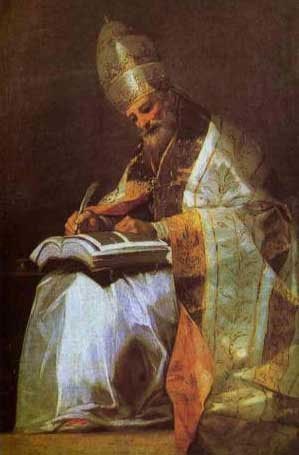 Aware of the historical period in which he lived and of the change that was taking place – from pagan Rome to Christian Rome – in a period of profound crisis, Leo the Great knew how to make himself close to the people and the faithful with his pastoral action and his preaching. He enlivened charity in a Rome tried by famines, an influx of refugees, injustice and poverty. He opposed pagan superstitions and the actions of Manichaean groups. He associated the liturgy with the daily life of Christians: for example, by combining the practice of fasting with charity and almsgiving above all on the occasion of the Quattro tempora, which in the course of the year marked the change of seasons. In particular, Leo the Great taught his faithful – and his words still apply for us today – that the Christian liturgy is not the memory of past events, but the actualization of invisible realities which act in the lives of each one of us. This is what he stressed in a sermon (cf. 64, 1-2) on Easter, to be celebrated in every season of the year “not so much as something of the past as rather an event of the present”. All this fits into a precise project, the Holy Pontiff insisted: just as, in fact, the Creator enlivened with the breath of rational life man formed from the dust of the ground, after the original sin he sent his Son into the world to restore to man his lost dignity and to destroy the dominion of the devil through the new life of grace.