Easter Sunday – A Time of Lectio Divina for the Discerning Heart Podcast


Easter Sunday – A Time of Lectio Divina for the Discerning Heart Podcast

As you begin, take a deep breath and exhale slowly.  For at least the next few moments, surrender all the cares and concerns of this day to the Lord.

Say slowly from your heart “Jesus, I Trust In You…You Take Over”

Become aware that He is with you, looking upon you with love, wanting to be heard deep within in your heart…

From the Holy Gospel According to St. Luke 24:1-12

On the first day of the week, at the first sign of dawn, they went to the tomb with the spices they had prepared. They found that the stone had been rolled away from the tomb, but on entering discovered that the body of the Lord Jesus was not there. As they stood there not knowing what to think, two men in brilliant clothes suddenly appeared at their side. Terrified, the women lowered their eyes. But the two men said to them, ‘Why look among the dead for someone who is alive? He is not here; he has risen. Remember what he told you when he was still in Galilee: that the Son of Man had to be handed over into the power of sinful men and be crucified, and rise again on the third day?’ And they remembered his words.
When the women returned from the tomb they told all this to the Eleven and to all the others. The women were Mary of Magdala, Joanna, and Mary the mother of James. The other women with them also told the apostles, but this story of theirs seemed pure nonsense, and they did not believe them.
Peter, however, went running to the tomb. He bent down and saw the binding cloths but nothing else; he then went back home, amazed at what had happened.

What word made this passage come alive for you?

What did you sense the Lord saying to you?

Once more give the Lord an opportunity to speak to you:

On the first day of the week, at the first sign of dawn, they went to the tomb with the spices they had prepared. They found that the stone had been rolled away from the tomb, but on entering discovered that the body of the Lord Jesus was not there. As they stood there not knowing what to think, two men in brilliant clothes suddenly appeared at their side. Terrified, the women lowered their eyes. But the two men said to them, ‘Why look among the dead for someone who is alive? He is not here; he has risen. Remember what he told you when he was still in Galilee: that the Son of Man had to be handed over into the power of sinful men and be crucified, and rise again on the third day?’ And they remembered his words.
When the women returned from the tomb they told all this to the Eleven and to all the others. The women were Mary of Magdala, Joanna, and Mary the mother of James. The other women with them also told the apostles, but this story of theirs seemed pure nonsense, and they did not believe them.
Peter, however, went running to the tomb. He bent down and saw the binding cloths but nothing else; he then went back home, amazed at what had happened.

What did your heart feel as you listened?

What did you sense the Lord saying to you?

Once more, through Him, with Him and in Him listen to the Word:

On the first day of the week, at the first sign of dawn, they went to the tomb with the spices they had prepared. They found that the stone had been rolled away from the tomb, but on entering discovered that the body of the Lord Jesus was not there. As they stood there not knowing what to think, two men in brilliant clothes suddenly appeared at their side. Terrified, the women lowered their eyes. But the two men said to them, ‘Why look among the dead for someone who is alive? He is not here; he has risen. Remember what he told you when he was still in Galilee: that the Son of Man had to be handed over into the power of sinful men and be crucified, and rise again on the third day?’ And they remembered his words.
When the women returned from the tomb they told all this to the Eleven and to all the others. The women were Mary of Magdala, Joanna, and Mary the mother of James. The other women with them also told the apostles, but this story of theirs seemed pure nonsense, and they did not believe them.
Peter, however, went running to the tomb. He bent down and saw the binding cloths but nothing else; he then went back home, amazed at what had happened.

What touched your heart in this time of prayer?

What did your heart feel as you prayed?

What do you hope to carry with you from this time with the Lord?


Our Father, who art in heaven,

  hallowed be thy name.

Thy kingdom come.

 Thy will be done on earth, as it is in heaven.

Give us this day our daily bread,

 and forgive us our trespasses,

 as we forgive those who trespass against us,

and lead us not into temptation,

 but deliver us from evil.

Amen
Excerpt from THE JERUSALEM BIBLE, copyright (c) 1966 by Darton, Longman & Todd, Ltd. and Doubleday, a division of Penguin Random House, Inc. Reprinted by Permission.

SP 35 – Episode 35 – The Mystery of Holy Saturday – In Search of the Still Point with Dr. Regis Martin – Discerning Hearts Podcast


Episode 35 – The Mystery of Holy Saturday

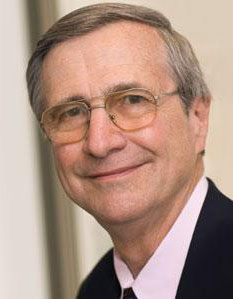
Dr. Regis Martin

Discerning Hearts is honored to host the reflections of Dr. Regis Martin.  Filled with profound insights, wisdom, and joy, he is one of the most trustworthy guides one can have on the spiritual journey.

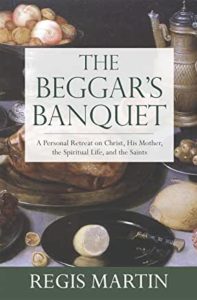
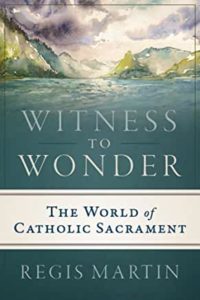
For years Regis Martin, STD, has been regaling audiences about the mysteries of God and Church, most especially his students at Franciscan University of Steubenville where he teaches theology. Author of half-dozen or more books, including The Suffering of Love (Ignatius, 2006), The Last Things (Ignatius Press, 2011), Still Point (Ave Maria, 2012), The Beggar’s Banquet (Emmaus Road, 2012), Witness to Wonder (Emmaus Road, 2017) his work frequently appears in Crises and The Catholic Thing.

.

IP#352 Dr. Peter Kreeft – Probes on Inside the Pages with Kris McGregor Podcast

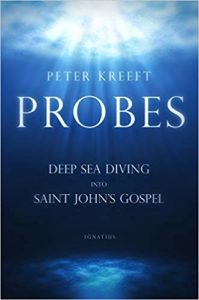
“Probes: Deep Sea Diving into St. John’s Gospel” is a beautiful union of Scripture Study and the prayer experience of Lectio Divina.  I’ve never seen anything quite like it (and I hope I see more). What the reader will find is that diving deeper is actually climbing higher.  Under Dr. Kreeft’s guidance, we learn to ask penetrating questions of Sacred Scripture, but more importantly, we learn to listen to the Word for the answers. Designed for community study or individual reflection, this is the “John” book I have been waiting for!  Thank you once again Dr. Kreeft!

You can find the book here

From the book description:

This is no ordinary book. It is a set of probing questions (1,450 in fact) designed to help individuals or groups, especially groups, to dive deeply into Saint John’s Gospel. No answers are provided, but the questions are phrased in such a way as to set a person in a reliable direction for finding the answers.

The questions correspond to the verses of the Gospel and require active and personal interaction. Some of the questions are easy, some difficult, and they are marked accordingly. Some questions include background information or hints that help the reader along. Some were written with a fair bit of humor. Any person or group using these questions to explore John will find themselves entertained as well as informed and inspired.

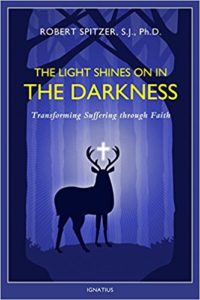
IP#315 Fr. Robert Spitzer – The Light Shines On In The Darkness on Inside the Pages with Kris McGregor podcast

Simply one of the finest works ever compiled on the mystery of suffering.  Fr. Robert Spitzer’s “The Light Shines On In The Darkness: Transforming Suffering through Faith (Happiness, Suffering, and Transcendence)” could be considered a “catechism of suffering,” but not one rooted in misery, but rather anchored in the experience of God’s great mercy and redemptive sacrifice.  This is a book of hope and one that should be experienced by all Christians, and in particular, those who minister in any way, shape, or form in the New Evangelization.  Why would a loving God allow suffering?  Is there any good that can be brought forth from our trials?   So much more is addressed in this opus. I could not put this book down.  Pick it up, you won’t regret it!

You can find the book here

“Suffering has the power to break or elevate the human spirit.  Lived in the spirit of the Gospel and borne for the sake of others, it’s the most redemptive, transfiguring force in creation.  Fr. Spitzer has written a magisterial work on the meaning of suffering, a work remarkable both for its depth and beauty.”
— Most Rev. Charles Chaput, O.F.M. Cap., Archbishop of Philadelphia

“In this trenchant and searching book, Fr. Spitzer responds to the most powerful objection to the proposition that God exists, namely, the problem of suffering.  And he dares to do what very few are willing to do today:  to articulate how evil and pain are ingredients in the providential design of a loving God.”
Bishop Robert Barron, Host, Catholicism film series


SPECIAL EDITION – The Contemplation to Attain the Love of God – complete/without interruption w/ Fr. Timothy Gallagher, O.M.V. Podcast

This is a special edition of the reflection offered by Fr. Timothy Gallagher on the “Contemplation to Attain the love of God” by St. Ignatius of Loyola as found in the “Spiritual Exercises.” What we original provided to you as two separate episodes, we now combine into a single extended episode without interruption. We hope this will enhance your experience of this Ignatian exercise.BA6 - "Refuse to Accept Discouragement" - Begin Again: The Spiritual Legacy of Ven. Bruno Lanteri with Fr. Timothy Gallagher

CONTEMPLATION TO ATTAIN THE LOVE OF GOD

The Spiritual Exercises of St. Ignatius of Loyola, [1914], at sacred-texts.com

Note. First, it is well to remark two things: the first is that love ought to be put more in deeds than in words.

The second, love consists in the interchange between the two parties; that is to say in the lover’s giving and communicating to the beloved what he has or out of what he has or can; and so contrary, the beloved to the lover. So that if the one has the knowledge, he gives to the one who has it not. The same of honors, of riches; and so the one to the other.

CONTEMPLATION TO GAIN LOVE

Prayer. The usual Prayer.

First Prelude. The first Prelude is a composition, which is here to see how I am standing before God our Lord, and of the Angels and of the Saints interceding for me.

Second Prelude. The second, to ask for what I want. It will be here to ask for interior knowledge of so great good received, in order that being entirely grateful, I may be able in all to love and serve His Divine Majesty.


First Point. The First Point is, to bring to memory the benefits received, of Creation, Redemption and particular gifts, pondering with much feeling how much God our Lord has done for me, and how much He has given me of what He has, and then the same Lord desires to give me Himself as much as He can, according to His Divine ordination.

And with this to reflect on myself, considering with much reason and justice, what I ought on my side to offer and give to His Divine Majesty, that is to say, everything that is mine, and myself with it, as one who makes an offering with much feeling:

Take, Lord, and receive all my liberty, my memory, my intellect, and all my will — all that I have and possess. Thou gavest it to me: to Thee, Lord, I return it! All is Thine, dispose of it according to all Thy will. Give me Thy love and grace, for this is enough for me.


Second Point. The second, to look how God dwells in creatures, in the elements, giving them being, in the plants vegetating, in the animals feeling in them, in men giving them to understand: and so in me, giving me being, animating me, giving me sensation and making me to understand; likewise making a temple of me, being created to the likeness and image of His Divine Majesty; reflecting as much on myself in the way which is said in the first Point, or in another which I feel to be better. In the same manner, will be done on each Point which follows.


Third Point. The third, to consider how God works and labors for me in all things created on the face of the earth — that is, behaves like one who labors — as in the heavens, elements, plants, fruits, cattle, etc., giving them being, preserving them, giving them vegetation and sensation, etc.

Then to reflect on me.


Fourth Point. The fourth, to look how all the good things and gifts descend from above, as my poor power from the supreme and infinite power from above; and so justice, goodness, pity, mercy, etc.; as from the sun descend the rays, from the fountain the waters, etc.

Then to finish reflecting on myself, as has been said.


I will end with a Colloquy and an OUR FATHER.

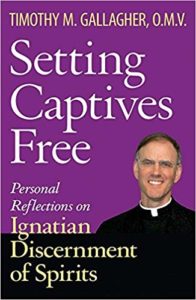
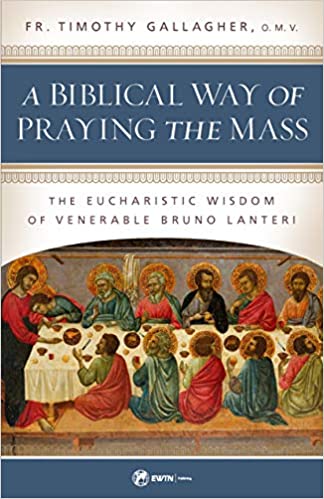
Be sure to check out Fr. Timothy Gallaghers latest book

You can find this book here

Father Timothy M. Gallagher, O.M.V., was ordained in 1979 as a member of the Oblates of the Virgin Mary, a religious community dedicated to retreats and spiritual formation according to the Spiritual Exercises of St. Ignatius.  Fr. Gallagher is featured on the EWTN series “Living the Discerning Life:  The Spiritual Teachings of St. Ignatius of Loyola”. For more information on how to obtain copies of Fr. Gallaghers’s various books and audio which are available for purchase, please visit  his  website:   frtimothygallagher.org

For other Discerning Hearts Fr. Timothy Gallagher Podcasts visit here

SP 34 – Episode 34 – The Strongest Argument… – In Search of the Still Point with Dr. Regis Martin – Discerning Hearts Podcast


Episode 34 – The Strongest Argument..

Dr. Regis Martin

Discerning Hearts is honored to host the reflections of Dr. Regis Martin.  Filled with profound insights, wisdom, and joy, he is one of the most trustworthy guides one can have on the spiritual journey.

For years Regis Martin, STD, has been regaling audiences about the mysteries of God and Church, most especially his students at Franciscan University of Steubenville where he teaches theology. Author of half-dozen or more books, including The Suffering of Love (Ignatius, 2006), The Last Things (Ignatius Press, 2011), Still Point (Ave Maria, 2012), The Beggar’s Banquet (Emmaus Road, 2012), Witness to Wonder (Emmaus Road, 2017) his work frequently appears in Crises and The Catholic Thing.

.

BWPM 10 – Give Us This Day – A Biblical Way of Praying the Mass w/ Fr. Timothy Gallagher, O.M.V. Podcast

Episode 10 – Give Us This Day – A Biblical Way of Praying the Mass with Fr. Timothy Gallagher O.M.V.

BA6 - "Refuse to Accept Discouragement" - Begin Again: The Spiritual Legacy of Ven. Bruno Lanteri with Fr. Timothy Gallagher

We continue our conversation with Fr. Gallagher discussing the encouragements given by Venerable Bruno Lanteri in regards to a biblical way of praying the Mass.  In this episode, Fr. Gallagher reflects on the Consecration.

Take a moment and pray:

Our Father: Father: ponder the love, the security, and the providential care of the heavenly Father that this word signifies. Our: all of us share this Father; we are all his sons and daughters, one family.

who art in heaven: lift your gaze of faith to the infinite joy of heaven where this Father resides with the Son and Holy Spirit, the communion to which we are called when earthly life is done.

hallowed be thy name: ask, beg, petition that this Father’s name be held in love and reverence in your heart, in your family, in the Church, and in the world. thy kingdom come: pray that the kingdom of God — his love, truth, life, holiness, grace, justice, and peace — grow and be increasingly rooted in this world. Desire this. Ask for this.

thy will be done: with the sentiments and heart of a mendico, seek the grace to do God’s will in your life, in all things, day by day.

on earth: pray that God’s will be done in the Church and in the world. Raise this cry from your heart.

as it is in heaven: contemplate the joy, the harmony, the communion, the peace of heaven, in which God’s will is the single guide. Ask that this joy and communion be granted to our world.

Give us this day: What are your needs this day? What do your family members need this day? The Church? The nation? The world? Ask to be given what you need today.

our daily bread: the material bread we need for our lives and for the sustenance, health, education, and well-being of those entrusted to our care; and the spiritual bread: the Eucharist, Holy Communion.

and forgive us our trespasses: ask for the loving encounter with the Father that is forgiveness (Luke 15:11–32), for healing from the burdens of our hearts.

as we forgive those who trespass against us: Has anyone hurt you? Mistreated you? Misunderstood you? In these deep places of the heart, ask for the grace to forgive. “Be kind to one another, compassionate, forgiving one another as God has forgiven you in Christ” (Eph. 4:32).

and lead us not into temptation: pray for freedom from all that could cause spiritual harm. Make this prayer for yourself, your family, the Church, and the world.

but deliver us from evil: ask for protection and safety from all evil. Ask this “of him who called you out of darkness into his wonderful light” (1 Pet. 2:9).

Gallagher, Fr. Timothy; Gallagher, Fr Timothy . A Biblical Way of Praying the Mass: The Eucharistic Wisdom of Venerable Bruno Lanteri (pp. 75-76). EWTN Publishing Inc.. Kindle Edition.


For more episodes in the A Biblical Way of Praying the Mass with Fr. Timothy Gallagher podcast series, visit here


You can find A Biblical Way of Praying the Mass here

Father Timothy M. Gallagher, O.M.V., was ordained in 1979 as a member of the Oblates of the Virgin Mary, a religious community dedicated to retreats and spiritual formation according to the Spiritual Exercises of St. Ignatius.  Fr. Gallagher is featured on the EWTN series “Living the Discerning Life:  The Spiritual Teachings of St. Ignatius of Loyola.” For more information on how to obtain copies of Fr. Gallaghers’s various books and audio, which are available for purchase, please visit  his  website:   frtimothygallagher.org

For other Discerning Hearts Fr. Timothy Gallagher Podcasts visit here

The Joyful Mysteries – Scriptural Rosary of the Blessed Virgin Mary – Discerning Hearts Catholic Podcasts

The Scriptural Rosary of the Blessed Virgin Mary

First Three Hail Mary’s:

  1. I live now not with my own life but with the life of Christ who lives in me. The life I now live in this body I live in faith: faith in the Son of God who loved me and who sacrificed himself for my sake. (Galatians 2:20)
  2. I know the plans I have in mind for you – it is Yahweh who speaks – plans for peace, not disaster, reserving a future full of hope for you. Then when you call to me, and come to plead with me, I will listen to you. When you seek me you shall find me, when you seek me with all your heart; I will let you find me. (Jeremiah 29:11-14a)
  3. 3. Love is always patient and kind; it is never jealous; love is never boastful or conceited; it is never rude or selfish; it does not take offense and is not resentful. Love takes no pleasure in other people’s sins but delights in the truth; it is always ready to excuse, to trust, to hope, and to endure whatever comes. Love does not come to an end (1 Corinthians 13:4-8)


For the entire Discerning Hearts Scriptural Rosary visit here


The Joyful Mysteries


The Annunciation of the Blessed Virgin Mary

  1. In the sixth month the angel Gabriel was sent by God to a town in Galilee called Nazareth, (Luke 1:26)
  2. To a virgin betrothed to a man named Joseph, of the House of David; and the virgin’s name was Mary. (Luke 1:27)
  3. He went in and said to her, ‘Rejoice, so highly favored! The Lord is with you.’ (Luke 1:28)
  4. She was deeply disturbed by these words and asked herself what this greeting could mean, (Luke 1:29)
  5. The angel said to her, ‘Mary, do not be afraid; you have won God’s favor (Luke 1:30)
  6. Listen! You are to conceive and bear a son, and you must name him Jesus. (Luke 1:31)
  7. Mary said to the angel, ‘But how can this come about, since I am a virgin?’ (Luke 1:34)
  8. ‘The Holy Spirit will come upon you’ the angel answered ‘and the power of the Most High will cover you with its shadow. And so the child will be holy and will be called Son of God. (Luke 1:35)
  9. Know this too: your kinswoman Elizabeth has, in her old age, herself conceived a son, and she whom people called barren is now in her sixth month, for nothing is impossible to God’ (Luke 1:36-37)
  10. ‘I am the handmaid of the Lord,’ said Mary ‘let what you have said be done to me.’ And the angel left her. (Luke 1:38)

The Visitation of The Blessed Virgin Mary to Elizabeth

  1. Mary set out at that time and went as quickly as she could to a town in the hill country of Judah. She went into Zechariah’s house and greeted Elizabeth. (Luke 1:39-40)
  2. Now as soon as Elizabeth heard Mary’s greeting, the child leapt in her womb and Elizabeth was filled with the Holy Spirit. (Luke 1:41)
  3. She gave a loud cry and said, ‘Of all women you are the most blessed, and blessed is the fruit of your womb. (Luke 1:42)
  4. Why should I be honored with a visit from the mother of my Lord? For the moment your greeting reached my ears, the child in my womb leapt for joy. (Luke 1:43-44)
  5. Yes, blessed is she who believed that the promise made her by the Lord would be fulfilled.’ (Luke 1:45)
  6. And Mary said: ‘My soul proclaims the greatness of the Lord and my spirit exults in God my savior; (Luke 1:46-47)
  7. Because he has looked upon his lowly handmaid. Yes, from this day forward all generations will call me blessed, (Luke 1-48)
  8. For the Almighty has done great things for me. Holy is his name, and his mercy reaches from age to age for those who fear him. (Luke 1:49-50)
  9. He has shown the power of his arm, he has routed the proud of heart. He has pulled down princes from their thrones and exalted the lowly. (Luke 1:51-52)
  10. The hungry he has filled with good things, the rich sent empty away. He has come to the help of Israel his servant, mindful of his mercy -according to the promise he made to our ancestors-of his mercy to Abraham and to his descendants forever.’ (Luke 1:53-55)

The Nativity of Our Lord and Savior, Jesus Christ

  1. The time came for her to have her childand she gave birth to a son, her first born. She wrapped him in swaddling clothes, and laid him in a manger because there was no room for them at the inn. (Luke 2:6-7)
  2. In the countryside close by there were shepherds who lived in the fields and took it in turns to watch their flocks during the night. The angel of the Lord appeared to them and the glory of the Lord shone round them. They were terrified, (Luke 2:8-9)
  3. But the angel said, ‘Do not be afraid. Listen, I bring you news of great joy, a joy to be shared by the whole people. (Luke 2:10)
  4. Today in the town of David a saviour has been born to you; he is Christ the Lord. And here is a sign for you: you will find a baby wrapped in swaddling clothes and lying in a manger.’ (Luke 2:11-12)
  5. And suddenly with the angel there was a great throng of the heavenly host, praising God and singing: ‘Glory to God in the highest heaven, and peace to men who enjoy his favour'(Luke 2:13-14)
  6. Now when the angels had gone from them into heaven, the shepherds said to one another, ‘Let us go to Bethlehem and see this thing that has happened which the Lord has made known to us’. (Luke 2:15)
  7. So they hurried away and found Mary and Joseph, and the baby lying in the manger. When they saw the child they repeated what they had been told about him,(Luke 2:16-17)
  8. and everyone who heard it was astonished at what the shepherds had to say. As for Mary, she treasured all these things and pondered them in her heart.(Luke 2:18-19)
  9. And the shepherds went back glorifying and praising God for all they had heard and seen; it was exactly as they had been told. (Luke 2:20)
  10. When the eighth day came and the child was to be circumcised, they gave him the name Jesus, the name the angel had given him before his conception. (Luke 2:21)

The Presentation at the Temple

  1. And when the day came for them to be purified as laid down by the Law of Moses, they took him up to Jerusalem to present him to the Lord-(Luke 2:22)
  2. observing what stands written in the Law of the Lord: Every first-born male must be consecrated to the Lord and also to offer in sacrifice, in accordance with what is said in the Law of the Lord, a pair of turtledoves or two young pigeons(Luke 2:23-24)
  3. Now in Jerusalem there was a man named Simeon. He was an upright and devout man; he looked forward to Israel’s comforting and the Holy Spirit rested on him.(Luke 2:25)
  4. It had been revealed to him by the Holy Spirit that he would not see death until he had set eyes on the Christ of the Lord(Luke 2:26)
  5. Prompted by the Spirit he came to the Temple and when the parents brought in the child Jesus to do for him what the Law required,he took him into his arms and blessed God; (Luke 2:27-28)
  6. He said: ‘Now, Master, you can let your servant go in peace, just as you promised; because my eyes have seen the salvation which you have prepared for all the nations to see. (Luke 2:29-31)
  7.  A light to enlighten the pagans and the glory of your people Israel’. (Luke 2:32)
  8. As the child’s father and mother stood there wondering at the things that were being said about him,Simeon blessed them (Luke 2:33-34a)
  9. And said to Mary his mother, ‘You see this child: he is destined for the fall and for the rising of many in Israel, destined to be a sign that is rejected-(Luke 2:34b)
  10. and a sword will pierce your own soul too-so that the secret thoughts of many may be laid bare’.(Luke 2:35)

The Finding of the Child Jesus in the Temple


  1. Every year his parents used to go to Jerusalem for the feast of the Passover. When he was twelve years old, they went up for the feast as usual. (Luke 2:41-42)
  2. When they were on their way home after the feast, the boy Jesus stayed behind in Jerusalem without his parents knowing it.(Luke 2:43)
  3. They assumed he was with the caravan, and it was only after a day’s journey that they went to look for him among their relations and acquaintances. When they failed to find him they went back to Jerusalem looking for him everywhere. (Luke 2:44-45)
  4. Three days later, they found him in the Temple, sitting among the doctors, listening to them, and asking them questions;(Luke 2:46)
  5. and all those who heard him were astounded at his intelligence and his replies.(Luke 2:47)
  6. They were overcome when they saw him, and his mother said to him, ‘My child, why have you done this to us? See how worried your father and I have been, looking for you.’ (Luke 2:48)
  7. ‘Why were you looking for me?’ he replied ‘Did you not know that I must be busy with my Father’s affairs?'(Luke 2:49)
  8. But they did not understand what he meant.(Luke 2:50)
  9. He then went down with them and came to Nazareth and lived under their authority. His mother stored up all these things in her heart.(Luke 2:51)
  10. And Jesus increased in wisdom, in stature, and in favour with God and men.(Luke 2:52)


Excerpt from THE JERUSALEM BIBLE, copyright (c) 1966 by Darton, Longman & Todd, Ltd. and Doubleday, a division of Penguin Random House, Inc. Reprinted by Permission.


ST-Luke Ep 19- The Gospel of Luke – Chapter 9 Part 1 – Seeking Truth with Sharon Doran – Discerning Hearts Podcast

Episode 19 – The Gospel of Luke – Chapter 9 Part 1

Luke 9:  “Son of God Transfigured”

Luke chapter 9 begins with the mission of the twelve Apostles, whom Jesus gave power to cure disease and authority over all demons. They were instructed to take nothing for their journey and to “shake off the dust from your feet as a testimony against” anyone who did not welcome them. To “shake off the dust” was a Hebrew idiom for Jews to separate themselves from the Gentiles. So in this context, Jesus was telling the Apostles to separate themselves from the Jews who rejected the Gospel. In a similar passage, Matthew took things a step further, warning “that it shall be more tolerable on the Day of Judgment for the land of Sodom and Gomorrah than for that town (Mt 10:15).” Knowing that Jesus gave the Apostles power over all demons helps us understand why Jesus chastised the disciples for their lack of faith when they could not drive out a demon from a boy (Luke 9:40-41).

The chapter continues with Herod’s perplexity. Herod knew that John the Baptist was dead, yet he heard some thought that John had been raised from the dead or that Elijah had returned. These stories led to Herod’s desire to meet Jesus, which finally occurs during the Passion. We learn from Josephus that John was imprisoned for two years prior to his execution at Machaerus, a Herodian fortress on the eastern side of the Dead Sea. John was imprisoned for criticizing Herod Antipas for his unlawful marriage to Herodias, the wife of his brother Herod Phillip. Just as the evil Jezebel wanted to kill Elijah the prophet, so too did Herodias want to kill John the Baptist, the new Elijah.

The feeding of the 5000 is the only miracle (other than the Resurrection) that is found in all four Gospels. Luke was the only Gospel writer who specified that Bethsaida was the location of this miracle. Bethsaida was located at the inflow of the Jordan River into the Sea of Galilee. Bethsaida was the home town of Peter, Andrew and Philip and was the location of many miracles, including the successive healing of the blind man as told in Mark 8. The city of Bethsaida was later renamed after Livia Drusilla, (aka Julia Augusta) the wife of Caesar Augustus, who was emperor at the time Jesus’s birth. Caesar Augustus had no male heir of his own, so at his death, he bequeathed 2/3 of his empire to Tiberius, Livia’s son by another man, and 1/3 to Julia herself. Julia was very popular among the people of the empire and was at odds with her son, Tiberius. She was declared a priestess and then later a goddess, and many temples were built in her honor throughout the empire. One of these temples was built in Bethsaida and the ancient Jewish fishing town was renamed Julias in her honor.

During the feeding of the 5000, Jesus told the people to sit together in companies of 50. This recalls the encampment of the Israelites in the Sinai desert. Moses divided the people into companies that surrounded the Ark of the Covenant, which contained the true presence of God. The companies were led by four of the twelve tribes as represented on banners with images of a lion (representing Judah), the face of a man (representing Ruben), an ox (representing Ephraim) and an eagle (representing Dan). Just as the companies in Sinai surrounded the true presence of God in the Tabernacle, so too did the companies of 50 surround Jesus, the true presence of God and Word made flesh, at the feeding of the 5000. The images on the Sinai banners were later seen in the description of the four living creatures in Ezekiel’s vision of heaven (EZEK 1) as well as in John the Evangelist’s vision of heaven in Revelation 4: the four living creatures surround the true presence of God in heaven. The four living creatures also symbolize the Gospel writers: Matthew the man, Mark the lion, Luke the ox and John the eagle. In many churches, images of the Gospel writers in the form of the four living creatures surround the tabernacle, which contains the true presence of God in the Eucharist. The feeding of the 5000 prefigures the Eucharist: the words take, blessed, broke and gave said by Jesus are the same words spoken by the priest during the Eucharistic prayer. On the road to Emmaus, the disciples recognized Jesus after he first opened the Word and then took, blessed, broke and gave bread to the disciples. At mass, both the Word and the Eucharist are equally venerated as both are Jesus. Through Moses, the Lord fed manna to the Israelites; through Jesus the new Moses, the Lord fed bread to the 5000; through the priesthood in persona Christi, the Lord feeds us the bread of life in the Eucharist.

Finally, we learn about the Transfiguration, which most ancient historians believed took place on Mount Tabor. Jesus took Peter, James and John with him to the mountain top, where they saw Elijah and Moses visit with the transfigured Jesus about his coming exodus. The fear the Apostles felt when they saw the radiant face of Jesus reminds us of the fear of the Israelites when they saw the radiant face of Moses after he received the tablets of the law from the Lord. They were all overshadowed by a cloud, which brings to mind the Lord’s appearance to Moses on Mount Sinai as well as the annunciation to Mary, who was overshadowed by the Holy Spirit. The apostles were heavy with sleep, which reminds us of Gethsemane when the apostles fell asleep while Jesus prayed. Jesus’ human nature was highlighted in his baptism, while his divine nature was transmitted through the Transfiguration. The Transfiguration marked the turning point in the ministry of Jesus, when he set his face towards Jerusalem and his passion, death and resurrection.

©2019 Seeking Truth Catholic Bible Study

Sharon Doran serves as the teaching director of “Seeking Truth.” An experienced Bible Study teacher, Sharon has a passion for scripture that will motivate and challenge you to immerse yourself in God’s Word and apply His message to your everyday life.

For more in this series, visit the Seeking Truth with Sharon Doran Discerning Hearts page.

“Seeking Truth” is an in-depth Catholic Bible Study commissioned by the Archdiocese of Omaha in response to John Paul II’s call to the New Evangelization as well as Pope Benedict XVI’s exhortation for all Catholics to study scripture. To learn more, go to www.seekingtruth.net

The Sorrowful Mysteries – Scriptural Rosary of the Blessed Virgin Mary – Discerning Hearts Catholic Podcasts

First Three Hail Mary’s:

    1. I live now not with my own life but with the life of Christ who lives in me. The life I now live in this body I live in faith: faith in the Son of God who loved me and who sacrificed himself for my sake. (Galatians 2:20)
    2. I know the plans I have in mind for you – it is Yahweh who speaks – plans for peace, not disaster, reserving a future full of hope for you. Then when you call to me, and come to plead with me, I will listen to you. When you seek me you shall find me, when you seek me with all your heart; I will let you find me. (Jeremiah 29:11-14a)
    3. 3. Love is always patient and kind; it is never jealous; love is never boastful or conceited; it is never rude or selfish; it does not take offense and is not resentful. Love takes no pleasure in other people’s sins but delights in the truth; it is always ready to excuse, to trust, to hope, and to endure whatever comes. Love does not come to an end (1 Corinthians 13:4-8)

For the entire Discerning Hearts Scriptural Rosary visit here


The Sorrowful Mysteries


The Agony in the Garden

  1. Then Jesus came with them to a small estate called Gethsemane; and he said to his disciples, ‘Stay here while I go over there to pray’.(Matthew 26:36)
  2. He took Peter and the two sons of Zebedee with him. And sadness came over him, and great distress.(Matthew 26:37)
  3. Then he said to them, ‘My soul is sorrowful to the point of death. Wait here and keep awake with me.’ And going on a little further he fell on his face and prayed. ‘My Father,’ he said ‘if it is possible, let this cup pass me by. Nevertheless, let it be as you, not I, would have it.'(Matthew 26:38-39)
  4. He came back to the disciples and found them sleeping, and he said to Peter, ‘So you had not the strength to keep awake with me one hour? You should be awake, and praying not to be put to the test. The spirit is willing, but the flesh is weak.'(Matthew 26:40-41)
  5. Again, a second time, he went away and prayed: ‘My Father,’ he said ‘If this cup cannot pass by without my drinking it, your will be done!’ And he came back again and found them sleeping, their eyes were so heavy.(Matthew 26:42-43)
  6. Leaving them there, he went away again and prayed for the third time, repeating the same words.Then he came back to the disciples and said to them, ‘You can sleep on now and take your rest. Now the hour has come when the Son of Man is to be betrayed into the hands of sinners. (Matthew 26:44-45)
  7. Get up! Let us go! My betrayer is already close at hand.’ He was still speaking when Judas, one of the Twelve, appeared, and with him a large number of men armed with swords and clubs, sent by the chief priests and elders of the people. (Matthew 26:46-47)
  8. Now the traitor had arranged a sign with them. ‘The one I kiss,’ he had said ‘he is the man. Take him in charge.’ So he went straight up to Jesus and said, ‘Greetings, Rabbi’, and kissed him. Jesus said to him, ‘My friend, do what you are here for’. Then they came forward, seized Jesus and took him in charge. (Matthew 26:48-50)
  9. At that, one of the followers of Jesus grasped his sword and drew it; he struck out at the high priest’s servant, and cut off his ear. Jesus then said, ‘Put your sword back, for all who draw the sword will die by the sword. (Matthew 26:51-52)
  10. Or do you think that I cannot appeal to my Father who would promptly send more than twelve legions of angels to my defense? But then, how would the scriptures be fulfilled that say this is the way it must be?'(Matthew 26:53-54)

The Scourging at the Pillar

  1. The high priest then stood up and said to him, ‘Have you no answer to that? What is this evidence these men are bringing against you?’ But Jesus was silent. And the high priest said to him, ‘I put you on oath by the living God to tell us if you are the Christ, the Son of God’.(Matthew 26:62-63)
  2. ‘The words are your own’ answered Jesus. ‘Moreover, I tell you that from this time onward you will see the Son of Man seated at the right hand of the Power and coming on the clouds of heaven.'(Matthew 26:64)
  3. At this, the high priest tore his clothes and said, ‘He has blasphemed. What need of witnesses have we now? There! You have just heard the blasphemy.(Matthew 26:65)
  4. What is your opinion?’ They answered, ‘He deserves to die’. Then they spat in his face and hit him with their fists; others said as they struck him, ‘Play the prophet, Christ! Who hit you then?'(Matthew 26:66-68)
  5. Then Pilate saw that he was making no impression, that in fact a riot was imminent. So he took some water, washed his hands in front of the crowd and said, ‘I am innocent of this man’s blood. It is your concern.’ And the people, to a man, shouted back, ‘His blood be on us and on our children!’ (Matthew 27:24-25)
  6. Then he released Barabbas for them. He ordered Jesus to be first scourged and then handed over to be crucified.(Matthew 27:26)
  7. Like a sapling he grew up in front of us, like a root in arid ground. Without beauty, without majesty (we saw him), no looks to attract our eyes;(Isaiah 53:2)
  8. a thing despised and rejected by men, a man of sorrows and familiar with suffering, a man to make people screen their faces; he was despised and we took no account of him.(Isaiah 53:3)
  9. And yet ours were the sufferings he bore, ours the sorrows he carried. But we, we thought of him as someone punished, struck by God, and brought low. (Matthew 53:4)
  10. Yet he was pierced through for our faults, crushed for our sins. On him lies a punishment that brings us peace, and through his wounds we are healed.(Matthew 53:5)

The Crowning with Thorns

  1. the soldiers twisted some thorns into a crown and put it on his head, and dressed him in a purple robe. They kept coming up to him and saying, ‘Hail, king of the Jews!’; and they slapped him in the face. (John 19:2-3)
  2. Pilate came outside again and said to them, ‘Look, I am going to bring him out to you to let you see that I find no case’. Jesus then came out wearing the crown of thorns and the purple robe. Pilate said, ‘Here is the man’. (John 19:4-5)
  3. When they saw him the chief priests and the guards shouted, ‘Crucify him! Crucify him!’ Pilate said, ‘Take him yourselves and crucify him: I can find no case against him’.(John 19:6)
  4. ‘We have a Law,’ the Jews replied ‘and according to that Law he ought to die, because he has claimed to be the Son of God.’ When Pilate heard them say this his fears increased. (John 19:7-8)
  5. Re-entering the Praetorium, he said to Jesus, ‘Where do you come from?’ But Jesus made no answer. Pilate then said to him, ‘Are you refusing to speak to me? Surely you know I have power to release you and I have power to crucify you?’ (John 19:9-10)
  6. ‘You would have no power over me’ replied Jesus ‘if it had not been given you from above; that is why the one who handed me over to you has the greater guilt.'(John 19:11)
  7. From that moment Pilate was anxious to set him free, but the Jews shouted, ‘If you set him free you are no friend of Caesar’s; anyone who makes himself king is defying Caesar’.(John 19:12)
  8. Hearing these words, Pilate had Jesus brought out, and seated himself on the chair of judgement at a place called the Pavement, in Hebrew Gabbatha.It was Passover Preparation Day, about the sixth hour. ‘Here is your king’ said Pilate to the Jews.(John 19:13-14)
  9. ‘Take him away, take him away!’ they said. ‘Crucify him!’ ‘Do you want me to crucify your king?’ said Pilate. The chief priests answered, ‘We have no king except Caesar’.(John 19:15)
  10. So in the end Pilate handed him over to them to be crucified.(John 19:16)

The Carrying of the Cross

  1. And when they had finished making fun of him, they took off the purple and dressed him in his own clothes. They led him out to crucify him.They enlisted a passer-by, Simon of Cyrene, father of Alexander and Rufus, who was coming in from the country, to carry his cross. (Mark 15:20-21)
  2. Large numbers of people followed him, and of women too, who mourned and lamented for him. But Jesus turned to them and said, ‘Daughters of Jerusalem, do not weep for me; weep rather for yourselves and for your children. (Luke 23:27:28)
  3. For the days will surely come when people will say, “Happy are those who are barren, the wombs that have never borne, the breasts that have never suckled!”(Luke 23:29)
  4. Then they will begin to say to the mountains, “Fall on us!”; to the hills, “Cover us”. For if men use the green wood like this, what will happen when it is dry?’ (Luke 23:30-31)
  5. We had all gone astray like sheep, each taking his own way, and Yahweh burdened him with the sins of all of us. Harshly dealt with, he bore it humbly, he never opened his mouth, like a lamb that is led to the slaughter-house, like a sheep that is dumb before its shearers never opening its mouth. (Isaiah 53:6-7)
  6. By force and by law he was taken; would anyone plead his cause? Yes, he was torn away from the land of the living; for our faults struck down in death. (Isaiah 53:8)
  7. They gave him a grave with the wicked, a tomb with the rich, though he had done no wrong and there had been no perjury in his mouth. (Isaiah 53:9)
  8. Yahweh has been pleased to crush him with suffering. If he offers his life in atonement, he shall see his heirs, he shall have a long life and through him what Yahweh wishes will be done.(Isaiah 53:10)
  9. His soul’s anguish over he shall see the light and be content. By his sufferings shall my servant justify many, taking their faults on himself. (Isaiah 53:11)
  10. Hence I will grant whole hordes for his tribute, he shall divide the spoil with the mighty, for surrendering himself to death and letting himself be taken for a sinner, while he was bearing the faults of many and praying all the time for sinners. (Isaiah 53:12)

The Crucifixion of Jesus Christ

  1. They brought Jesus to the place called Golgotha, which means the place of the skull. They offered him wine mixed with myrrh, but he refused it. (Mark 15:22-23)
  2. Then they crucified him, and shared out his clothing, casting lots to decide what each should get. It was the third hour when they crucified him(Mark 15:24-25)
  3. The inscription giving the charge against him read: ‘The King of the Jews’.And they crucified two robbers with him, one on his right and one on his left.(Mark 15:26-28)
  4. One of the criminals hanging there abused him. ‘Are you not the Christ?’ he said. ‘Save yourself and us as well.’ But the other spoke up and rebuked him. ‘Have you no fear of God at all?’ he said. ‘You got the same sentence as he did, but in our case we deserved it: we are paying for what we did. But this man has done nothing wrong. (Luke 23:39-41)
  5. Jesus,’ he said ‘remember me when you come into your kingdom.’ ‘Indeed, I promise you,’ he replied ‘today you will be with me in paradise.'(Luke 23:42-43)
  6. Near the cross of Jesus stood his mother and his mother’s sister, Mary the wife of Clopas, and Mary of Magdala. Seeing his mother and the disciple he loved standing near her, Jesus said to his mother, ‘Woman, this is your son. Then to the disciple he said, ‘This is your mother’. And from that moment the disciple made a place for her in his home.(John 19:25-27)
  7. After this, Jesus knew that everything had now been completed, and to fulfil the scripture perfectly he said: ‘I am thirsty’. (John 19:28)
  8. And about the ninth hour, Jesus cried out in a loud voice, ‘Eli, Eli, lama sabachthani?’ that is, ‘My God, my God, why have you deserted me? (Matthew 27:46)
  9. But Jesus, again crying out in a loud voice, yielded up his spirit. At that, the veil of the Temple was torn in two from top to bottom; the earth quaked; the rocks were split; (Matthew 27:50-51)
  10. Meanwhile the centurion, together with the others guarding Jesus, had seen the earthquake and all that was taking place, and they were terrified and said, ‘In truth this was a son of God.’ (Matthew 27:54)


Excerpt from THE JERUSALEM BIBLE, copyright (c) 1966 by Darton, Longman & Todd, Ltd. and Doubleday, a division of Penguin Random House, Inc. Reprinted by Permission.