1024 This perfect life with the Most Holy Trinity—this communion of life and love with the Trinity, with the Virgin Mary, the angels and all the blessed—is called “heaven.” Heaven is the ultimate end and fulfillment of the deepest human longings, the state of supreme, definitive happiness.
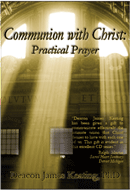
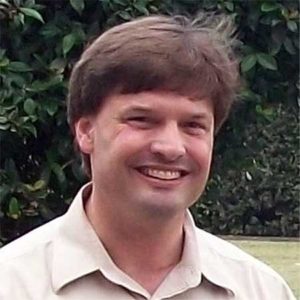
Deacon James Keating, PhD, the director of Theological Formation for the Institute for Priestly Formation, located at Creighton University, in Omaha.
The beginning of the gospel of Jesus Christ, the Son of God.
As it is written in Isaiah, the prophet: Behold, I am sending my messenger ahead of you;
he will prepare your way.
A voice of one crying out in the desert:
“Prepare the way of the Lord,
make straight his paths.”
John the Baptist appeared in the desert
proclaiming a baptism of repentance for the forgiveness of sins.
People of the whole Judean countryside
and all the inhabitants of Jerusalem
were going out to him
and were being baptized by him in the Jordan River
as they acknowledged their sins.
John was clothed in camel’s hair,
with a leather belt around his waist.
He fed on locusts and wild honey.
And this is what he proclaimed:
“One mightier than I is coming after me.
I am not worthy to stoop and loosen the thongs of his sandals.
I have baptized you with water;
he will baptize you with the Holy Spirit.”
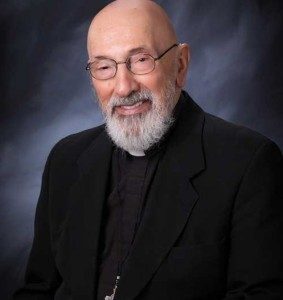
Msgr. John A. Esseff is a Roman Catholic priest in the Diocese of Scranton. On May 30, 1953, he was ordained by the late Bishop William J. Hafey, D.D. at St. Peter’s Cathedral in Scranton, PA. Msgr. Esseff served as a retreat director and confessor to St. Teresa of Calcutta. He continues to offer direction and retreats for the sisters of the missionaries of charity around the world. Msgr. Esseff encountered St. Padre Pio, who would become a spiritual father to him. He has lived in areas around the world, serving in the Pontifical missions, a Catholic organization established by St. Pope John Paul II, to bring the Good News to the world, especially to the poor. Msgr. Esseff assisted the Institute for Priestly Formation founders and continues to serve as a spiritual director for the Institute. He serves as a retreat leader and director to bishops, priests and sisters and seminarians, and other religious leaders worldwide.
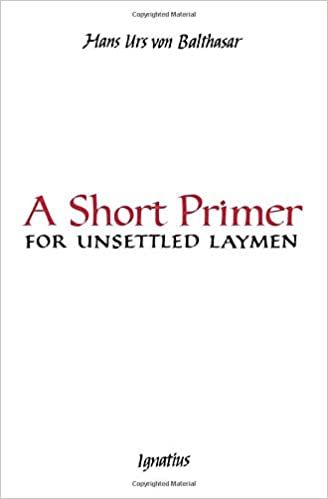
Contradictions in the Bible? Contradictions in the Christian faith? More heavy-hitting discussion as we continue to move through Hans Urs von Balthasar’s “A Short Primer for Unsettled Laymen”.
Hans Urs von Balthasar addresses the critical issues that have been unsettling the Catholic laity since the Second Vatican Council. In a clear and readable manner, he focuses on the core elements of the faith: the Word of God; the life, death, and resurrection of Christ; the sacraments; the structure of the Church; and Mary.
Speaking plainly about the polarization within the Catholic Church, he also discusses the various ideological trends—such as liberalism, progressivism, and traditionalism—that have undermined the confidence and the unity of the faithful.
“In this Primer, Balthasar addresses today’s faithful laity who feel that [the] solidity of the Church is shifting beneath their feet. He speaks to those who fear that the Church has done what she ought not to do: that she is in fact relaxing her demands in order to win favor, not from God, but from man. Into this situation Balthasar re-proposes the ‘form’ of Jesus Christ as revealed in his Church. This form is ‘only the whole’: the whole, concrete reality of Christ, conveyed within Catholic tradition. This form is ‘spun from three strands’ of Word, sacrament, and ecclesial authority. These three provide the Church with the ability to remain on course despite the winds blowing through history.”
— Angela Franks, Ph.D., From the Foreword
Episode 10 – Arius – “Villains of the Early Church: And How They Made Us Better Christians“
In this episode, Mike Aquilina and Kris McGregor discuss Arius and the threat of the Arian heresy. Mike makes suggestions on what the Christian can do to stay true to the faith in times and recognize the Arian tendencies we continue to see today.
An excerpt from Villains of the Early Church:
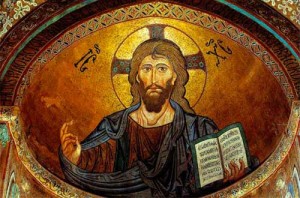
ARIUS WAS an obscure Egyptian priest who probably had more influence on the history of Christian theology than any Christian thinker since St. Paul. It was all negative influence, but no one can deny the influence. Because of Arius, the Catholic Church had to define the relationship of the Son to the Father in clear and unambiguous terms. Because of Arius, we ended up with the Nicene Creed.
But no one would have guessed for most of his life that this Arius was going to set the world on fire.
Aquilina, Mike. Villains of the Early Church: And How They Made Us Better Christians. Emmaus Road Publishing. Kindle Edition.
You can find the book on which this series is based here
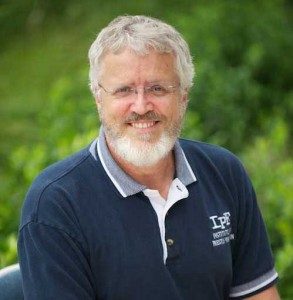
Mike Aquilina is a popular author working in the area of Church history, especially patristics, the study of the early Church Fathers.[1] He is the executive vice-president and trustee of the St. Paul Center for Biblical Theology, a Roman Catholic research center based in Steubenville, Ohio. He is a contributing editor of Angelus (magazine) and general editor of the Reclaiming Catholic History Series from Ave Maria Press. He is the author or editor of more than fifty books, including The Fathers of the Church (2006); The Mass of the Early Christians (2007); Living the Mysteries(2003); and What Catholics Believe(1999). He has hosted eleven television series on the Eternal Word Television Network and is a frequent guest commentator on Catholic radio.
Episode 3: Purgatory – Salvation Begins Now: Last Things First
Deacon James Keating and Kris McGregor discuss the nature of purgatory, referencing saints’ mystical experiences to explore purification, suffering, and holiness. Saints like St. Catherine of Genoa offer images of purgatory that allow us to meditate on sin’s disruptive nature to the Body of Christ. This purification isn’t bound by time as we know it; rather, it’s a timeless encounter with Jesus’ love that cleanses us from the effects of sin.
There are common misconceptions, such as contrasting physical suffering with the profound, and that relational pain causes isolation from God and others. This relational suffering, which stems from choices that cut us off from communion, parallels the purgatorial experience, calling us toward God for healing. Purgatory is less about physical torment and more about the agony of purification needed to restore our identity in God’s love.
The sacrament of reconciliation is a profound opportunity to undergo purification on earth, preparing us for communion with God. True confession requires courage, as it involves confronting our sins and vulnerabilities openly with God, who meets us with unconditional mercy.
Discerning Hearts Reflection Questions
Understanding Purgatory’s Purpose – How does viewing purgatory as a relational purification rather than a physical torment change your understanding of its purpose?
Contemplating the Impact of Sin – Reflect on how even “small” sins disrupt the harmony of the Body of Christ and affect your own spiritual health.
Identifying Relational Pain – In what ways have feelings of isolation or confusion about your identity impacted your relationship with God and others?
Embracing the Sacrament of Reconciliation – How might regularly participating in the sacrament of reconciliation deepen your experience of God’s mercy and freedom?
Confronting Fear of Truth – What specific fears or rationalizations have kept you from fully admitting your sins to God in the sacrament of confession?
Learning from the Saints – Who in your life exemplifies holiness, and how can you look to them as a guide toward surrender and abandonment to God?
Trusting in God Through Suffering – How can embracing Christ’s Sacred Heart help you surrender fears about suffering or death and experience God’s peace?
Striving for Earthly Holiness – What steps can you take to start your purification process on earth, inspired by the examples of saints like Mother Teresa and St. John Paul II?
From the Catechism of the Catholic Church:
“1030 All who die in God’s grace and friendship, but still imperfectly purified, are indeed assured of their eternal salvation; but after death they undergo purification, so as to achieve the holiness necessary to enter the joy of heaven.”
Deacon James Keating, Ph.D., is a professor of Spiritual Theology and serves as a spiritual director at Kenrick Glennon Seminary in St. Louis, MO.
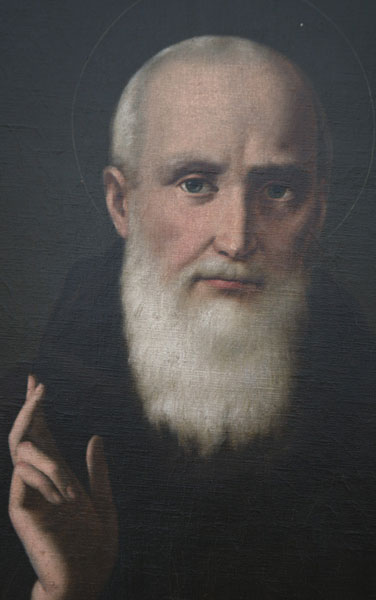
We continue our conversation on the life of St. Benedict by using the biography penned by St. Gregory the Great. In this episode, St. Benedict is visited by a priest on Easter Sunday morning in the cave and is called from his seclusion.
Now when it pleased Almighty God that Romanus should rest from his labors and that the life of Benedict should be manifest to the world for an example to all men, that the candle set upon a candlestick might shine and give light to the whole Church of God, our Lord vouchsafed to appear to a certain Priest living far off, who had to make ready his dinner for Easter Day, saying to him: “Thou hast prepared good cheer for thyself, and My servant in such a place is famished for hunger.” Who presently rose, and on the solemn day of Easter went towards the place with such meat as he had provided for himself, were seeking the man of God, amongst craggy rocks, winding valleys and hollow pits he found him hid in a cave. Then after prayers, and blessing the Almighty Lord, they sat down, and after some spiritual discourse, the Priest said: “Rise, and let us take our refection, for this is Easter Day.” To whom the man of God answered: “I know it is Easter because I have found so much favor as to see thee.” (For not having a long time conversed with men, he did not know it was Easter Day.) The good Priest did therefore again affirm it, saying: “Truly this is the day of our Lord’s Resurrection, and therefore it is not fit that you should keep abstinence, and for this cause I am sent that we may eat together that which Almighty God hath bestowed on us.” Whereupon blessing God, they fell to their meat. Their discourse and dinner ended; the Priest returned to his Church.
Father Mauritius Wilde, OSB, Ph.D., did his philosophical, theological, and doctoral studies in Europe. He is the author of several books and directs retreats regularly. He serves as Prior at Sant’Anselmo in Rome. For more information about the ministry of the Missionary Benedictines of Christ the King Priory in Schuyler, Ne
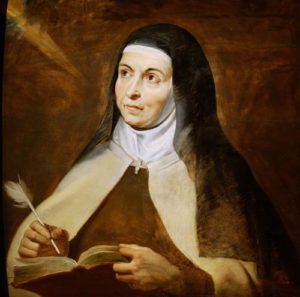
In this episode, Dr. Lilles discusses the Sixth Mansions Chapter 4 of the “Interior Castle” which covers:
TREATS OF HOW GOD SUSPENDS THE SOUL IN PRAYER BY A TRANCE, ECSTASY, OR RAPTURE, WHICH I BELIEVE ARE ALL THE SAME THING. GREAT COURAGE REQUIRED TO RECEIVE EXTRAORDINARY FAVOURS FROM HIS MAJESTY.
1. Courage required by the soul for the divine espousals. 2. Raptures. 3. Rapture caused by the spark of love. 4. The powers and senses absorbed. 5. Mysteries revealed during ecstasies. 6. These mysteries are unspeakable. 7. Moses and the burning bush. 8. Simile of the museum. 9. St. Teresa’svisit to the Duchess of Alva. 10. Joy of the soul during raptures. 11. No imaginary vision. 12. True and false raptures. 13. Revelations of future bliss. 14. The soul’s preparation. 15. The soul blinded by its faults. 16. God ready to give these graces to all. 17. Faculties lost during ecstasy. 18. Spiritual inebriation. 19. Fervour and love of suffering left in the soul. 20. Scandal caused to spectators by such favours. 21. Our Lord’s predilection for such a soul. 22. Illusionary raptures.
Anthony Lilles, S.T.D. is an associate professor and the academic dean of Saint John’s Seminary in Camarillo as well as the academic advisor for Juan Diego House of Priestly Formation for the Archdiocese of Los Angeles. For over twenty years he served the Church in Northern Colorado where he joined and eventually served as dean of the founding faculty of Saint John Vianney Theological Seminary in Denver. Through the years, clergy, seminarians, religious and lay faithful have benefited from his lectures and retreat conferences on the Carmelite Doctors of the Church and the writings of St. Elisabeth of the Trinity.
Episode 2: What is Death? – Salvation Begins Now: Last Things First
Deacon James Keating and Kris McGregor explore deep themes of Catholic theology around death, salvation, and the journey of purification, both in life and after death. Humanity’s fear of death often stems from the fear of isolation, as humans are created for communion with God and each other. Death brings an anxiety rooted in the dread of losing this communion. Purgatory is a continuation of this journey toward holiness. For those who die in God’s friendship but are still imperfect, purgatory allows for the purification needed to enter Heaven’s fullness—a process likened to a “fire” of love that cleanses and prepares the soul for eternal communion.
The Catholic belief that life on earth should be seen as an opportunity for ongoing repentance and purification, reducing the need for purgatory after death. Sin, especially mortal sin, can sever one’s connection to God, while venial sin does not fully break this bond, allowing hope of eventual communion. The Mass is the ultimate prayer of salvation, as it directly connects the faithful to Calvary and Christ’s redemptive love. The Mass is uniquely powerful for praying for deceased loved ones, as it is a touchpoint of divine grace where heaven meets earth. Catholics should continually pray for the deceased, highlighting the importance of love, community, and intercessory prayer in the Church’s understanding of salvation and eternal life.
Discerning Hearts Reflection Questions
Understanding Purgatory’s Purpose – How does viewing purgatory as a relational purification rather than a physical torment change your understanding of its purpose?
Contemplating the Impact of Sin – Reflect on how even “small” sins disrupt the harmony of the Body of Christ and affect your own spiritual health.
Identifying Relational Pain – In what ways have feelings of isolation or confusion about your identity impacted your relationship with God and others?
Embracing the Sacrament of Reconciliation – How might regularly participating in the sacrament of reconciliation deepen your experience of God’s mercy and freedom?
Confronting Fear of Truth – What specific fears or rationalizations have kept you from fully admitting your sins to God in the sacrament of confession?
Learning from the Saints – Who in your life exemplifies holiness, and how can you look to them as a guide toward surrender and abandonment to God?
Trusting in God Through Suffering – How can embracing Christ’s Sacred Heart help you surrender fears about suffering or death and experience God’s peace?
Striving for Earthly Holiness – What steps can you take to start your purification process on earth, inspired by the examples of saints like Mother Teresa and St. John Paul II?
From the Catechism of the Catholic Church:
“1030 All who die in God’s grace and friendship, but still imperfectly purified, are indeed assured of their eternal salvation; but after death they undergo purification, so as to achieve the holiness necessary to enter the joy of heaven.”
Deacon James Keating, Ph.D., is a professor of Spiritual Theology and serves as a spiritual director at Kenrick Glennon Seminary in St. Louis, MO.
What is human progress, and is it a good thing? How does it change how we see God? In the second part of the series, we face more confusing issues with the help of Hans Urs von Balthasar’s A Short Primer for Unsettled Laymen.
Hans Urs von Balthasar addresses the critical issues that have been unsettling the Catholic laity since the Second Vatican Council. In a clear and readable manner, he focuses on the core elements of the faith: the Word of God; the life, death, and resurrection of Christ; the sacraments; the structure of the Church; and Mary.
Speaking plainly about the polarization within the Catholic Church, he also discusses the various ideological trends—such as liberalism, progressivism, and traditionalism—that have undermined the confidence and the unity of the faithful.
“In this Primer, Balthasar addresses today’s faithful laity who feel that [the] solidity of the Church is shifting beneath their feet. He speaks to those who fear that the Church has done what she ought not to do: that she is in fact relaxing her demands in order to win favor, not from God, but from man. Into this situation Balthasar re-proposes the ‘form’ of Jesus Christ as revealed in his Church. This form is ‘only the whole’: the whole, concrete reality of Christ, conveyed within Catholic tradition. This form is ‘spun from three strands’ of Word, sacrament, and ecclesial authority. These three provide the Church with the ability to remain on course despite the winds blowing through history.”
— Angela Franks, Ph.D., From the Foreword
Episode 25 – John 12: The Glory of the Lord part 1
“John 12 begins just six days before Jesus’ final Passover on earth. Gathering with some of his disciples, Jesus is dining at the house of Lazarus, who had just been risen from the dead. Sharon gives us the background of typical Greco-Roman dining, where guests would recline at table to eat their meal, and afterward, would be entertained by musicians and sometimes even prostitutes. We recall King Herod, married illicitly to Herodias, who promised even half his kingdom to Herodias’ daughter Salome after she performed a seductive after-dinner dance. Prompted by her mother, Salome demands the head of John the Baptist, who had publicly criticized the marriage between Herod and Herodias. In some paintings, Salome is pictured with a vial of spikenard, a rare, expensive, richly aromatic oil.
Sharon goes on to explain the significance of spikenard for a first-century Jewish girl. Spikenard was kept in an alabaster jar, and on her wedding night, the virgin bride would break open the jar, anoint her new groom, and consummate the wedding. With this background, we now better understand the beautiful meaning behind the actions of Mary of Bethany, who breaks open an enormous jar of spikenard, anoints the feet of Jesus, and then dries them with her hair. Mary desires to give everything to Jesus and enter into a spiritual marriage. She wants to lavish him with not only her most precious earthly gift, but even more, with the priceless gift of her total self: heart, mind, soul, and strength.
Clarifying a common misconception, Sharon explains that Mary of Bethany is not the same person as Mary Magdalene or one of several other Mary’s found elsewhere in the Bible. Spikenard was also used for burial anointing, but having just seen her brother rise from the dead, Mary knows Jesus will also rise and have no need for the burial anointing. Instead, Mary anoints Jesus now as her spiritual spouse. Sharon then moves on to the triumphal entry into Jerusalem, showing how Jesus fulfills the prophecy of Zechariah 9, entering into his kingship riding atop a donkey. To reach Jerusalem, Jesus would have processed through Bethany and Bethphage. Sharon unlocks the importance of Bethphage, also known as the House of Un-ripened Figs. Despite being a few miles outside the city walls, Bethphage was still considered to be part of Jerusalem and was home to two members holding seats in the Sanhedrin. The irony of Jesus processing past this town is profound: any judicial order to execute a rebellious leader had to be made in Bethphage. Today Jesus rides triumphantly past Bethphage; in just a few short days, his execution will be confirmed in Bethphage. ”
Sharon Doran serves as the teaching director of “Seeking Truth.” An experienced Bible Study teacher, Sharon has a passion for scripture that will motivate and challenge you to immerse yourself in God’s Word and apply His message to your everyday life.
“Seeking Truth” is an in-depth Catholic Bible Study, commissioned by the Archdiocese of Omaha in response to John Paul II’s call to the New Evangelization as well as Pope Benedict XVI’s exhortation for all Catholics to study scripture. To learn more go to www.seekingtruth.net


 Episode 10 – Arius – “Villains of the Early Church: And How They Made Us Better Christians“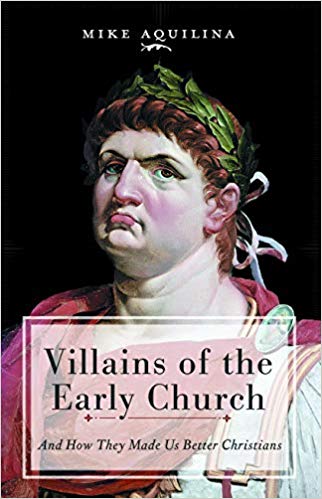
 For other audio recordings of various spiritual classics you can visit the