Podcast: Play in new window | Download (Duration: 27:52 — 19.1MB) | Embed
Subscribe: Apple Podcasts | Spotify | Amazon Music | Android | Pandora | iHeartRadio | JioSaavn | Podchaser | Gaana | Podcast Index | Email | TuneIn | Deezer | Anghami | RSS | More
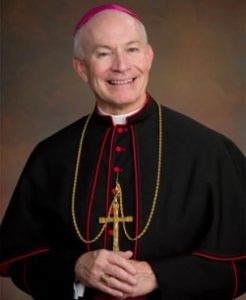
Episode 10 Why the Priesthood Matters – Why it Matters: An Exploration of Faith with Archbishop George Lucas
In this episode with Archbishop Lucas we begin the conversation about the Sacrament of Holy Orders and why the priesthood matters?
From the Catechism of the Catholic Church:
In the person of Christ the Head . . .
1548 In the ecclesial service of the ordained minister, it is Christ himself who is present to his Church as Head of his Body, Shepherd of his flock, high priest of the redemptive sacrifice, Teacher of Truth. This is what the Church means by saying that the priest, by virtue of the sacrament of Holy Orders, acts in persona Christi Capitis:23
- It is the same priest, Christ Jesus, whose sacred person his minister truly represents. Now the minister, by reason of the sacerdotal consecration which he has received, is truly made like to the high priest and possesses the authority to act in the power and place of the person of Christ himself (virtute ac persona ipsius Christi).24Christ is the source of all priesthood: the priest of the old law was a figure of Christ, and the priest of the new law acts in the person of Christ.25
1549 Through the ordained ministry, especially that of bishops and priests, the presence of Christ as head of the Church is made visible in the midst of the community of believers.26 In the beautiful expression of St. Ignatius of Antioch, the bishop is typos tou Patros: he is like the living image of God the Father.27
1550 This presence of Christ in the minister is not to be understood as if the latter were preserved from all human weaknesses, the spirit of domination, error, even sin. The power of the Holy Spirit does not guarantee all acts of ministers in the same way. While this guarantee extends to the sacraments, so that even the minister’s sin cannot impede the fruit of grace, in many other acts the minister leaves human traces that are not always signs of fidelity to the Gospel and consequently can harm the apostolic fruitfulness of the Church.
1551 This priesthood is ministerial. “That office . . . which the Lord committed to the pastors of his people, is in the strict sense of the term a service.”28 It is entirely related to Christ and to men. It depends entirely on Christ and on his unique priesthood; it has been instituted for the good of men and the communion of the Church. The sacrament of Holy Orders communicates a “sacred power” which is none other than that of Christ. The exercise of this authority must therefore be measured against the model of Christ, who by love made himself the least and the servant of all.29 “The Lord said clearly that concern for his flock was proof of love for him.”30
. . . “in the name of the whole Church”
1552 The ministerial priesthood has the task not only of representing Christ – Head of the Church – before the assembly of the faithful, but also of acting in the name of the whole Church when presenting to God the prayer of the Church, and above all when offering the Eucharistic sacrifice.31
1553 “In the name of the whole Church” does not mean that priests are the delegates of the community. The prayer and offering of the Church are inseparable from the prayer and offering of Christ, her head; it is always the case that Christ worships in and through his Church. The whole Church, the Body of Christ, prays and offers herself “through him, with him, in him,” in the unity of the Holy Spirit, to God the Father. The whole Body, caput et membra, prays and offers itself, and therefore those who in the Body are especially his ministers are called ministers not only of Christ, but also of the Church. It is because the ministerial priesthood represents Christ that it can represent the Church.
For more episodes in this series visit the
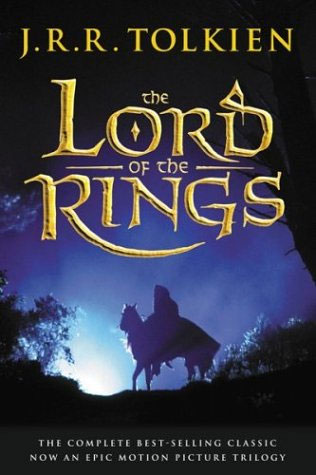
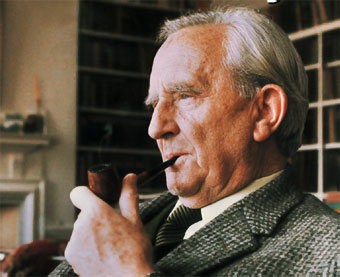 unseen hand of providence felt by the reader. In his mythical creations or sub-creations, as he would call them, he shows how the unseen hand of God is felt far more forcefully in myth than it is ever felt in fiction. Paradoxically, fiction works with facts, albeit invented facts, whereas myth works with truth, albeit truth dressed in fancy disguises. Furthermore, since facts are physical and truth is metaphysical, myth, being metaphysical, is spiritual.”
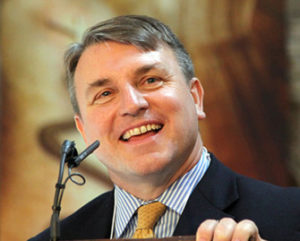
 Joseph Pearce is currently the Writer-in-Residence and Visiting Fellow at Thomas More College of Liberal Arts in Merrimack, New Hampshire. He is also Visiting Scholar at Mount Royal Academy in Sunapee, New Hampshire. He is also Visiting Scholar at Mount Royal Academy in Sunapee, New Hampshire. He is co-editor of the Saint Austin Review (or StAR), an international review of Christian culture, literature, and ideas published in England (Family Publications) and the United States (Sapientia Press). He is also the author of many books, including literary biographies of Solzhenitsyn, J. R. R. Tolkien, C. S. Lewis, G. K. Chesterton, and Oscar Wilde.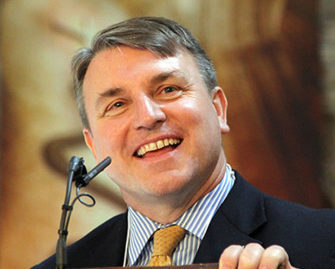
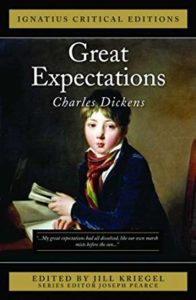 Based on the Ignatius Critical Edition, this series examines, from the Judeo-Christian perspective, the life, the times, and influence of authors of great works in literature.
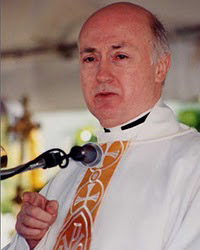 What a delight to talk once again speak with Fr. George Rutler! This we discuss his book “The Stories of Hymns: The History Behind 100 of Christianity’s Greatest Hymns”! A gifted story teller and a devotee of great hymnody, Fr. Rutler guides us into the richness of prayer through our sacred song.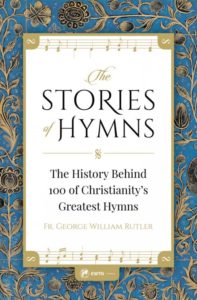
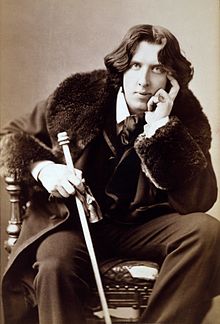
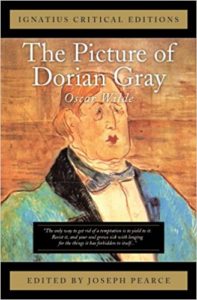 Based on the Ignatius Critical Edition, this series examines, from the Judeo-Christian perspective, the life, the times, and influence of authors of great works in literature.
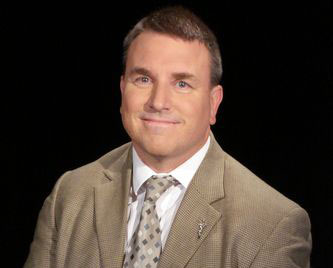 Episode 20 – Great Works in Western Literature with Joseph Pearce – G. K. Chesterton and “The Man Who Was Thursday”
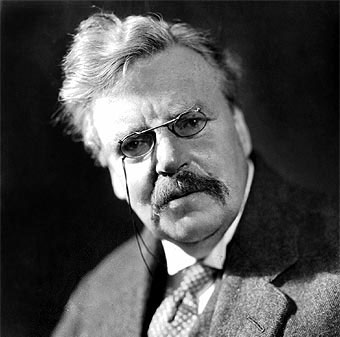 Chesterton’s own response, and riposte, to the Decadence of the 1890s can be found in his novel “The Man Who Was Thursday”. Whereas the Decadents–taking their own perverse inspiration from the dark romanticism of Byron, Shelley and Keats-had stripped the masks off reality” and discovered darkness, Chesterton stripped the masks off reality” (from the “anarchists” in his novel) and discovered light — Joseph Pearce “Ignatius Insight”