
Podcast: Play in new window | Download (21.6MB) | Embed Subscribe: Apple Podcasts | Spotify | Amazon Music | Android | Pandora | iHeartRadio | JioSaavn | Podchaser | Gaana | Podcast Index | Email | TuneIn | Deezer | Anghami | RSS | More
The story and history of Saint Clement.
 First, start with the podcast above featuring the son of the Fathers, Mike Aquilina talking about St. Clement, then…
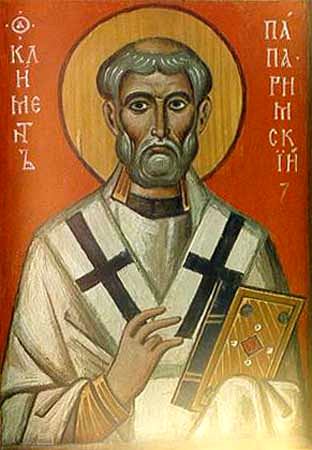
Clemens Romanus was born in Rome in Italy during the time that the Christian faith was being spread and Christians were being persecuted by the Roman Emperors. He is believed to be of Jewish descent and a freeman of Rome. He worked as a tanner
during the early part of his life. He was then converted to Christianity and became a disciple of St. Peter and of St. Paul. Following the death of Saint Peter he took over his position and became the fourth Pope and Bishop of Rome continuing to convert Romans from the religion of the old Roman gods to Christianity.
Saint Clement was banished from Rome during the reign of the Emperor Trajan (September 18, 53 – August 9, 117) due to his beliefs and unpopularity with the Roman rabble. He was banished to Chersonesus, which was an ancient Greek colony under Roman rule, in the south western part of Crimea (part of the Ukraine). In Chersonesus he was sentenced to work with other prisoners in a sto
ne quarry where he continued to convert people. The number and success of his conversions attracted the attention of the Roman prefect who sentenced him to death. Clement was he was bound to an anchor and cast into the sea. He died in A.D.100.
How blessed and amazing are God’s gifts, dear friends Life with immortality, splendor with righteousness, truth with confidence, faith with assurance, self-control with holiness And all these things are within our comprehension. Clement of Rome

Basilica of Saint Clement
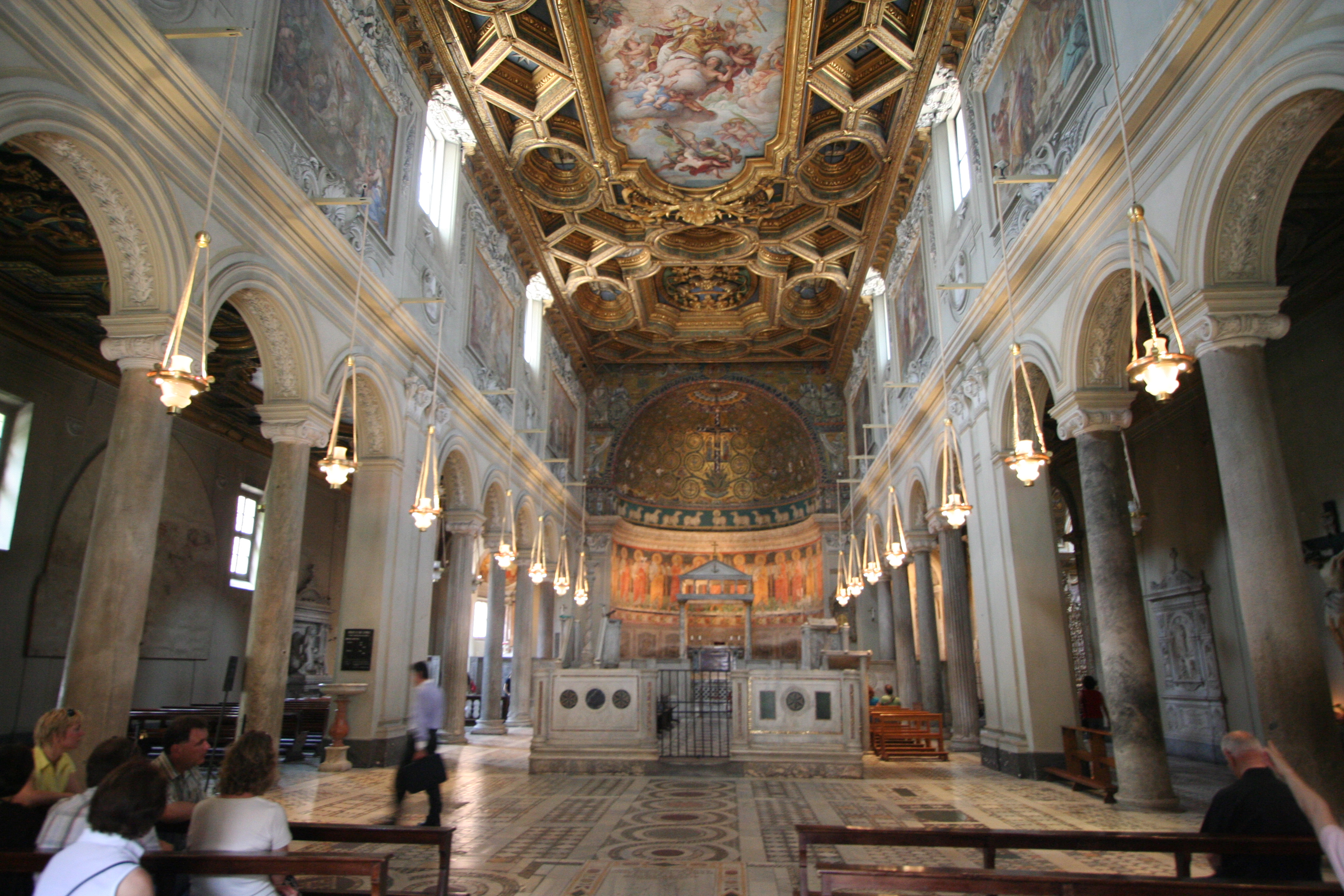
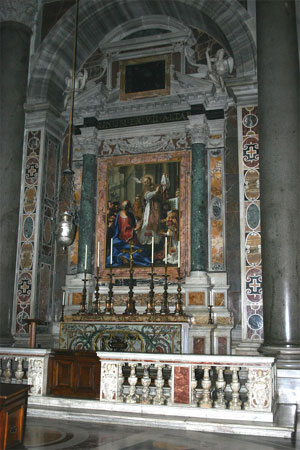
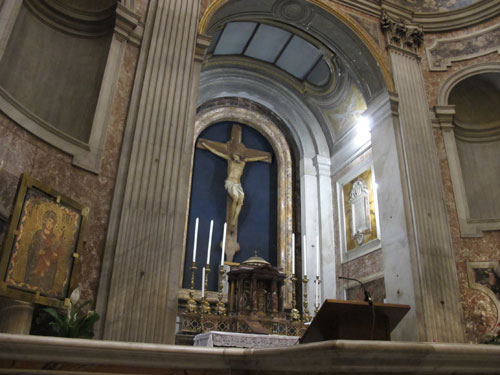
The Basilica di San Clemente is an early Christian basilica in Rome dedicated to Pope St. Clement. Its beautiful interior is especially notable for its three historical layers.
The main upper church is one of the most richly decorated churches in Rome. The vast majority of its architecture and art dates from its construction in the early 12th century. The entrance is on the left aisle.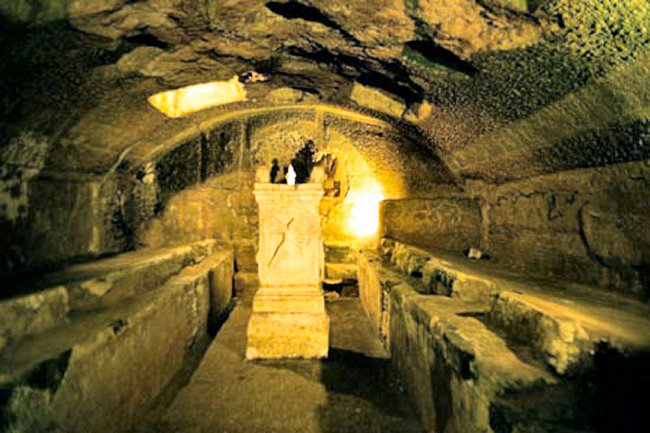
The most striking sight is the 12th-century apse mosaic, in a golden-bronze color and featuring a large cross in the center. In the center of the apse is a throne, whose back is part of a martyr’s tomb.
The high altar contains the relics of St. Clement of Rome and St. Ignatius of Antioch. Faded frescoes decorate many of the walls, and date from the 6th to 11th centuries. They depict New Testament scenes and lives of several saints.


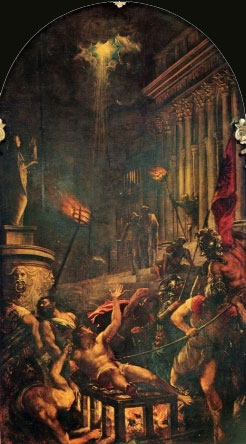

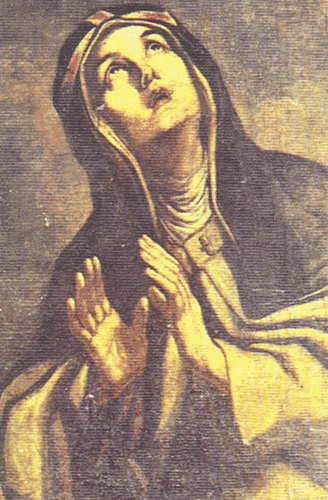

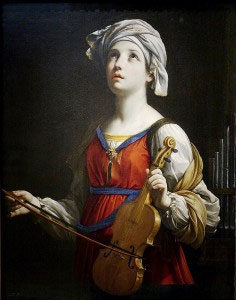 Against her will, she was married by her father to a young, pagan patrician named Valerian. While everyone sang and danced at their wedding, Cecilia sat apart, saying only the Psalms. Valerian turned out to be a man of great understanding. On their wedding night, she told Valerian, “I have an angel of God watching over me. If you touch me in the way of marriage, he will be angry, and you will suffer. But if you respect my maidenhood, he will love you as he loves me.”
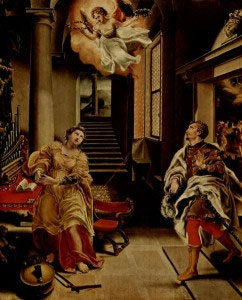 From that time the two young men dedicated themselves to good works. Because of their ardor in burying the bodies of martyred Christians, they were arrested. The prefect Almachius told them that if they would sacrifice to the gods, they could go free. They refused, and Valerian rejoiced when he was handed over to be scourged.
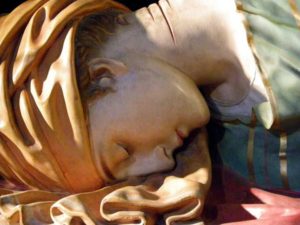 lingered for three days, during which time the Christians thronged to her side, and she formally made over her house to Urban and committed her household to his care.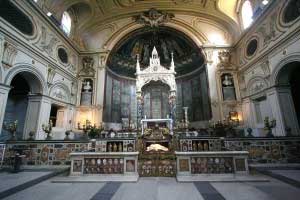
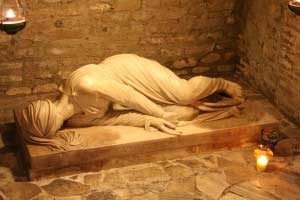 sword. A replica of this statue occupies the original resting place of the saint in the Catacomb of Callixtus. Other artists were allowed to paint pictures of her after her tomb was opened.