An Advent Journey for the Discerning Heart:
Prepare your heart for Christ through Scripture, the saints, and the gentle practice of daily listening.
Week Two: Following the Voice of Christ
DAY 8 – Hope
“Let us hold fast the confession of our hope without wavering, for he who promised is faithful.”
Hebrews 10.23
Hope is the quiet strength that anchors the heart in God’s promises. It is a theological virtue, not a feeling we generate. God Himself pours it into the soul through grace. Because of this, hope is steady even when circumstances shift, even when emotions rise and fall, even when darkness feels close.
Hope looks at God before it looks at the problem. Hope remembers that God keeps His promises. The greatest fulfillment of those promises is the gift of Christ, given at a moment in history when all seemed lost. Advent teaches us to return to this truth every day. Christ is the proof that God keeps His word.
Yet hope is not only about the great moments of salvation history. It is also about the personal ways God has been faithful in your life. Each moment He sustained you, guided you, protected you, forgave you, or brought you through something difficult becomes a touchstone of hope. Hope grows when the heart remembers.
Hope does not deny suffering. It meets suffering with trust in a God who is larger than every fear and stronger than every obstacle. Hope believes that God is already present and already at work.
Journey with the Saints –
Ven Bruno Lanteri
“Do not lose heart. Be confident. God is love.” Venerable Bruno Lanteri
Venerable Bruno taught that Christian hope rests entirely on the mercy and fidelity of God. He understood hope as a grace that lifts the soul when it feels weak or discouraged. His famous spiritual counsel, “Begin again,” expresses this beautifully. Hope always makes it possible to take the next step toward God.
For Ven. Bruno, hope was not optimism. It was confidence in God’s character. He believed that no failure, no weakness, and no discouragement could block the action of grace if a soul continued to turn toward God with trust. Hope leans on God, not on self.
Ven. Bruno also insisted that hope grows when a person remembers God’s past faithfulness. Every grace God has already given becomes a promise of what He will continue to do. Hope expands the heart to expect God’s goodness again.
Reflection for the Listening Heart
Today invites you to let your heart rest in God’s fidelity. Hope grows when you stop trying to hold everything together and allow God to carry what you cannot. Hope remembers that God has led you before and He will lead you again.
Look back over your life. Where has God kept His promises to you. Where has He shown you love, direction, or protection. These memories are seeds of hope. They strengthen your trust in the God who remains faithful.
Ask yourself: Where do I need hope today. How is God inviting me to remember His faithfulness?
A Simple Practice for Today
Recall one moment in your life when God was clearly present. Thank Him for it. Later in the day, pray quietly, “Lord, You have been faithful. Strengthen my hope.” Let this remembrance become a place of trust.
Prayer
Lord Jesus, strengthen within me the virtue of hope. Help me to trust in Your promises and to remember the many ways You have been faithful. Pour Your grace into my heart so I may rest in Your love and look to You with confidence. Teach me to hope in You always. Amen.
An Advent Journey for the Discerning Heart:
Prepare your heart for Christ through Scripture, the saints, and the gentle practice of daily listening.
Week Two: Following the Voice of Christ
DAY 7 – Trust
“Trust in the Lord with all your heart, and do not rely on your own insight. In all your ways acknowledge him, and he will make straight your paths.”
Proverbs 3.5 to 6
Trust is the foundation of recognizing the voice of Christ. Before the heart can follow the Shepherd, it must believe that His voice is steady, loving, and faithful. Trust allows the soul to rest in God even when clarity has not yet come. Trust strengthens the listening heart, because it teaches us to lean on God rather than on our own interpretations.
Trust does not remove uncertainty. It transforms it. When the heart lives in trust, uncertainty no longer becomes a barrier. It becomes a space where God reveals Himself. Trust says, “Lord, even when I do not see, I know You are guiding me.”
In the spiritual life, trust matures when we stop grasping for control. We often long for explanations. We want to know how God will act or what will come next. But Advent prepares us for a God who arrives in ways we do not expect. Trust keeps the heart open to receive Him.
Trust is a daily choice. It is the movement of the heart that leans toward God, especially when the way forward is dim or unclear. Christ guides those who trust Him, and trust teaches the heart to recognize His whispers.
Journey with the Saints –
St. Joseph
“When Joseph woke from sleep, he did as the angel of the Lord commanded him.” Matthew 1.24
St. Joseph is the quiet master of trust. Scripture gives us no recorded words from him. His entire relationship with God unfolds in listening, obedience, and surrender. Joseph trusts God without demanding full understanding. He accepts God’s direction even when it disrupts his plans and overturns what he thought his life would be.
Joseph responds to God with a heart that moves quickly toward obedience. He listens not only with his ears, but with his whole life. He surrenders his expectations, his anxieties, his own judgments, and even his need to understand. Joseph shows that trust is not passive. It is an active openness to God’s will, even when the path is hidden.
His quiet example teaches us to let God lead. In Joseph, we see trust that yields, trust that listens, and trust that acts.
Reflection for the Listening Heart
Today invites you to notice where you struggle to trust. Trust often becomes difficult when life feels uncertain or when prayer seems unanswered. Yet trust grows not by having more control, but by releasing the desire to control everything. Trust is a gentle turning toward the One who loves you.
Ask the Lord to show you the places where your heart holds back. These are often the places where He desires to draw near. Trust begins when we allow God to enter those guarded areas and guide us forward step by step.
Ask yourself: Where is Christ asking me to trust Him today. What part of my heart needs to lean more fully into His care.
A Simple Practice for Today
Lord Jesus, teach my heart to trust You. Help me release my need to understand everything and rest in Your faithful love. Give me the grace to follow Your voice even when the way is unclear. Make my trust steady and simple, like St. Joseph’s, and guide my heart into Your peace. Amen.
Prayer
Lord Jesus, teach my heart to trust You. Help me release my need to understand everything and rest in Your faithful love. Give me the grace to follow Your voice even when the way is unclear. Make my trust steady and simple, like St. Joseph’s, and guide my heart into Your peace. Amen.
An Advent Journey for the Discerning Heart:
Prepare your heart for Christ through Scripture, the saints, and the gentle practice of daily listening.
Week One: Awakening the Listening Heart
DAY 6 – Conversion
“Repent, for the kingdom of heaven is at hand.”
Matthew 4.17
Conversion is not a single moment. It is a continual turning toward God. Advent teaches this ongoing movement of the heart. Conversion is the steady, daily action of choosing God again and again. It is the refusal to remain still in spiritual life. It is the willingness to move toward the One who is constantly drawing near.
Conversion is not dramatic for most people. It is usually quiet. It is the moment when you realign your heart after noticing you have drifted. It is the instant you choose truth over distraction, love over indifference, prayer over noise. Every turn toward God, no matter how small, becomes a doorway for grace to enter.
True conversion is active. It responds to God’s initiative. God always makes the first movement. Conversion is our movement back. The discerning heart knows this is a lifelong rhythm. We turn toward Him again in moments of light, in times of weakness, in days of clarity, and in seasons of confusion.
Conversion prepares the heart for deeper listening. It keeps the soul awake, open, and progressing toward Christ.
Journey with the Saints –
St. Catherine of Siena
“Be who God meant you to be, and you will set the world on fire.” Attributed to St. Catherine of Siena
St. Catherine understood conversion as a continual rising into the fullness of who God created you to be. She teaches that conversion is not a narrowing of the spiritual life. It is the steady work of grace thatexpands the heart. As the heart expands, it becomes more capable of receiving God’s love and more available to give that love to others.
For St. Catherine, this expansion happens through humility and surrender. When the soul releases fear, pride, or self-reliance, the heart opens wider to God’s action. Every movement toward Him increases the heart’s capacity for charity, courage, and truth. Conversion stretches the heart so it can hold more of God and give more of God.
St. Catherine reminds us that conversion unfolds gradually. It is a lifelong process of allowing God to shape, widen, and mature the heart until Christ’s life becomes the center of everything.
Reflection for the Listening Heart
Today invites you to reflect on where your heart is turned. Conversion is not about perfection. It is about direction. You may drift at times. You may feel distracted. You may recognize places where you have resisted God. Conversion turns you back, even gently, even quietly.
Ask God to show you where He is inviting you to turn toward Him again. Perhaps in a relationship. Perhaps in prayer. Perhaps in a place where fear holds you back. Every turn toward God strengthens the listening heart.
Ask yourself: Where is Christ calling me to turn toward Him today. What step of conversion is He inviting me to take.
A Simple Practice for Today
Take one moment today and say, “Lord, turn my heart toward You.” Then choose one concrete act of love, forgiveness, or faith that reflects that turning. Later in the day, repeat the simple prayer as a way of renewing your direction.
Prayer
Lord Jesus, turn my heart toward You again. Draw me away from anything that leads me from Your love and strengthen every desire that leads me closer to You. Teach me to live conversion as a daily movement of grace. Help me to turn, and turn again, until my heart rests fully in You. Amen.
An Advent Journey for the Discerning Heart:
Prepare your heart for Christ through Scripture, the saints, and the gentle practice of daily listening.
Week One: Awakening the Listening Heart
DAY 5 – Stillness
“Be still, and know that I am God.”
Psalm 46.10 RSV
Stillness is the interior calm that allows the soul to recognize God’s presence. It is different from silence. Silence quiets the environment. Stillness settles the heart. Advent invites us into stillness so the deeper truth of God’s nearness can be known rather than merely thought about.
Stillness is not inactivity. It is the freedom from interior agitation. It gathers the scattered heart into one place and brings the mind and soul together before God. When the heart is restless, God feels far away. When the heart becomes still, His presence becomes gently perceptible.
Stillness requires trust. It asks the soul to rest without striving and to set aside the inner rush that pushes toward the next thing. The discerning heart learns to recognize that God often speaks when the heart rests rather than when it works. God moves in the quiet center of the soul.
Advent teaches us this stillness so we can know, in the depth of our being, that He is God and He is here.
Journey with the Saints –
St. Teresa of Avila
“Let nothing disturb you. Let nothing frighten you. All things pass away. God never changes.”
St. Teresa of Avila, Poem “Nada te turbe,” line 1
St. Teresa knew the power of a still heart. Her teaching and her life remind us that interior stillness is not found by force. It is found by grounding the heart in God’s faithfulness. When the heart remembers who God is and how He loves, fear loosens and rest becomes possible.
For St. Teresa, stillness is rooted in trust. As long as the soul tries to control every outcome, the interior life will stay restless. But when the soul yields to God and remembers His constancy, a deep stillness forms that no circumstance can disrupt. This stillness allows the soul to hear God with clarity.
St. Teresa teaches us that stillness is both gift and discipline. We make space for it, and God fills that space with His peace.
Reflection for the Listening Heart
Today invites you to notice where you feel restless, tense, or scattered. Stillness begins when you acknowledge those places and let them soften in the presence of God. You do not need to force peace. You only need to stop resisting His nearness.
Listening grows in a still heart. When agitation quiets, even slightly, the presence of God becomes more recognizable. Stillness allows the heart to know what noise often hides.
Ask yourself: What steals my stillness today. What might God be asking me to release so my heart can rest in Him.
A Simple Practice for Today
Choose one moment today to sit quietly and breathe slowly. Say, “You are God, and You are here.” Let your heart settle. Later in the day, pause again for one slow breath and place your hand over your heart as a gesture of stillness before God.
Prayer
Lord Jesus, draw my heart into stillness. Quiet the restlessness that distracts me from Your presence. Teach me to rest in You with trust and peace. Help me to know, deep within, that You are God and that I am held in Your love. Amen.
An Advent Journey for the Discerning Heart:
Prepare your heart for Christ through Scripture, the saints, and the gentle practice of daily listening.
Week One: Awakening the Listening Heart
DAY 4 – Openness
“Behold, I stand at the door and knock. If any one hears my voice and opens the door, I will come in to him and eat with him, and he with me.”
Revelation 3.20 RSV
Openness is the willingness of the heart to receive what God desires to give. It is the posture that says yes before knowing the details. Advent teaches this openness by inviting us to welcome Christ in ways we may not expect and through moments we may not choose.
Openness does not mean passivity. It is an active readiness that springs from trust. It allows the heart to become spacious, uncluttered, and free enough to respond to God’s movements. When the heart closes, grace cannot enter. When the heart opens, even slightly, God works.
Openness also means loosening our grip on expectations. God often arrives in forms we do not recognize. The discerning heart learns to say, “Lord, whatever You desire to do in me today, I receive.” This is the openness that made room for Christ in Mary. It is the openness that prepares the soul for His coming now.
Advent invites you to open the door of your heart so Christ may enter more deeply.
Journey with the Saints –
St. Francis of Assisi
“What a person is before God, that he is, and no more.”
St. Francis of Assisi, Admonition 19
St. Francis of Assisi lived with a heart wide open to God. His openness flowed from humility. He accepted his smallness before God, and because of this, his heart remained available to whatever God wished to give or reveal.
For St. Francis, openness meant letting go of self-protection and allowing God to reshape his desires and priorities. He did not cling to security, success, or control. His openness created space for joy, charity, and trust. He welcomed God in poverty, in simplicity, and in every person he encountered.
St. Francis teaches us that openness is the fruit of humility. When we stand before God honestly, without masks or defenses, the heart can finally open. God fills that openness with His presence.
Reflection for the Listening Heart
Today invites you to look for places within your heart that feel tight, guarded, or closed. Sometimes the heart closes because of fear. Sometimes because of disappointment. Sometimes because we simply want things to go our way. Openness asks us to soften those places so God can enter.
Listening becomes deeper when the heart stops resisting what God is offering. Openness makes room for grace to surprise us. It prepares us to receive something new or unexpected.
Ask yourself: Where is God inviting me to open my heart today. What do I need to release so Christ can come closer.
A Simple Practice for Today
Take a quiet moment and say, “Lord, I open my heart to You.” Notice any resistance and gently release it. Later in the day, repeat the same prayer while opening your hands in a simple gesture of surrender. Let this be an intentional act of openness.
Prayer
Lord Jesus, open my heart to Your presence. Remove whatever keeps me closed or guarded. Give me the grace to welcome You in the ways You desire to come. Teach me the humility that creates space for Your love, and draw me into deeper trust. I open the door of my heart to You today. Amen.
The 1st Sunday of Advent – A Call to Wake Up, Repent, and Enter the Light of JesusBuilding a Kingdom of Love with Msgr. John Esseff
On the First Sunday of Advent, Msgr. Esseff shares two deeply moving testimonies that reveal the power of love, faith, and the kingship of Christ. The first story follows a Christian couple who defied medical advice to abort their “defective” child, trusting instead in God’s providence. Their faith was rewarded with the birth of a healthy baby who grew into a successful firefighter.
In this first Sunday of Advent reflection, Msgr. John Esseff invites listeners into the season with a call to spiritual wakefulness. Drawing from the Gospel of Matthew, he explains Jesus’ warning that some will be united with him at his coming while others will be left behind. The key difference is union with Christ, a union formed through baptism, nourished by grace, and renewed through repentance.
Msgr. Esseff speaks about the early Church, the outpouring of the Holy Spirit, and the ongoing need for every Christian to “put on the Lord Jesus Christ.” He warns that sin separates the soul from Christ and dims the light God desires to radiate through us. Advent is presented as a time to return to that light, confront the shadows in our lives, and seek healing through confession, prayer, and intentional spiritual discipline.
The episode also explores Advent’s connection to peace. Drawing from Isaiah, Msgr. Esseff prays for a world where nations turn weapons into instruments of cultivation, and where each person commits to the peace Christ brings. He shares personal experiences of confession, transformation, and encounters with families seeking deeper union with God.
As the episode closes, he encourages listeners to begin an Advent journal, undertake a sincere spiritual inventory, and allow the Holy Spirit to reveal areas of darkness that need grace. For Msgr. Esseff, Advent is the doorway to a renewed life in Christ, a season where hearts awaken, grace deepens, and the soul prepares to welcome the light of Christmas.
Discerning Hearts Reflection Questions
What area of my life most needs the light of Christ as Advent begins?
Where have I allowed habits or attitudes to separate me from Jesus?
What specific action can I take this week to grow in holiness and peace?
How is God calling me to make room for deeper union with him this Advent?
What step toward reconciliation or virtue is the Holy Spirit prompting in my heart?
Gospel Matthew 27:37-44
Jesus said to his disciples:
“As it was in the days of Noah,
so it will be at the coming of the Son of Man.
In those days before the flood,
they were eating and drinking,
marrying and giving in marriage,
up to the day that Noah entered the ark.
They did not know until the flood came and carried them all away.
So will it be also at the coming of the Son of Man.
Two men will be out in the field;
one will be taken, and one will be left.
Two women will be grinding at the mill;
one will be taken, and one will be left.
Therefore, stay awake!
For you do not know on which day your Lord will come.
Be sure of this: if the master of the house
had known the hour of night when the thief was coming,
he would have stayed awake
and not let his house be broken into.
So too, you also must be prepared,
for at an hour you do not expect, the Son of Man will come.”
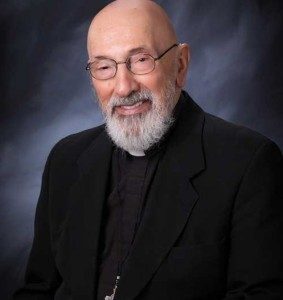
Msgr. John A. Esseff is a Roman Catholic priest in the Diocese of Scranton. Msgr. Esseff served as a retreat director and confessor to St. Teresa of Calcutta. He continues to offer direction and retreats for the sisters of the Missionaries of Charity around the world. Msgr. Esseff encountered St. Padre Pio, who would become a spiritual father to him. He has lived in areas around the world, serving in the Pontifical missions, a Catholic organization established by Pope St. John Paul II to bring the Good News to the world, especially to the poor. Msgr. Esseff assisted the founders of the Institute for Priestly Formation and continues to serve as a spiritual director for the Institute. He continues to serve as a retreat leader and director to bishops, priests and sisters and seminarians, and other religious leaders around the world.
Christ the King and the Victory of Jesus – Building a Kingdom of Love with Msgr. John Esseff
In this episode of Building a Kingdom of Love, Msgr. John Esseff reflects on the Solemnity of Christ the King. He turns to the Gospel of Luke to show how Jesus reigns from the cross, victorious in love. Msgr. Esseff explains that Christ conquers sin through his mercy, conquers the devil through his authority, and conquers death through the glory of his Resurrection. He shares personal experiences from mission work around the world and encourages listeners to trust in the power of Jesus rather than fear evil. With Kris McGregor, he discusses how Christ brings divine order to creation and how each baptized person has a distinct mission within the Body of Christ. The episode closes with hope in the eternal life promised to all who live in Christ.
Discerning Hearts Reflection Questions
Where do I need to invite Christ to bring his mercy into my life right now?
What fears about evil or darkness do I need to surrender to the authority of Jesus?
How is Christ asking me to participate in the life and mission of the Church today?
How does the kingship of Christ shape the way I view suffering, death, and eternal life?
What role has God entrusted to me within the Body of Christ at this moment of my life?
Msgr. John A. Esseff is a Roman Catholic priest in the Diocese of Scranton. Msgr. Esseff served as a retreat director and confessor to St. Teresa of Calcutta. He continues to offer direction and retreats for the sisters of the Missionaries of Charity around the world. Msgr. Esseff encountered St. Padre Pio, who would become a spiritual father to him. He has lived in areas around the world, serving in the Pontifical missions, a Catholic organization established by Pope St. John Paul II to bring the Good News to the world, especially to the poor. Msgr. Esseff assisted the founders of the Institute for Priestly Formation and continues to serve as a spiritual director for the Institute. He continues to serve as a retreat leader and director to bishops, priests and sisters and seminarians, and other religious leaders around the world.
I admit that we are all weak, but if we want help, the Lord God has given us the means to find it easily. One priest may wish to lead a good, holy life, as he knows he should. He may wish to be chaste and to reflect heavenly virtues in the way he lives. Yet he does not resolve to use suitable means, such as penance, prayer, the avoidance of evil discussions and harmful and dangerous friendships. Another priest complains that as soon as he comes into church to pray the office or to celebrate Mass, a thousand thoughts fill his mind and distract him from God. But what was he doing in the sacristy before he came out for the office or for Mass? How did he prepare? What means did he use to collect his thoughts and to remain recollected?
Would you like me to teach you how to grow from virtue to virtue and how, if you are already recollected at prayer, you can be even more attentive next time, and so give God more pleasing worship? Listen, and I will tell you. If a tiny spark of God’s love already burns within you, do not expose it to the wind, for it may get blown out. Keep the stove tightly shut so that it will not lose its heat and grow cold. In other words, avoid distractions as well as you can. Stay quiet with God. Do not spend your time in useless chatter.
If teaching and preaching is your job, then study diligently and apply yourself to whatever is necessary for doing the job well. Be sure that you first preach by the way you live. If you do not, people will notice that you say one thing, but live otherwise, and your words will bring only cynical laughter and a derisive shake of the head.
Are you in charge of a parish? If so, do not neglect the parish of your own soul, do not give yourself to others so completely that you have nothing left for yourself. You have to be mindful of your people without becoming forgetful of yourself.
My brothers, you must realise that for us churchmen nothing is more necessary than meditation. We must meditate before, during and after everything we do. The prophet says: I will pray, and then I will understand. When you administer the sacraments, meditate on what you are doing. When you celebrate Mass, reflect on the sacrifice you are offering. When you pray the office, think about the words you are saying and the Lord to whom you are speaking. When you take care of your people, meditate on how the Lord’s blood has washed them clean so that all that you do becomes a work of love.
This is the way we can easily overcome the countless difficulties we have to face day after day, which, after all, are part of our work: in meditation we find the strength to bring Christ to birth in ourselves and in other men.
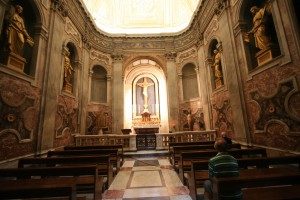
The private revelation which was given to St. Bridget of Sweden that day in the chapel of the church of St. Paul’s Outside the Walls in Rome over 600 years ago is still one of the most poignant and compelling moments in all mystical experiences. The Church has deemed this worthy of belief to the extent that it can edify one’s faith rather than hurt; that indeed if practiced and nurtured it could open the heart for an outpouring of grace.
The “Pieta Prayers” of St. Bridget of Sweden can be a challenging practice in today’s world. To help foster a greater understanding and devotion to Our Lord’s Passion, Discerning Hearts has produced an MP3 Downloadable Audio, which we hope will assist you in some way. Thank you to Bruce McGregor and Lesa Lindsey for giving voice to the prayer.
Are published under the sanction of the Decree of November 18, 1966, published in the Acta Apostolicae Sedis, Vol. 58, No. 16 of December 29, 1966.
Prayers Approved by Pope Pius IX Magnificent Promises to Saint Bridget of Sweden
Pope Benedict XV expressed himself as follows on the Revelations of St. Bridget: “The approbation of such revelations implies nothing more than, after mature examination, it is permissible to publish them for the unit of the faithful. Though they don’t merit the same credence as the truths of religion, one can, however, believe them out of human faith, conforming to the rules of prudence by which they are probable, and supported by sufficient motives that one might believe in them piously. (Les Petits Bollandistes, tome XII)
These prayers can serve as the Way of the Cross. Visitors to the Church of St. Paul at Rome can see the crucifix, above the Tabernacle in the Blessed
Sacrament Chapel, sculptured by Pierre Cavallini, before which St. Bridge knelt when she received these 15 prayers from Our Lord.
The following inscription is placed in the church to commemorate the event: “Pendentis, Pendente Dei verba accepit aure accipit et verbum corde Brigitta Deum. Anno Jubilei MCCCL.” As St. Bridget for a long time wanted to know the number of blows Our Lord received during His Passion, He one day appeared to her and said: “I received 5480 blows on My Body. If you wish to honor them in some way, say 15 Our Fathers and 15 Hail Mary’s with the following Prayers (which He taught her) for a whole year. When the year is up, you will have honored each one of My Wounds.”
First Prayer
Our Father – Hail Mary.
O, Jesus Christ! Eternal Sweetness to those who love Thee, joy surpassing all joy and all desire, Salvation and Hope of all sinners, Who hast proved that Thou hast no greater desire than to be among men, even assuming human nature at the fullness of time for the love of men, recall all the sufferings Thou hast endured from the instant of Thy conception, and especially during Thy Passion, as it was decreed and ordained from all eternity in the Divine plan. Remember, O Lord, that during the Last Supper with Thy disciples, having washed their feet, Thou gavest them Thy Most Precious Body and Blood, and while at the same time Thou didst sweetly console them, Thou didst foretell them Thy coming Passion. Remember the sadness and bitterness which Thou didst experience in Thy Soul as Thou Thyself bore witness saying: “My Soul is sorrowful even unto death.” Remember all the fear, anguish and pain that Thou didst suffer in Thy delicate Body before the torment of the Crucifixion, when, after having prayed three times, bathed in a sweat of blood, Thou wast betrayed by Judas, Thy disciple, arrested by the people of a nation Thou hadst chosen and elevated, accused by false witnesses, unjustly judged by three judges during the flower of Thy youth and during the solemn Paschal season. Remember that Thou wast despoiled of Thy garments and clothed in those of derision; that Thy Face and Eyes were veiled, that Thou wast buffeted, crowned with thorns, a reed placed in Thy Hands, that Thou was crushed with blows and overwhelmed with affronts and outrages. In memory of all these pains and sufferings which Thou didst endure before Thy Passion on the Cross, grant me before my death true contrition, a sincere and entire confession, worthy satisfaction, and the remission of all my sins. Amen
Second Prayer
Our Father – Hail Mary.
O Jesus! True liberty of angels, Paradise of delights, remember the horror and sadness which Thou didst endure when Thy enemies, like furious lions, surrounded Thee, and by thousands of insults, spits, blows, lacerations and other unheard-of-cruelties, tormented Thee at will. In consideration of these torments and insulting words, I beseech Thee, O my Savior, to deliver me from all my enemies, visible and invisible, and to bring me, under Thy protection, to the perfection of eternal salvation. Amen
Third Prayer
Our Father – Hail Mary.
O Jesus! Creator of Heaven and earth Whom nothing can encompass or limit, Thou Who dost enfold and hold all under Thy Loving power, remember the very bitter pain Thou didst suffer when the Jews nailed Thy Sacred Hands and Feet to the Cross by blow after blow with big blunt nails, and not finding Thee in a pitiable enough state to satisfy their rage, they enlarged Thy Wounds, and added pain to pain, and with indescribable cruelty stretched Thy Body on the Cross, pulled Thee from all sides, thus dislocating Thy Limbs. I beg of Thee, O Jesus, by the memory of this most Loving suffering of the Cross, to grant me the grace to fear Thee and to Love Thee. Amen.
Fourth Prayer
Our Father – Hail Mary.
O Jesus! Heavenly Physician, raised aloft on the Cross to heal our wounds with Thine, remember the bruises which Thou didst suffer and the weakness of all Thy Members which were distended to such a degree that never was their pain like unto Thine. From the crown of Thy Head to the Soles of Thy Feet there was not one spot on Thy Body that was not in torment, and yet, forgetting all Thy sufferings, Thou didst not cease to pray to Thy heavenly Father for Thy enemies, saying “Father forgive them for they know not what they do.” Through this great Mercy, and in memory of this suffering, grant that the remembrance of Thy Most Bitter Passion may effect in us a perfect contrition and the remission of all our sins. Amen.
Fifth Prayer
Our Father – Hail Mary.
O Jesus! Mirror of eternal splendor, remember the sadness which Thou experienced, when contemplating in the light of Thy Divinity the predestination of those who would be saved by the merits of Thy Sacred passion, Thou didst see at the same time, the great multitude of reprobates who would be damned for their sins, and Thou didst complain bitterly of those hopeless lost and unfortunate sinners. Through this abyss of compassion and pity, and especially through the goodness which Thou displayed to the good thief when Thou sadist to him: “This day, thou shalt be with Me in paradise.” I beg of Thee, O Sweet Jesus, that at the hour of my death, Thou wilt show me mercy. Amen.
Sixth Prayer
Our Father – Hail Mary.
O Jesus! Beloved and most desirable King, remember the grief Thou didst suffer when naked and like a common criminal, Thou was fastened and raised on the Cross, when all Thy relatives and friends abandoned Thee, except Thy Beloved Mother, who remained close to Thee during Thy agony and whom Thou didst entrust to Thy faithful disciple when Thou sadist to Mary: “Woman, behold thy son!” and to St. John: “Son, behold thy Mother!” I beg of Thee O my Savior, by the sword of sorrow which pierced the soul of Thy holy Mother, to have compassion on me in all my affliction and tribulations, both corporal and spiritual, and to assist me in all my trials, and especially at the hour of my death. Amen
Seventh Prayer
Our Father – Hail Mary.
O Jesus! Inexhaustible Fountain of compassion, Who by a profound gesture of Love, said from the Cross: “I thirst!” suffered from the thirst for the salvation of the human race. I beg of Thee O my Savior, to inflame in our hearts the desire to tend toward perfection in all our acts; and to extinguish in us the concupiscence of the flesh and the ardor of worldly desires. Amen
Eighth Prayer
Our Father – Hail Mary.
O Jesus! Sweetness of hearts, delight of the spirit, by the bitterness of the vinegar and gall which Thou didst taste on the Cross for Love of us, grant us the grace to receive worthily Thy Precious Body and Blood during our life and at the hour of our death, that they may serve as a remedy and consolation for our souls. Amen
Ninth Prayer
Our Father – Hail Mary.
O Jesus! Royal virtue, joy of the mind, recall the pain Thou didst endure when, plunged in an ocean of bitterness at the approach of death, insulted, outraged by the Jews, Thou didst cry out in a loud voice that Thou was abandoned by Thy Father, saying: “My God, My God, why hast Thou forsaken me?” Through this anguish, I beg of Thee, O my Savior, not to abandon me in the terrors and pains of my death. Amen
Tenth Prayer
Our Father – Hail Mary.
O Jesus! Who art the beginning and end of all things, life and virtue, remember that for our sakes Thou was plunged in an abyss of suffering from the soles of Thy Feet to the crown of Thy Head. In consideration of the enormity of Thy Wounds, teach me to keep, through pure love, Thy Commandments, whose way is wide and easy for those who love Thee. Amen
Eleventh Prayer
Our Father – Hail Mary.
O Jesus! Deep abyss of mercy, I beg of Thee, in memory of Thy Wounds which penetrated to the very marrow of Thy Bones and to the depth of Thy being, to draw me, a miserable sinner, overwhelmed by my offenses, away from sin and to hide me from Thy Face justly irritated against me, hide me in Thy Wounds, until Thy anger and just indignation shall have passed away. Amen
Twelfth Prayer
Our Father – Hail Mary.
O Jesus! Mirror of Truth, symbol of unity, link of Charity, remember the multitude of wounds with which Thou was covered from head to foot, torn and reddened by the spilling of Thy adorable blood. O great and universal pain which Thou didst suffer in Thy virginal flesh for love of us! Sweetest Jesus! What is there that Thou couldst have done for us which Thou hast not done! May the fruit of Thy sufferings be renewed in my soul by the faithful remembrance of Thy passion, and may Thy love increase in my heart each day, until I see Thee in eternity, Thou Who art the treasury of every real good and every joy, which I beg Thee to grant me, O sweetest Jesus, in Heaven. Amen
Thirteenth Prayer
Our Father – Hail Mary.
O Jesus! Strong Lion, Immortal and Invincible King, remember the pain which Thou didst endure when all Thy strength, both moral and physical, was entirely exhausted, Thou didst bow Thy head, saying: “It is consummated!” Through this anguish and grief, I beg of Thee Lord Jesus, to have mercy on me at the hour of my death when my mind will be greatly troubled and my soul will be in anguish. Amen
Fourteenth Prayer
Our Father – Hail Mary.
O Jesus! Only Son of the Father, splendor and figure of His substance remember the simple and humble recommendation Thou didst make of Thy Soul to Thy Eternal Father, saying: “Father, into Thy Hands I commend My Spirit!” And with Thy body all torn, and Thy Heart broken, and the bowels of Thy mercy open to redeem us, Thou didst expire. By this precious death, I beg of Thee O King of Saints, comfort me and help me to resist the devil, the flesh and the world, so that being dead to the world I may live for Thee alone. I beg of Thee at the hour of my death to receive me, a pilgrim and an exile returning to Thee. Amen
Fifteenth Prayer
Our Father – Hail Mary.
O Jesus! True and fruitful Vine! Remember the abundant outpouring of Blood which Thou didst so generously shed from Thy Sacred Body as juice from grapes in a wine press. From Thy Side, pierced with a lance by a soldier, blood and water issued forth until there was not left in Thy Body a single drop, and finally, like a bundle of myrrh lifted to the top of the Cross, Thy delicate flesh was destroyed, the very Substance of Thy Body withered, and the Marrow of Thy Bones dried up. Through this bitter Passion and through the outpouring of Thy precious Blood, I beg of Thee, O Sweet Jesus, to receive my soul when I am in my death agony. Amen
Conclusion
O, Sweet Jesus! Pierce my heart so that my tears of penitence and love will be my bread day and night; may I be converted entirely to Thee, may my heart be Thy perpetual habitation, may my conversation be pleasing to Thee, and my the end of my life be so praiseworthy that I may merit Heaven and there with Thy saints, praise Thee forever. Amen<
St. Benedict, Listening, and Discernment – Beginning to Pray with Dr. Anthony Lilles
Dr. Lilles introduces four key concepts from St. Benedict’s Rule that are essential for deep listening and obedience to God: the search for God (quaerere Deum), sacred reading (Lectio Divina), conversion of life (conversatio morum), and living with oneself (arbitrium suum). He explains that Lectio Divina is more than a technique; it is a way of life that transforms the heart and aligns it with God’s will. This transformation leads to a deeper conversion and the ability to live peacefully with oneself, free from the distractions of the world. The series encourages listeners to prepare through prayer and attentiveness, allowing the wisdom of the saints to deepen their spiritual journey and lead to meaningful changes in their lives.
Discerning Hearts Reflection Questions
How do the lives and teachings of saints deepen your understanding of prayer and spirituality?
In what ways can you seek a deeper, loving union with God in your daily life?
How can you better discern God’s voice amidst the various influences in your life?
How can the concepts of quaerere Deum, Lectio Divina, conversatio morum, and arbitrium suum guide your spiritual journey?
How can you incorporate Lectio Divina into your daily routine to transform your heart and align with God’s will?
What steps can you take to foster a deeper conversion and live peacefully with yourself, free from worldly distractions?
How can you prepare yourself through prayer and attentiveness to allow the wisdom of the saints to influence your spiritual growth?
Dr. Lilles offers 4 key points we should keep in mind as we move forward in this series
The Search for God
Listening to God – Lectio Divina
Conversion to God – Conversatio Morum
Living with oneself and letting God fashion one into His image
Let easy admission not be given to one who newly cometh to change his life; but, as the Apostle saith, “Try the spirits, whether they be of God” (1 Jn 4:1). If, therefore, the newcomer keepeth on knocking, and after four or five days it is seen that he patiently beareth the harsh treatment offered him and the difficulty of admission, and that he persevereth in his request, let admission be granted him, and let him live for a few days in the apartment of the guests.
But afterward let him live in the apartment of novices, and there let him meditate, eat, and sleep. Let a senior also be appointed for him, who is qualified to win souls, who will observe him with great care and see whether he really seeketh God, whether he is eager for the Work of God, obedience and humiliations. Let him be shown all the hard and rugged things through which we pass on to God.
If he promiseth to remain steadfast, let this Rule be read to him in order after the lapse of two months, and let it be said to him: Behold the law under which thou desirest to combat. If thou canst keep it, enter; if, however, thou canst not, depart freely. If he still persevereth, then let him be taken back to the aforesaid apartment of the novices, and let him be tried again in all patience. And after the lapse of six months let the Rule be read over to him, that he may know for what purpose he entereth. And if he still remaineth firm, let the same Rule be read to him again after four months. And if, after having weighed the matter with himself he promiseth to keep everything, and to do everything that is commanded him, then let him be received into the community, knowing that he is now placed under the law of the Rule, and that from that day forward it is no longer permitted to him to wrest his neck from under the yoke of the Rule, which after so long a deliberation he was at liberty either to refuse or to accept.
Let him who is received promise in the oratory, in the presence of all, before God and His saints, stability, the conversion of morals, and obedience, in order that, if he should ever do otherwise, he may know that he will be condemned by God “Whom he mocketh.” Let him make a written statement of his promise in the name of the saints whose relics are there, and of the Abbot there present. Let him write this document with his own hand; or at least, if he doth not know how to write, let another write it at his request, and let the novice make his mark, and with his own hand place it on the altar. When he hath placed it there, let the novice next begin the verse: “Uphold me, O Lord, according to Thy word and I shall live; and let me not be confounded in my expectations” (Ps 118[119]:116). Then let all the brotherhood repeat this verse three times, adding the Gloria Patri.
The let that novice brother cast himself down at the feet of all, that they may pray for him; and from that day let him be counted in the brotherhood. If he hath any property, let him first either dispose of it to the poor or bestow it on the monastery by a formal donation, reserving nothing for himself as indeed he should know that from that day onward he will no longer have power even over his own body.
Let him, therefore, be divested at once in the oratory of the garments with which he is clothed, and be vested in the garb of the monastery. But let the clothes of which he was divested by laid by in the wardrobe to be preserved, that, if on the devil’s suasion he should ever consent to leave the monastery (which God forbid) he be then stripped of his monastic habit and cast out. But let him not receive the document of his profession which the Abbot took from the altar, but let it be preserved in the monastery.
Anthony Lilles, S.T.D., has served the Church and assisted in the formation of clergy and seminarians since 1994. Before coming to St. Patrick’s, he served at seminaries and houses of formation in the Archdiocese of Denver and the Archdiocese of Los Angeles. The son of a California farmer, married with young adult children, holds a B.A. in theology from the Franciscan University of Steubenville with both the ecclesiastical licentiate and doctorate in spiritual theology from the Pontifical University of Saint Thomas Aquinas in Rome (the Angelicum). An expert in the writings of St. Elizabeth of the Trinity and the Carmelite Doctors of the Church, he co-founded the Avila Institute for Spiritual Formation and the High Calling Program for priestly vocations. He also founded the John Paul II Center for Contemplative Culture, which hosts symposiums, retreats, and conferences. In addition to his publications, he blogs at www.beginningtopray.com .

 DAY 8 – Hope
 DAY 7 – Trust
 DAY 5 – Stillness

 Sacrament Chapel, sculptured by Pierre Cavallini, before which St. Bridge knelt when she received these 15 prayers from Our Lord.