The Third Sunday of Advent – Building a Kingdom of Love with Msgr. John Esseff – Discerning Hearts Podcast


The Third Sunday of Advent – Building a Kingdom of Love with Msgr. John Esseff

Msgr. Esseff reflects on the Advent season as a time of joy, repentance, and renewal, urging listeners to recognize Christ’s presence not just in history or the future but in their lives today. Drawing from scripture, he describes baptized Christians as the “New Jerusalem,” living temples of God called to reflect Christ’s love in the world. We should rejoice in God’s nearness and respond to the call of John the Baptist by repenting of sins such as judgment, greed, envy, and unforgiveness. Through prayer, fasting, and acts of mercy, believers can prepare their hearts for Christ’s transformative work.

Priests, deacons, and lay leaders ought to foster communal spiritual renewal during Advent through prayer and reflection. Msgr. Esseff shares personal stories, such as a family gathering for confession, as examples of responding to God’s call; and how Christ’s mission, bringing salvation and peace to all nations, should inspire us to embrace Advent as a time to joyfully ask, “What should I do?” and live as witnesses of Christ’s presence in a broken world.


Discerning Hearts Reflection Questions

  1. Rejoicing in God’s Presence: How can I better recognize and celebrate Christ’s presence in my daily life as the “New Jerusalem”?
  2. Examining My Heart: What sins or habits, such as judgment, greed, or unforgiveness, is God calling me to repent of during this Advent season?
  3. Living the Gospel: How can I practically reflect Christ’s love and mercy in my family, workplace, and community today?
  4. Preparing for Christ’s Coming: What steps can I take, like prayer, fasting, or acts of charity, to spiritually prepare for the birth of Christ this Christmas?
  5. Hearing the Call to Renewal: In what ways can I encourage others, such as family or parish members, to deepen their faith and renew their relationship with God?
  6. Seeking Forgiveness: Are there relationships in my life that require reconciliation, and how can I offer or seek forgiveness from the heart?
  7. Responding to God’s Voice: When I ask, “What should I do?” in prayer, how am I open to hearing and acting on Christ’s guidance for my spiritual growth?
  8. Proclaiming Joy to the World: How can I bring the joy of Christ to others, especially to those who are suffering or feel distant from God?

Gospel LK 3:10-18

The crowds asked John the Baptist,
“What should we do?”
He said to them in reply,
“Whoever has two cloaks
should share with the person who has none.
And whoever has food should do likewise.”
Even tax collectors came to be baptized and they said to him,
“Teacher, what should we do?”
He answered them,
“Stop collecting more than what is prescribed.”
Soldiers also asked him,
“And what is it that we should do?”
He told them,
“Do not practice extortion,
do not falsely accuse anyone,
and be satisfied with your wages.”Now the people were filled with expectation,
and all were asking in their hearts
whether John might be the Christ.
John answered them all, saying,
“I am baptizing you with water,
but one mightier than I is coming.
I am not worthy to loosen the thongs of his sandals.
He will baptize you with the Holy Spirit and fire.
His winnowing fan is in his hand to clear his threshing floor
and to gather the wheat into his barn,
but the chaff he will burn with unquenchable fire.”
Exhorting them in many other ways,
he preached good news to the people.


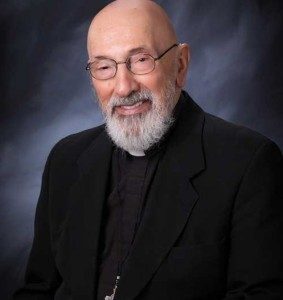
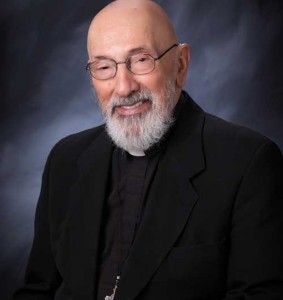
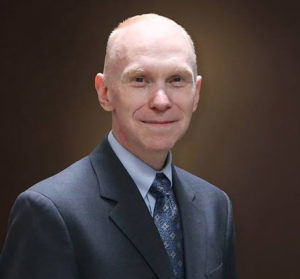
Msgr. John A. Esseff is a Roman Catholic priest in the Diocese of Scranton.   Msgr. Esseff served as a retreat director and confessor to St. Teresa of Calcutta.    He continues to offer direction and retreats for the sisters of the Missionaries of Charity around the world.  Msgr. Esseff encountered St.  Padre Pio,  who would become a spiritual father to him.  He has lived in areas around the world,  serving in the Pontifical missions, a Catholic organization established by Pope St. John Paul II to bring the Good News to the world especially to the poor.  Msgr. Esseff assisted the founders of the Institute for Priestly Formation and continues to serve as a spiritual director for the Institute.  He continues to serve as a retreat leader and director to bishops, priests and sisters and seminarians, and other religious leaders around the world.  
St. John of the Cross with Dr. Anthony Lilles – Beginning to Pray Special – Discerning Hearts Podcast

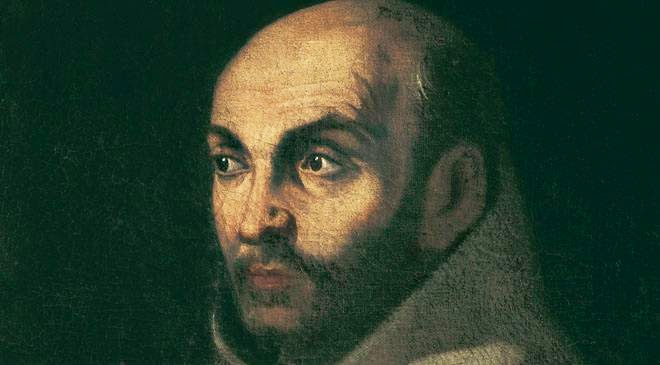
St. John of the Cross with Dr. Anthony Lilles – Beginning to Pray Special

Dr. Anthony Lilles and Kris McGregor discuss the lives and spiritual collaboration of St. John of the Cross and St. Teresa of Avila. St. John initially felt called to the contemplative Carthusian life but was profoundly influenced by St. Teresa, who encouraged him to join her in reforming the Carmelite Order. This reform emphasized mental prayer and community-focused contemplation as essential for personal holiness and the renewal of the Church. Despite their contrasting personalities—St. Teresa being a dynamic and joyful leader, and St. John a contemplative theologian—they shared a deep spiritual connection. Their collaboration enriched the Carmelite charism, providing a model of complementarity and mutual respect in the pursuit of holiness.

There were many challenges St. John of the Cross faced, including misunderstandings and exile, yet his writings, such as The Living Flame of Love, reveal his profound hope and love for God, even in suffering and death. There is an enduring relevance of their spiritual teachings, which encourage intimacy with Christ and fidelity to one’s vocation.

t. Teresa and St. John’s legacy, rooted in prayer and theological depth, continues to inspire those seeking a deeper union with God.


Discerning Hearts Reflection Questions

  1. The Role of Community in Spiritual Growth: How does the emphasis on community life in the Carmelite reform challenge or deepen your understanding of supporting others in their spiritual journey?
  2. Balancing Contemplation and Action: How can you integrate the Carmelite focus on mental prayer with the Jesuit call to active service in your daily life?
  3. Responding to Misunderstanding and Suffering: What can St. John of the Cross teach you about trusting God amid misunderstandings, rejection, or personal struggles?
  4. Spiritual Direction and Obedience: How does the relationship between St. Teresa and St. John of the Cross inspire your approach to spiritual mentorship or being mentored?
  5. The Complementarity of Vocations: In what ways can you appreciate and support the diversity of vocations and spiritual charisms within the Church?
  6. The Gift of Hope in Prayer: How does St. John of the Cross’s hope and longing for God in his final days encourage you to remain steadfast in your faith journey?
  7. Relevance of Mental Prayer Today: How can the Carmelite emphasis on deep intimacy with God through prayer be incorporated into the modern challenges of your life?

St. John of the Cross

For The Ascent of Mt. Carmel Audio Book visit this Discerning Hearts page

For commentary on various sections of The Ascent of Mt. Carmel by Dr. Lilles’ visit this Discerning Hearts page


Anthony Lilles, S.T.D. is an associate professor and the academic dean of Saint John’s Seminary in Camarillo as well as the academic advisor for Juan Diego House of Priestly Formation for the Archdiocese of Los Angeles. For over twenty years he served the Church in Northern Colorado where he joined and eventually served as dean of the founding faculty of Saint John Vianney Theological Seminary in Denver. Through the years, clergy, seminarians, religious and lay faithful have benefited from his lectures and retreat conferences on the Carmelite Doctors of the Church and the writings of St. Elisabeth of the Trinity.

SISL16 – Growth – Struggles in the Spiritual Life with Fr. Timothy Gallagher – Discerning Hearts Catholic Podcasts

Growth – Struggles in the Spiritual Life with Fr. Timothy Gallagher O.M.V.

Fr. Timothy Gallagher and Kris McGregor explore the spiritual challenges faced during prayer, using Cathy’s journey as a case study to illustrate how prayer evolves over time.

Cathy initially experiences deep spiritual consolation and healing by using reflective and imaginative methods of Ignatian prayer. However, as her prayer life matures, she finds these approaches less fulfilling and even distracting. This shift leads her to wonder if she’s praying incorrectly. Cathy’s transition to a simpler, quieter form of prayer reflects spiritual growth rather than failure. Drawing an analogy to the deepening intimacy in a long marriage, he emphasizes that prayer, at its core, is a relationship with God, and Cathy’s increasing desire for silent communion signifies a deeper, richer connection with Him.

This simplification of prayer is a natural progression for those who persevere in their spiritual journey. Whether through contemplative silence, liturgical prayer like the Liturgy of the Hours, or cherished devotions like the Rosary, the key is fidelity to daily prayer and attentiveness to the heart’s movement toward God. Changes in prayer experiences are opportunities for growth and invites them to seek guidance, such as through spiritual direction, to navigate transitions. Perseverance remains the essential virtue that ensures continued progress toward a closer relationship with God.

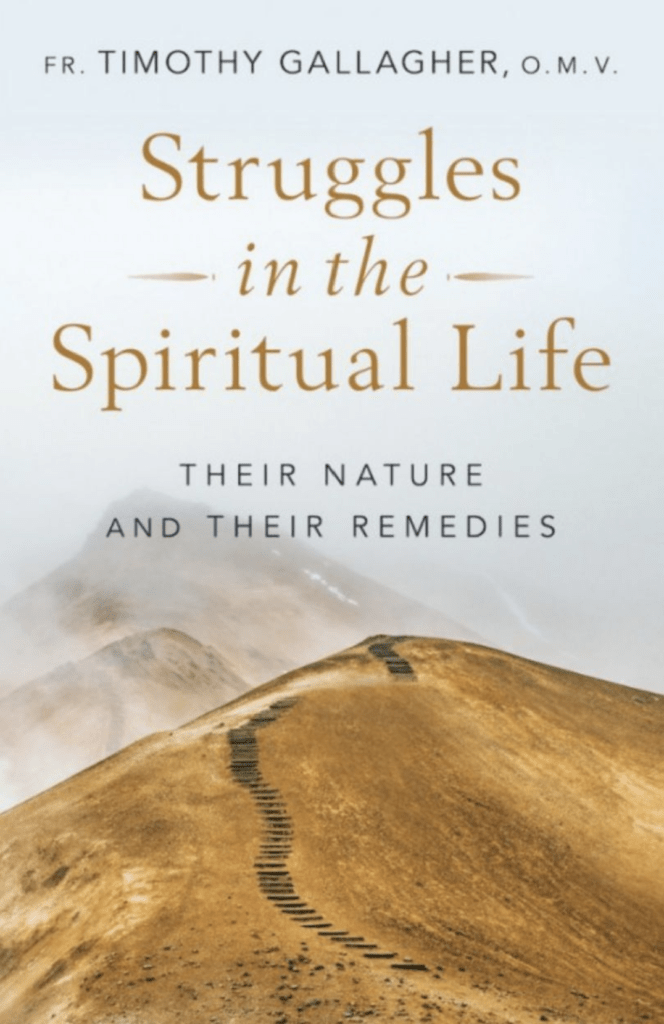
You can pick up a copy of the book here.


Discerning Hearts Reflection Questions

  1. What is the Role of Consolation and Desolation in Prayer? How can experiences of consolation and desolation guide your spiritual growth and reliance on God?
  2. How Does Perseverance Shape Your Prayer Life? In what ways can remaining faithful to prayer, even during dryness or struggle, deepen your relationship with God?
  3. Is Your Prayer Adapting to Your Spiritual Growth? How might God be inviting you to simplify or change the way you pray as your relationship with Him matures?
  4. How Do You Experience God’s Presence in Silence? What can moments of quiet communion with God teach you about trust and intimacy in your spiritual life?
  5. What Role Does Spiritual Direction Play in Your Journey? How could seeking guidance from a spiritual director help you navigate challenges or transitions in your prayer life?
  6. How Does Group Prayer Complement Personal Prayer? In what ways do communal practices like the Rosary or Liturgy of the Hours support and enrich your individual prayer experiences?
  7. Are You Open to Grace in Unexpected Forms? How can you recognize and embrace God’s work in your life, even in moments of dryness or change in prayer?

An excerpt from the chapter, “Growth”:

“Yes, this situation can be confusing. What is happening in Cathy’s prayer? It has become dry. Is this because she lacks formation (chapter 15), has grown negligent (chapter 16), or has permitted an inconsistency between her life and prayer (chapter 17)? None of this appears to be present: Cathy has received formation in prayer, is faithful to it, and shows no sign of inconsistency between her life and prayer. Yet her prayer is dry. Something else, then, is at work, and in this case, something blessed. Cathy finds herself less drawn than before to reflect on or imagine a scriptural text. She esteems this way of praying and has found it fruitful in the past.

Now, however, when she reflects or imagines, she says that “it felt like work, ‘busier’ than I wanted to be in prayer.” On the other hand, at one point “I let the imagining go and just sat with the Lord. That felt better.” Very likely, Cathy’s prayer is simplifying. At times, her heart desires to relinquish the “busyness” of reflecting and imagining and simply be with the Lord, her heart with his heart, with little activity, simply together in a blessed and loving communion. She fears that when she gives her heart this freedom, she is not really praying — not thinking about the meaning of a text or participating imaginatively as it unfolds.

On the contrary! Cathy, and anyone in her situation, needs to know that this silent, loving communion is genuine prayer.”

Gallagher O.M.V, Fr. Timothy ; Gallagher O.M.V, Fr. Timothy. Struggles in the Spiritual Life: Their Nature and Their Remedies (p. 111). Sophia Institute Press. Kindle Edition.


To find more episodes from this series, visit the Struggles in the Spiritual Life Podcast


From the book’s description:

Here is a powerful, life-changing book that will help you understand and conquer the struggles you face in your spiritual life. It’s a book for those who love the Lord and desire holiness yet often feel adrift or stagnant in their search for spiritual growth.

All of us encounter valleys on our journey with the Lord — those periods of spiritual desolation that are a painful yet unavoidable feature of our prayer life. Spiritual desolation is as complex as we are, so understanding what is happening and responding to it properly are critical to reaching the heights of holiness.

With warmth and understanding, Fr. Gallagher carefully identifies in this book the various forms of spiritual and nonspiritual desolation and supplies the remedy for each. You’ll learn how to discern whether your struggles derive from medical or psychological conditions or whether those struggles are spiritual and permitted by the Lord for reasons of growth. In each case, you’ll be given the remedy for the struggle. You’ll also learn the forms of spiritual dryness and of the Dark Night — and how to respond to them.

In chapter after chapter, Fr. Gallagher presents a particular struggle as experienced by fictional characters and then provides the advice he gives to those who come to him for spiritual direction about that struggle. You’ll gain confidence as you journey through desolation, and you’ll learn to reject the enemy’s ploys to infect you with a sense of hopelessness.


Did you know that Fr. Timothy Gallagher has 14 different podcast series on Discerning Hearts Catholic Podcasts?
Visit here to discover more!

Our Lady of Guadalupe – Building a Kingdom of Love with Msgr. John Esseff – Discerning Hearts Podcast

Our Lady of Guadalupe – Building a Kingdom of Love with Msgr. John Esseff

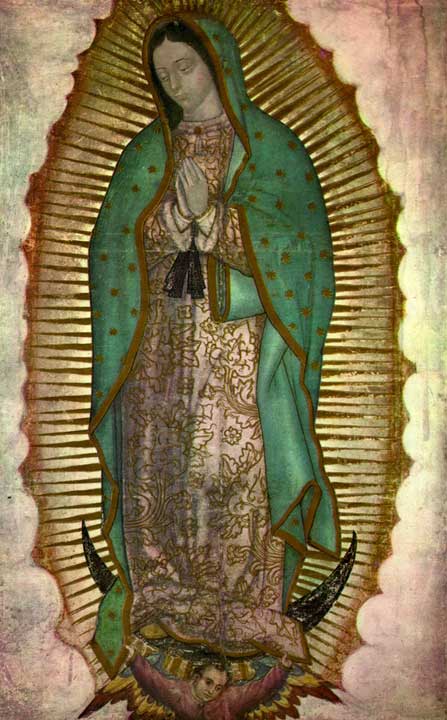
Msgr. Esseff reflects on the profound significance of Our Lady of Guadalupe and her universal message of love and protection, using the historical and spiritual context of her apparition to St. Juan Diego in 1531.

At a time when the Church in Europe was losing members, her presence in the Americas brought millions into the faith, symbolizing renewal and hope. The miraculous image imprinted on Juan Diego’s tilma continues to inspire devotion and is seen as a unifying force for the Church in the Americas.

There is a simplicity and power in Our Lady’s message to Juan Diego: trust in her as a loving mother who intercedes for all her children. He encourages listeners to see themselves in Juan Diego’s humility and to recognize their own unique role in sharing her love. She is the epicenter of unity for North and South America, calling Catholics to foster greater solidarity with one another. U


Discerning Hearts Reflection Questions

  1. Recognizing Mary’s Maternal Love: How do you experience Mary’s love and protection in your own life, especially during times of difficulty?
  2. Trusting in Humility: Like St. Juan Diego, how can you embrace humility and trust in God’s plans, even when you feel unworthy or insignificant?
  3. Unity Across the Americas: How does Our Lady of Guadalupe inspire you to foster solidarity and connection with Catholics across North and South America?
  4. Embracing Simplicity in Faith: What simple but powerful ways can you live out Mary’s message of love and care in your daily life?
  5. Preparing for Christmas: How can Mary’s presence and example guide you in drawing closer to Christ during this Advent season?

First Reading RV 11:19A; 12:1-6A, 10AB

“God’s temple in heaven was opened,
and the ark of his covenant could be seen in the temple.

A great sign appeared in the sky, a woman clothed with the sun,
with the moon under her feet,
and on her head a crown of twelve stars.
She was with child and wailed aloud in pain as she labored to give birth.
Then another sign appeared in the sky;
it was a huge red dragon, with seven heads and ten horns,
and on its heads were seven diadems.
Its tail swept away a third of the stars in the sky
and hurled them down to the earth.
Then the dragon stood before the woman about to give birth,
to devour her child when she gave birth.
She gave birth to a son, a male child,
destined to rule all the nations with an iron rod.
Her child was caught up to God and his throne.
The woman herself fled into the desert
where she had a place prepared by God.

Then I heard a loud voice in heaven say:
“Now have salvation and power come,
and the Kingdom of our God
and the authority of his Anointed.”

From the Office of Readings:

From a report by Don Antonio Valeriano, a Native American author of the sixteenth century
(Nicon Mopohua, 12th ed., 3-9, 21)

The Voice of the Turtledove has been heard in our land

At daybreak one Saturday morning in 1531, on the very first days of the month of December, an Indian named Juan Diego was going from the village where he lived to Tlatelolco in order to take part in divine worship and listen to God’s commandments. When he came near the hill called Tepeyac, dawn had already come, and Juan Diego heard someone calling him from the very top of the hill: “Juanito, Juan Dieguito.”

He went up the hill and caught sight of a lady of unearthly grandeur whose clothing was as radiant as the sun. She said to him in words both gentle and courteous: “Juanito, the humblest of my children, know and understand that I am the ever virgin Mary, Mother of the true God through whom all things live. It is my ardent desire that a church be erected here so that in it I can show and bestow my love, compassion, help, and protection to all who inhabit this land and to those others who love me, that they might call upon and confide in me. Go to the Bishop of Mexico to make known to him what I greatly desire. Go and put all your efforts into this.”

When Juan Diego arrived in the presence of the Bishop, Fray Juan de Zumarraga, a Franciscan, the latter did not seem to believe Juan Diego and answered: “Come another time, and I will listen at leisure.”

Juan Diego returned to the hilltop where the Heavenly Lady was waiting, and he said to her: “My Lady, my maiden, I presented your message to the Bishop, but it seemed that he did not think it was the truth. For this reason I beg you to entrust your message to someone more illustrious who might convey it in order that they may believe it, for I am only an insignificant man.”

She answered him: “Humblest of my sons, I ask that tomorrow you again go to see the Bishop and tell him that I, the ever virgin holy Mary, Mother of God, am the one who personally sent you.”

But on the following day, Sunday, the Bishop again did not believe Juan Diego and told him that some sign was necessary so that he could believe that it was the Heavenly Lady herself who sent him. And then he dismissed Juan Diego.

On Monday Juan Diego did not return. His uncle, Juan Bernardino, became very ill, and at night asked Juan to go to Tlatelolco at daybreak to call a priest to hear his confession.

Juan Diego set out on Tuesday, but he went around the hill and passed on the other side, toward the east, so as to arrive quickly in Mexico City and to avoid being detained by the Heavenly Lady. But she came out to meet him on that side of the hill and said to him: “Listen and understand, my humblest son. There is nothing to frighten and distress you. Do not let your heart be troubled, and let nothing upset you. Is it not I, your Mother, who is here? Are you not under my protection? Are you not, fortunately, in my care? Do not let your uncle’s illness distress you. It is certain that he has already been cured. Go up to the hilltop, my son, where you will find flowers of various kinds. Cut them, and bring them into my presence.”

When Juan Diego reached the peak, he was astonished that so many Castilian roses had burst forth at a time when the frost was severe. He carried the roses in the folds of his tilma (mantle) to the Heavenly Lady. She said to him: “My son, this is the proof and the sign which you will bring to the Bishop so that he will see my will in it. You are my ambassador, very worthy of trust.”

Juan Diego set out on his way, now content and sure of succeeding. On arriving in the Bishop’s presence, he told him: “My lord, I did what you asked. The Heavenly Lady complied with your request and fulfilled it. She sent me to the hilltop to cut some Castilian roses and told me to bring them to you in person. And this I am doing, so that you can see in them the sign you seek in order to carry out her will. Here they are; receive them.”

He immediately opened up his white mantle, and as all the different Castilian roses scattered to the ground, there was drawn on the cloak and suddenly appeared the precious image of the ever virgin Mary, Mother of God, in the same manner as it is today and is kept in her shrine of Tepeyac.

The whole city was stirred and came to see and admire her venerable image and to offer prayers to her; and following the command which the same Heavenly Lady gave to Juan Bernardino when she restored him to health, they called her by the name that she herself had used: “the ever virgin holy Mary of Guadalupe.”


fdsfsd

SJC4 – Pure Faith in Contemplative Prayer – St. John of the Cross with Fr. Donald Haggerty – Discerning Hearts Podcast


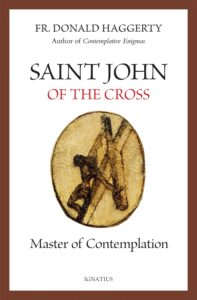
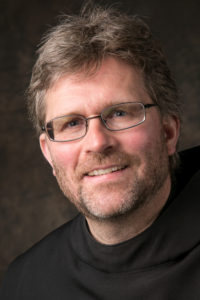
Pure Faith in Contemplative Prayer – St. John of the Cross: Master of Contemplation with Fr. Donald Haggerty

Fr. Haggerty explains the natural evolution of prayer, such as the Rosary, which may simplify over time as the soul becomes more attuned to God. This simplification reflects a deeper spiritual maturity, where prayer focuses less on intellectual or visual stimulation and more on surrender and love.

Faith and love guide us through the “darkness” of contemplation, leading the soul toward a hidden encounter with God. He shares the image of a blind man led by faith and love to illustrate the trust and surrender needed in the contemplative journey.

There are challenges in solitary prayer, and we must be cautious of self-oriented desires for spiritual experiences. True contemplative prayer involves surrendering expectations and allowing God to guide the soul in unpredictable ways.  This profound journey of prayer is not about techniques or methods but a personal encounter with God, supported by silence and the fruits of love and service.


Discerning Hearts Reflection Questions

  1. Simplicity in Prayer: How has your prayer life evolved over time, and do you find yourself drawn toward a simpler, more heartfelt approach?
  2. Faith and Love as Guides: In what ways do you trust faith and love to lead you through spiritual darkness or uncertainty in your journey with God?
  3. Encounter vs. Knowledge: Do you prioritize knowing about God intellectually, or do you seek a deeper, personal encounter with His presence in your prayer?
  4. Authentic Transformation: How does your prayer life inspire changes in your daily actions, particularly in demonstrating greater love, humility, and charity?
  5. Surrendering Expectations: Are you willing to let go of specific expectations or desired experiences in prayer to allow God to work freely within you?
  6. Silent Commitment: How can you incorporate moments of silence into your daily routine to foster a deeper relationship with God?
  7. Seeing Christ in Others: How do you encounter Christ in the poor, the suffering, or those in need around you, and how does this shape your spiritual life?
  8. Praying for Others: Is your prayer life marked by acts of charity, such as interceding for strangers, the dying, or those in crisis, beyond your personal intentions?
  9. Avoiding Spiritual Self-Absorption: How can you ensure that your prayer does not become self-focused but remains a genuine offering of love and surrender to God?
  10. Living the Fruits of the Spirit: What evidence of the fruits of the Spirit—like peace, patience, and kindness—do you see as a result of your contemplative practices?

An excerpt from St. John of the Cross: Master of Contemplation

“In this case, under the influence of deeper faith, the cooperation involves a mortification by the intellect: an emptying of the desire for spiritual gratifications that can be enjoyed by the intellect in the life of prayer. These can be sought in a way that becomes an impediment to the pure pursuit of God for himself alone. A “complete pacification of the spiritual house” (AMC 2.1.2) is required that will “quiet down” the impulse to pursue experiences of an intellectual or imaginative satisfaction in prayer. This “ascetical” task for the intellect in the interior life of prayer entails, in a telling phrase, “the negation through pure faith of all the spiritual faculties and gratifications and appetites” (AMC 2.1.2). What this “pure faith” will mean as a virtue of the intellect in contemplation needs to be explained with some care. For the intellect must cooperate in its own purification precisely through this exercise of pure faith. Taking us farther along in explanation, and referring to the stanza of his poem, Saint John of the Cross comments: “The soul, consequently, affirms that it departed ‘in darkness, and secure.’ For anyone fortunate enough to possess the ability to journey in the obscurity of faith, as do the blind with their guide, and depart from all natural phantasms [images] and intellectual reasonings, walks securely. . . . For the less a soul works with its own abilities, the more securely it proceeds, because its progress in faith is greater” (AMC 2.1.2, 3).”

Haggerty, Donald. Saint John of the Cross: Master of Contemplation (pp. 67-68). Ignatius Press. Kindle Edition.


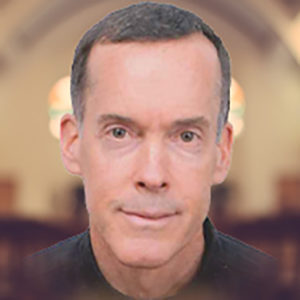
For more episodes in this series visit Fr. Haggerty’s Discerning Hearts page here


You find the book on which this series is based here.

The Gift of Holiness at Christmas with Fr. Mauritius Wilde O.S.B. – Discerning Hearts Podcast


The Gift of Holiness at Christmas with Fr. Mauritius Wilde O.S.B.

This reflection was given during a special advent evening of prayer and meditation service at St. Margaret Mary’s Church, in Omaha, NE.

Fr. Mauritius Wilde reflects on the joy and love that naturally accompany creativity, whether through artistic endeavors, parenting, or spiritual growth. Connecting human creativity to the divine, he illustrates how God’s act of creation in Genesis reflects His delight in what He has made.

Just as we love the fruits of our labor or gaze lovingly upon our children, God looks at us with unwavering love, marveling at His creation. Through Jesus Christ, the perfect image of God, we are invited to embrace this divine love and strive toward holiness, becoming more fully aligned with God’s image through grace and spiritual growth.

Advent is an invitation to focus on Christ’s transformative gift of holiness. Drawing on the wisdom of Meister Eckhart, Fr. Mauritius likens God to a sculptor, who patiently removes what obscures His image within us. Fr. Wilde encourages listeners to embrace this process of refinement by being actively receptive to God’s grace.

Holiness is not about striving for perfection on our own but about allowing God to work in us, making His image shine more fully.


Discerning Hearts Reflection Questions

  1. How Do I See My Creative Work? Reflect on whether you view your creative efforts as a participation in God’s creative power and a way to glorify Him.
  2. Do I Recognize God’s Delight in Me? Consider how often you acknowledge God’s loving gaze upon you as His beloved creation.
  3. What Does Holiness Mean in My Life? Ponder how you can actively embrace the grace of God to become a clearer image of His holiness.
  4. Am I Open to God’s Transformative Work? Reflect on your willingness to let God sculpt and refine you, removing what obscures His image.
  5. How Do I Prepare for Christ at Advent? Evaluate whether your Advent practices focus on deepening your relationship with Christ rather than external busyness.

Father Mauritius Wilde, OSB, Ph.D., did his philosophical, theological and doctoral studies in Europe. He is the author of several books and directs retreats regularly. He serves as Prior at Sant’Anselmo in Rome.

The Immaculate Conception – Building a Kingdom of Love with Msgr. John Esseff – Discerning Hearts Podcast

The Immaculate Conception – Building a Kingdom of Love with Msgr. John Esseff

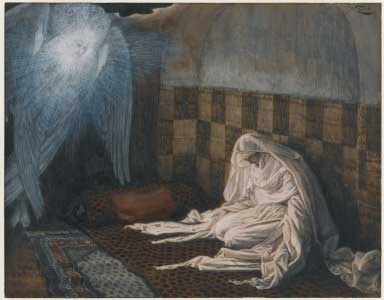
On the the Solemnity of the Immaculate Conception, Msgr. Esseff reflects on the significance of the Immaculate Conception of Mary within the broader plan of salvation history. He uses Genesis, Ephesians, and the Gospel of Luke to show us God’s eternal plan to reconcile humanity with Himself through Jesus Christ. Humanity’s fall through Adam and Eve introduced sin and death into the world, but God’s response was the plan of redemption, preordained before creation, culminating in the birth of Christ. Mary, conceived without sin, is presented as the new Eve, uniquely chosen to bring Jesus into the world. Her “yes” to the angel Gabriel is seen as a pivotal moment in God’s plan, countering the disobedience of the first parents and initiating the ultimate defeat of sin, Satan, and death.

Through Jesus’ suffering, death, and resurrection, humanity is adopted as children of God and incorporated into Christ’s body, the Church. He encourages us to see the Immaculate Conception as a profound reminder of God’s love and the invitation to holiness.


Discerning Hearts Reflection Questions

  1. God’s Eternal Plan: How does reflecting on God’s plan for redemption before creation deepen your trust in His providence?
  2. The Fall and Redemption: In what ways can recognizing the effects of original sin in your life inspire a greater appreciation for Christ’s saving work?
  3. Mary’s Role in Salvation: How does the Immaculate Conception help you understand Mary’s unique role in God’s plan and her intercession for you?
  4. Adoption in Christ: What does it mean to you personally to be adopted into God’s family through Jesus Christ?
  5. Living as the Body of Christ: How can you live more fully as a member of Christ’s body, united with Him and His Church?
  6. Advent Preparation: In this Advent season, how are you preparing your heart to welcome Christ more fully into your life?
  7. Power of the Holy Spirit: How do you experience the Holy Spirit working in your life to bring about holiness and transformation?
  8. Contemplating Mary’s Example: How can Mary’s fiat, her “yes” to God, inspire you to trust and surrender to His will in your own life?

Reading 1: Gn 3:9-15, 20

“After the man, Adam, had eaten of the tree,
the LORD God called to the man and asked him, “Where are you?”
He answered, “I heard you in the garden;
but I was afraid, because I was naked,
so I hid myself.”
Then he asked, “Who told you that you were naked?
You have eaten, then,
from the tree of which I had forbidden you to eat!”
The man replied, “The woman whom you put here with me
she gave me fruit from the tree, and so I ate it.”
The LORD God then asked the woman,
“Why did you do such a thing?”
The woman answered, “The serpent tricked me into it, so I ate it.”Then the LORD God said to the serpent:
“Because you have done this, you shall be banned
from all the animals
and from all the wild creatures;
on your belly shall you crawl,
and dirt shall you eat
all the days of your life.
I will put enmity between you and the woman,
and between your offspring and hers;
he will strike at your head,
while you strike at his heel.”The man called his wife Eve,
because she became the mother of all the living.”


Reading 2 Eph 1:3-6, 11-12

Brothers and sisters:
Blessed be the God and Father of our Lord Jesus Christ,
who has blessed us in Christ
with every spiritual blessing in the heavens,
as he chose us in him, before the foundation of the world,
to be holy and without blemish before him.
In love he destined us for adoption to himself through Jesus Christ,
in accord with the favor of his will,
for the praise of the glory of his grace
that he granted us in the beloved.

In him we were also chosen,
destined in accord with the purpose of the One
who accomplishes all things according to the intention of his will,
so that we might exist for the praise of his glory,
we who first hoped in Christ.


Gospel: Lk 1:26-38

“The angel Gabriel was sent from God
to a town of Galilee called Nazareth,
to a virgin betrothed to a man named Joseph,
of the house of David,
and the virgin’s name was Mary.
And coming to her, he said,
“Hail, full of grace! The Lord is with you.”
But she was greatly troubled at what was said
and pondered what sort of greeting this might be.
Then the angel said to her,
“Do not be afraid, Mary,
for you have found favor with God.
Behold, you will conceive in your womb and bear a son,
and you shall name him Jesus.
He will be great and will be called Son of the Most High,
and the Lord God will give him the throne of David his father,
and he will rule over the house of Jacob forever,
and of his Kingdom there will be no end.”
But Mary said to the angel,
“How can this be,
since I have no relations with a man?”
And the angel said to her in reply,
“The Holy Spirit will come upon you,
and the power of the Most High will overshadow you.
Therefore the child to be born
will be called holy, the Son of God.
And behold, Elizabeth, your relative,
has also conceived a son in her old age,
and this is the sixth month for her who was called barren;
for nothing will be impossible for God.”
Mary said, “Behold, I am the handmaid of the Lord.
May it be done to me according to your word.”
Then the angel departed from her.”

Lectionary for Mass for Use in the Dioceses of the United States, second typical edition, Copyright © 2001, 1998, 1997, 1986, 1970 Confraternity of Christian Doctrine


Msgr. John A. Esseff is a Roman Catholic priest in the Diocese of Scranton.  Msgr. Esseff served as a retreat director and confessor to St. Teresa of Calcutta.    He continues to offer direction and retreats for the sisters of the Missionaries of Charity around the world.  Msgr. Esseff encountered St.  Padre Pio,  who would become a spiritual father to him.  He has lived in areas around the world,  serving in the Pontifical missions, a Catholic organization established by Pope St. John Paul II to bring the Good News to the world, especially to the poor.  Msgr. Esseff assisted the founders of the Institute for Priestly Formation and continues to serve as a spiritual director for the Institute.  He continues to serve as a retreat leader and director to bishops, priests and sisters and seminarians, and other religious leaders around the world.  
The Second Sunday of Advent – Building a Kingdom of Love with Msgr. John Esseff – Discerning Hearts Podcast

The Second Sunday of Advent – Building a Kingdom of Love with Msgr. John Esseff

On the Second Sunday of Advent, Msgr. John Esseff focuses on Advent as a season of hope, preparation, and trust in God. Reflecting on Mary’s surrender during the Annunciation and as the ultimate model of faith and dependence on God. Msgr. Esseff reminds us of the transformative power of repentance, faith, and love; using a moving testimony of a woman miraculously healed at Lourdes underscores the greater miracle of selfless love and intercessory prayer for others.

The scriptural themes of redemption urge us to live courageously and joyfully as the “new Jerusalem,” radiating God’s glory. We must have confidence in Christ’s victory, encouraging listeners to embrace the sacraments and prepare for the Lord’s coming with renewed faith.


Discerning Hearts Reflection Questions

  1. Faith in Surrender: How can Mary’s complete trust in God inspire you to surrender your fears and uncertainties to His will?
  2. Trust in God’s Providence: In what areas of your life do you need to let go of self-reliance and place total dependence on God?
  3. Love as a Miracle: How does the testimony of selfless prayer and intercession challenge you to prioritize the needs of others in your relationship with God?
  4. Advent Preparation: How are you preparing your heart during this Advent season to welcome Christ with joy and trust?
  5. Living the Beatitudes: How can you embrace the struggles and challenges in your life as opportunities to live out the Beatitudes with faith and courage?
  6. Joy Amidst Suffering: What steps can you take to find joy and hope in God’s promises, even during times of personal or communal suffering?
  7. Being the New Jerusalem: How can you reflect God’s light and love in your daily actions, becoming a witness to His glory and redemption?
  8. Embracing the Sacraments: How do the Eucharist and other sacraments strengthen your faith and empower you to live as a disciple of Christ?

Reading 1 LUKE 3:1-6

In the fifteenth year of the reign of Tiberius Caesar,
when Pontius Pilate was governor of Judea,
and Herod was tetrarch of Galilee,
and his brother Philip tetrarch of the region
of Ituraea and Trachonitis,
and Lysanias was tetrarch of Abilene,
during the high priesthood of Annas and Caiaphas,
the word of God came to John the son of Zechariah in the desert.
John went throughout the whole region of the Jordan,
proclaiming a baptism of repentance for the forgiveness of sins,
as it is written in the book of the words of the prophet Isaiah:
A voice of one crying out in the desert:
“Prepare the way of the Lord,
make straight his paths.
Every valley shall be filled
and every mountain and hill shall be made low.
The winding roads shall be made straight,
and the rough ways made smooth,
and all flesh shall see the salvation of God.”


Msgr. John A. Esseff is a Roman Catholic priest in the Diocese of Scranton.  Msgr. Esseff served as a retreat director and confessor to St. Teresa of Calcutta.    He continues to offer direction and retreats for the sisters of the Missionaries of Charity around the world.  Msgr. Esseff encountered St.  Padre Pio,  who would become a spiritual father to him.  He has lived in areas around the world,  serving in the Pontifical missions, a Catholic organization established by Pope St. John Paul II to bring the Good News to the world, especially to the poor.  Msgr. Esseff assisted the founders of the Institute for Priestly Formation and continues to serve as a spiritual director for the Institute.  He continues to serve as a retreat leader and director to bishops, priests and sisters and seminarians, and other religious leaders around the world.  
SJC3 – Contemplative Faith: Certitude in Darkness – St. John of the Cross with Fr. Donald Haggerty – Discerning Hearts Podcast


Contemplative Faith: Certitude in Darkness – St. John of the Cross: Master of Contemplation with Fr. Donald Haggerty

Fr. Haggerty and Kris McGregor discuss the interconnectedness of saints, using examples like St. Thérèse of Lisieux, who embraced St. John’s teachings, influencing others like St. Teresa of Calcutta. Pope St. John Paul II’s deep engagement with St. John’s work, particularly his doctoral dissertation on the experiential impact of faith, which explores how deeper prayer transforms our understanding of God’s presence and our relationship with Him.

Contemplative prayer leads to greater certitude in faith, even as it brings “darkness” to the intellect, requiring trust in God’s unseen presence. This shift often involves a loss of emotional consolations or insights but marks an entry into the mystery of God’s indwelling presence. He encourages integrating scripture into prayer to listen to God’s timeless word personally. As prayer life matures, it becomes simpler yet more profound, as seen in devotions like the Rosary.

The journey of contemplation, marked by silence, trust, and receptivity, deepens our love and union with God, transforming both prayer and life itself.


Discerning Hearts Reflection Questions

  1. 1. The Influence of Saints: How do the lives and teachings of saints inspire and shape your own spiritual journey?
  2. 2. Trust in God’s Presence: In moments of silence or spiritual “darkness,” how do you deepen your trust in God’s unseen presence?
  3. 3. Scripture as Living Word: How can you integrate scripture into your prayer life to hear God speaking personally to you?
  4. 4. Simplicity in Prayer: As you grow in faith, how can you embrace simplicity and childlike trust in your prayer practices?
  5. 5. Transition in Spiritual Life: How do you respond to changes in your prayer experience, such as the loss of emotional consolations or vivid insights?
  6. 6. Certitude vs. Clarity: How does your faith sustain you when certainty in God’s presence doesn’t bring intellectual or emotional clarity?
  7. 7. Role of Contemplative Prayer: How does contemplative prayer deepen your awareness of God’s indwelling presence in your life?

An excerpt from St. John of the Cross: Master of Contemplation 

“What can be the reason for this experience in prayer? Saint John of the Cross affirms that supernatural faith, inasmuch as it places us in an immediate contact with God, affects the intellect in a strangely painful way with the onset of contemplative graces. The truths of revelation that the intellect embraces in faith now seem to surpass comprehension in a manner unlike any previous experience in prayer. A deeper understanding of theological faith can explain why this occurs. It is inadequate to conceive of our faith as simply an assent by our mind to truths that are then held securely with personal conviction. This is not at all the full picture. On a very personal level, in our relations with God himself, faith is a kind of real conduit into the actual mystery of God. As a theological virtue, it unites the intellect quite directly and immediately to the mystery of God. The effect of this union, depending on a soul’s closeness to God, is to stretch the intellect beyond what it can assimilate in its natural capacity. The result in the time of interior prayer is a painful experience of obscurity within the intellect toward the God of ultimate mystery known personally in faith. This is not an experience of dark doubts about God. Rather, it is as though a light has begun to shine too brightly, preventing our eyes from seeing what is there in front of us. The closer we approach the light of God, the more his presence blinds us. The ordinary act of comprehension in regard to natural objects of knowledge does not function in this way. But when the knowledge is of God himself in his immediate personal presence to the soul, the consequence is vastly different.”

Haggerty, Donald. Saint John of the Cross: Master of Contemplation (pp. 67-68). Ignatius Press. Kindle Edition.


For more episodes in this series visit Fr. Haggerty’s Discerning Hearts page here


You find the book on which this series is based here.

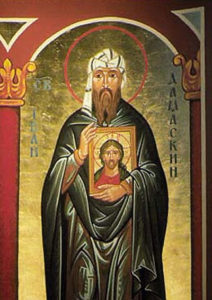
St. John Damascene, Pt. 2 – The Doctors of the Church: The Charism of Wisdom with Dr. Matthew Bunson – Discerning Hearts Podcast

St. John Damascene, Pt. 2 – The Doctors of the Church: The Charism of Wisdom with Dr. Matthew Bunson

  • Born: 676 AD, Damascus, Syria
  • Died: December 4, 749 AD, Mar Saba, Jordan

Dr. Matthew Bunson and Kris McGregor continue exploring the life and contributions of St. John Damascene and his role in the defense of sacred icons during the Byzantine Empire’s iconoclastic controversies. St. John’s theological insights on the veneration of images, emphasizing the distinction between worship (latria) due to God alone and veneration (dulia) offered to saints and holy images as reminders of divine truths. St. John defended the sacredness of matter, rooted in the Incarnation, and argued that icons served as tangible connections to the divine, much like family photographs evoke deep personal memories. His work helped preserve the Church’s understanding of creation’s goodness and the role of art in theological expression.

The episode also delves into St. John’s influence on Marian doctrine, notably his title as the “Doctor of the Assumption.” His writings laid the foundation for the dogma of the Assumption defined in 1950, emphasizing Mary’s unique role as Theotokos (God-bearer) and her assumption as a reflection of her purity and divine mission. St. John’s broader legacy as a poet, theologian, and champion of Christian art, whose insights remain relevant for understanding the interplay between faith, art, and devotion. His contributions, translated into various languages, continue to resonate universally, reflecting the timeless and inclusive nature of the Church’s teachings.


Discerning Hearts Reflection Questions

  1. The Role of Sacred Art in Faith: How do icons and sacred images deepen your understanding and experience of God’s presence in creation?
  2. Veneration vs. Worship: How can you better explain the distinction between veneration of saints and worship of God to those unfamiliar with Catholic teaching?
  3. Theology of Creation and Incarnation: In what ways does recognizing the goodness of matter enhance your appreciation of Christ’s Incarnation and the sacraments?
  4. Marian Devotion and Christology: How does reflecting on Mary’s role as Theotokos help you grow closer to Jesus and understand His divine mission?
  5. Memory and Holiness: How can sacred art or practices of remembrance inspire you to follow the example of saints in your daily life?
  6. Faith Amid Controversy: How can the courage of figures like St. John Damascene inspire you to stand firm in defending your faith traditions in the face of challenges?
  7. Unity of Truth and Beauty: How does the universality of sacred art and theology affirm your belief in the Church’s mission to reach all cultures and generations?

From Vatican.va, an excerpt from the teachings of Pope Benedict XVI General Audience 2008:

“St. John Damascene extends these fundamental ideas to the veneration of the relics of Saints, on the basis of the conviction that the Christian Saints, having become partakers of the Resurrection of Christ, cannot be considered simply “dead”. Numbering, for example, those whose relics or images are worthy of veneration, John states in his third discourse in defence of images: “First of all (let us venerate) those among whom God reposed, he alone Holy, who reposes among the Saints (cf. Is 57: 15), such as the Mother of God and all the Saints. These are those who, as far as possible, have made themselves similar to God by their own will; and by God’s presence in them, and his help, they are really called gods (cf. Ps 82[81]: 6), not by their nature, but by contingency, just as the red-hot iron is called fire, not by its nature, but by contingency and its participation in the fire. He says in fact : you shall be holy, because I am Holy (cf. Lv 19: 2)” (III, 33, col. 1352 a). After a series of references of this kind, John Damascene was able serenely to deduce: “God, who is good, and greater than any goodness, was not content with the contemplation of himself, but desired that there should be beings benefited by him, who might share in his goodness: therefore he created from nothing all things, visible and invisible, including man, a reality visible and invisible. And he created him envisaging him and creating him as a being capable of thought (ennoema ergon), enriched with the word (logo[i] sympleroumenon), and orientated towards the spirit (pneumati teleioumenon)” (II, 2, pg 94, col. 865a). And to clarify this thought further, he adds: “We must allow ourselves to be filled with wonder (thaumazein) at all the works of Providence (tes pronoias erga), to accept and praise them all, overcoming any temptation to identify in them aspects which to many may seem unjust or iniquitous, (adika), and admitting instead that the project of God (pronoia) goes beyond man’s capacity to know or to understand (agnoston kai akatalepton), while on the contrary only he may know our thoughts, our actions, and even our future” (ii, 29, pg 94, col. 964c). Plato had in fact already said that all philosophy begins with wonder. Our faith, too, begins with wonder at the very fact of the Creation, and at the beauty of God who makes himself visible.The optimism of the contemplation of nature (physike theoria), of seeing in the visible creation the good, the beautiful, the true, this Christian optimism, is not ingenuous: it takes account of the wound inflicted on human nature by the freedom of choice desired by God and misused by man, with all the consequences of widespread discord which have derived from it. From this derives the need, clearly perceived by John Damascene, that nature, in which the goodness and beauty of God are reflected, wounded by our fault, “should be strengthened and renewed” by the descent of the Son of God in the flesh, after God had tried in many ways and on many occasions, to show that he had created man so that he might exist not only in “being”, but also in “well-being” (cf. The Orthodox Faith, II, 1, pg 94, col. 981). With passionate eagerness John explains: “It was necessary for nature to be strengthened and renewed, and for the path of virtue to be indicated and effectively taught (didachthenai aretes hodòn), the path that leads away from corruption and towards eternal life…. So there appeared on the horizon of history the great sea of love that God bears towards man (philanthropias pelagos)”…. It is a fine expression. We see on one side the beauty of Creation, and on the other the destruction wrought by the fault of man. But we see in the Son of God, who descends to renew nature, the sea of love that God has for man. John Damascene continues: “he himself, the Creator and the Lord, fought for his Creation, transmitting to it his teaching by example…. And so the Son of God, while still remaining in the form of God, lowered the skies and descended… to his servants… achieving the newest thing of all, the only thing really new under the sun, through which he manifested the infinite power of God” (III, 1, pg 94, col. 981c-984b).

We may imagine the comfort and joy which these words, so rich in fascinating images, poured into the hearts of the faithful. We listen to them today, sharing the same feelings with the Christians of those far-off days: God desires to repose in us, he wishes to renew nature through our conversion, he wants to allow us to share in his divinity. May the Lord help us to make these words the substance of our lives.”


For more from Dr. Matthew Bunson, check out his Discerning Hearts page.

Dr. Matthew E. Bunson is a Register senior editor and a senior contributor to EWTN News. For the past 20 years, he has been active in the area of Catholic social communications and education, including writing, editing, and teaching on a variety of topics related to Church history, the papacy, the saints and Catholic culture. He is faculty chair at Catholic Distance University, a senior fellow of the St. Paul Center for Biblical Theology, and the author or co-author of over 50 books including The Encyclopedia of Catholic History, The Pope Encyclopedia, We Have a Pope! Benedict XVI, The Saints Encyclopedia and best-selling biographies of St. Damien of Molokai and St. Kateri Tekakwitha.