Sunday of the Thirty-Second Week in Ordinary Time – A Time of Lectio Divina for the Discerning Heart Podcast

Sunday of the Thirty-Second Week in Ordinary Time – A Time of Lectio Divina for the Discerning Heart Podcast

As you begin, take a deep breath and exhale slowly.  For at least the next few moments, surrender all the cares and concerns of this day to the Lord.

Say slowly from your heart “Jesus, I Trust In You…You Take Over”

Become aware that He is with you, looking upon you with love, wanting to be heard deep within in your heart…

From the Holy Gospel According to St. Mark 12:38-44

In his teaching Jesus said, ‘Beware of the scribes who like to walk about in long robes, to be greeted obsequiously in the market squares, to take the front seats in the synagogues and the places of honour at banquets; these are the men who swallow the property of widows, while making a show of lengthy prayers. The more severe will be the sentence they receive.’
  He sat down opposite the treasury and watched the people putting money into the treasury, and many of the rich put in a great deal. A poor widow came and put in two small coins, the equivalent of a penny. Then he called his disciples and said to them, ‘I tell you solemnly, this poor widow has put more in than all who have contributed to the treasury; for they have all put in money they had over, but she from the little she had has put in everything she possessed, all she had to live on.’

What word made this passage come alive for you?

What did you sense the Lord saying to you?

Once more give the Lord an opportunity to speak to you:

In his teaching Jesus said, ‘Beware of the scribes who like to walk about in long robes, to be greeted obsequiously in the market squares, to take the front seats in the synagogues and the places of honour at banquets; these are the men who swallow the property of widows, while making a show of lengthy prayers. The more severe will be the sentence they receive.’
  He sat down opposite the treasury and watched the people putting money into the treasury, and many of the rich put in a great deal. A poor widow came and put in two small coins, the equivalent of a penny. Then he called his disciples and said to them, ‘I tell you solemnly, this poor widow has put more in than all who have contributed to the treasury; for they have all put in money they had over, but she from the little she had has put in everything she possessed, all she had to live on.’

What did your heart feel as you listened?

What did you sense the Lord saying to you?

Once more, through Him, with Him and in Him listen to the Word:

In his teaching Jesus said, ‘Beware of the scribes who like to walk about in long robes, to be greeted obsequiously in the market squares, to take the front seats in the synagogues and the places of honour at banquets; these are the men who swallow the property of widows, while making a show of lengthy prayers. The more severe will be the sentence they receive.’
  He sat down opposite the treasury and watched the people putting money into the treasury, and many of the rich put in a great deal. A poor widow came and put in two small coins, the equivalent of a penny. Then he called his disciples and said to them, ‘I tell you solemnly, this poor widow has put more in than all who have contributed to the treasury; for they have all put in money they had over, but she from the little she had has put in everything she possessed, all she had to live on.’

What touched your heart in this time of prayer?

What did your heart feel as you prayed?

What do you hope to carry with you from this time with the Lord?


Our Father, who art in heaven,

hallowed be thy name.

Thy kingdom come.

Thy will be done on earth, as it is in heaven.

Give us this day our daily bread,

and forgive us our trespasses,

as we forgive those who trespass against us,

and lead us not into temptation,

 but deliver us from evil.

Amen

Excerpt from THE JERUSALEM BIBLE, copyright (c) 1966 by Darton, Longman & Todd, Ltd. and Doubleday, a division of Penguin Random House, Inc. Reprinted by Permission.

SBN2 – What is Death? – Salvation Begins Now: Last Things First with Deacon James Keating – Discerning Hearts Podcast

Episode 2: What is Death? – Salvation Begins Now: Last Things First

Deacon James Keating and Kris McGregor explore deep themes of Catholic theology around death, salvation, and the journey of purification, both in life and after death. Humanity’s fear of death often stems from the fear of isolation, as humans are created for communion with God and each other. Death brings an anxiety rooted in the dread of losing this communion. Purgatory is a continuation of this journey toward holiness. For those who die in God’s friendship but are still imperfect, purgatory allows for the purification needed to enter Heaven’s fullness—a process likened to a “fire” of love that cleanses and prepares the soul for eternal communion.

The Catholic belief that life on earth should be seen as an opportunity for ongoing repentance and purification, reducing the need for purgatory after death. Sin, especially mortal sin, can sever one’s connection to God, while venial sin does not fully break this bond, allowing hope of eventual communion. The Mass is the ultimate prayer of salvation, as it directly connects the faithful to Calvary and Christ’s redemptive love. The Mass is uniquely powerful for praying for deceased loved ones, as it is a touchpoint of divine grace where heaven meets earth. Catholics should continually pray for the deceased, highlighting the importance of love, community, and intercessory prayer in the Church’s understanding of salvation and eternal life.


Discerning Hearts Reflection Questions

  1. Understanding Purgatory’s Purpose – How does viewing purgatory as a relational purification rather than a physical torment change your understanding of its purpose?
  2. Contemplating the Impact of Sin – Reflect on how even “small” sins disrupt the harmony of the Body of Christ and affect your own spiritual health.
  3. Identifying Relational Pain – In what ways have feelings of isolation or confusion about your identity impacted your relationship with God and others?
  4. Embracing the Sacrament of Reconciliation – How might regularly participating in the sacrament of reconciliation deepen your experience of God’s mercy and freedom?
  5. Confronting Fear of Truth – What specific fears or rationalizations have kept you from fully admitting your sins to God in the sacrament of confession?
  6. Learning from the Saints – Who in your life exemplifies holiness, and how can you look to them as a guide toward surrender and abandonment to God?
  7. Trusting in God Through Suffering – How can embracing Christ’s Sacred Heart help you surrender fears about suffering or death and experience God’s peace?
  8. Striving for Earthly Holiness – What steps can you take to start your purification process on earth, inspired by the examples of saints like Mother Teresa and St. John Paul II?

From the Catechism of the Catholic Church:

“1030 All who die in God’s grace and friendship, but still imperfectly purified, are indeed assured of their eternal salvation; but after death they undergo purification, so as to achieve the holiness necessary to enter the joy of heaven.”


Deacon James Keating, Ph.D., is a professor of Spiritual Theology and serves as a spiritual director at Kenrick Glennon Seminary in St. Louis, MO. 

Check out Deacon Keating’s “Discerning Heart” page

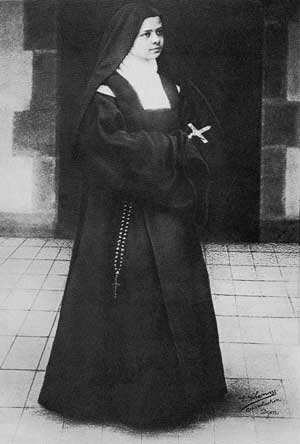
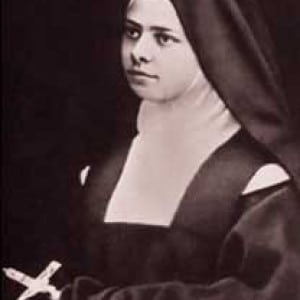
Day 9 – St. Elizabeth of the Trinity Novena – Discerning Hearts Podcast


Day Nine:  For the grace to become the praise of the glory of the Holy Trinity

In the heart of the Holy Trinity, the music of eternal praise echoes without ceasing in an eternal “now.” The Son reveals to the Father His glory in the power of the Holy Spirit and through the Holy Spirit the Father blesses His Son anew. This blessing is not a reality of the past or future, but of the eternal present. This means that this very moment we have together resounds with this canticle of love that the Three Divine Persons share with one another. The world came from this music and is directed to it – and the contemplative soul helps this mystery be realized.

The Praise of Glory. Saint Elizabeth believed that this was her vocation – the secret name that God had given her from all eternity. She believed that Saint Paul had revealed it to her.

In Ephesians, we learn that we have been predestined in Christ, the Beloved of the Father, for this great purpose. This is the Father’s plan of love for us. This praise of glory is what the Holy Spirit produces in us – if we will surrender ourselves completely to His Divine touch.

Saint Elizabeth sees us as musical instruments capable of joining in the Holy Trinity’s this great hymn of praise. This music is beautiful, but to produce it, the Holy Spirit must “tune” us first. This is painful. As long as we get caught up in internal emotional storms or else allow ourselves to be distracted by things that are not God’s will, we are out of tune. Conversely the more our interior life is in harmony with His mystery, the more beautiful the praise we are able to offer.

To ponder this is to begin to understand the last petition of Saint Elizabeth’s prayer to the Trinity – namely – she asks the Trinity to be buried in her so that she might bury herself in the Trinity. To be buried – this speaks about a death and being laid to rest. Saint Elizabeth understands the radical extent to which the Holy Trinity has given itself to humanity. Revealed in Christ crucified and buried in the tomb., the humanity of Christ makes known that God will hold nothing back to rescue us from death and to win our heart to join His eternal praise of glory. She sees her own heart as the tomb in which God has buried Himself. The death of Christ is always personal for her – “He gave Himself for me.”

To accept this gift in a personal way is to be caught up in the mystery of salvation. Just as Jesus was laid in the tomb on Good Friday, the Trinity can come into a soul and rest there in a new way – and the more it rests in the soul, the more that soul has the opportunity to rest in the Trinity. This feels like a total annihilation, but it is a radical identification with Christ’s salvific offering. Just as Jesus transformed His tomb into a sign of victory – He transforms hearts that accept his total gift of love on the Cross. If they will die to themselves, He will give them life. To believe in Jesus is to die to oneself in the Trinity, to be laid to rest in the Trinity, to be buried in the Trinity – in order that the mystery of the Holy Trinity through the life of Christ within might raise one up on high.

In this mystical death, the new life of Christ takes root in our souls.

He is the praise of the Father’s glory and when we die to ourselves, we allow His praise to swell up anew within us. The Holy Spirit “tunes’ our hearts by communicating the whole mystery of Christ into us and identifying all the inner movements of our hearts with the movements of Christ’s. Every thought is captive and every inordinate desire dies away, and our inner strength is perfected. The new desires and glorious thoughts of Christ Himself make it possible to praise the Father as the Risen Lord praises Him together with all of the heavenly hosts. Together, delighting the Heart of the Father anew, we have found a way extend the salvific work of Christ in our lives and in our communities – at a time when our neighbors most need a word of hope. Let us pray that the vocation of Saint Elizabeth of the Trinity becomes our own vocation too – to be this praise of glory.

O My God, Trinity whom I adore, help me to forget myself entirely so as to be established in you as still and as peaceful as if my soul were already in eternity. May nothing be able to disturb my peace, nor make me depart from you, o my Unchanging One, but may each moment carry me further into the depths of your Mystery. Pacify my soul, make it your heaven, your beloved abode, your resting place. May I never leave you there alone, but may I be entirely present, my faith completely ready, wholly adoring, fully surrendered to your creative action.

O my beloved Christ, crucified by love, I would like to be a bride for your heart. I would like to cover you with glory, I would like to love you… unto death. I feel my powerlessness, however, and I ask you to clothe me with yourself, to identify my soul with all the movements of your soul, to defeat me, to overwhelm me, to substitute yourself for me, that my life might be but the radiation of your Life. Come into me as Adorer, as Healer, as Savior. O Eternal Word, Word of my God, I want to spend my life listening to you, I want to be completely docile, ready to learn everything from you. Then, through all nights, all voids, all weakness, I want to fixate on you always and to remain under your great light. O My beloved Star, fascinate me so that I would not be able to forsake your shining light.

O Consuming Flame, Spirit of love, come over me until my soul is render into an incarnation of the Word; may I be for Him another humanity in which he renews His whole Mystery.

And you, O Father, bend over your little creature, cover her with your shadow, and see in her only the Beloved in whom You are well-pleased.
O my Three, my All, my Beatitude, Infinite Solitude, Immensity in which I loose myself, I surrender myself as prey. Bury yourself in me in order that I might bury myself in you, while waiting to contemplate in your light the immeasurable depths of your grandeur.

Amen

The Novena to St. Elizabeth of the Trinity is authored by Dr. Anthony Lilles S.T.D.

For the entire 9-Day Novena to St. Elizabeth of the Trinity

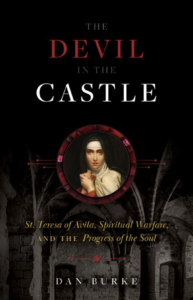
TSP10 – The Battles of the Sixth Mansion – St. Teresa of Avila, Spiritual Warfare, and the Progress of the Soul with Dan Burke – Discerning Hearts Podcasts


Episode 10 – The Battles of the Sixth Mansion – St. Teresa, Spiritual Warfare, and the Progress of the Soul with Dan Burke

Dan Burke and Kris McGregor delve into St. Teresa of Ávila’s guidance for navigating spiritual experiences and potential deceptions. St. Teresa’s writings, particularly her work on the sixth Mansion in The Interior Castle, provide a framework for discerning genuine divine encounters from false or self-delusional experiences.

Authentic spiritual experiences foster an awareness of God’s greatness, humility, detachment from worldly things, and lasting spiritual transformation. True encounters with the divine inspire awe, deepen humility, and lead to a life oriented toward God’s will, rather than personal pride or recognition. This contrasts sharply with experiences that lead to self-aggrandizement or ungrounded mystical claims, which the Church often tests rigorously to verify authenticity.

Be aware of unchecked mysticism or self-appointed “spiritual teachers,” especially in today’s media age, where individuals might bypass critical guidance in favor of public recognition. We must root ourselves in the core teachings of the faith and engage in spiritual practices like mental prayer, seeking spiritual directors to help us grow in self-awareness.


Discerning Hearts Discussion Questions

  1. Authenticity of Spiritual Experiences – How can you discern whether a spiritual experience is genuinely from God or influenced by personal desires?
  2. Humility in Spiritual Growth – In what ways can you practice humility when sharing or understanding your own spiritual experiences?
  3. Role of Obedience in Faith – How might obedience to the Church’s teachings and authority help deepen your spiritual journey and protect against self-deception?
  4. Detachment from Worldly Desires – What earthly attachments could be hindering your relationship with God, and how can you work on letting go of them?
  5. Importance of Spiritual Direction – Who serves as a spiritual guide in your life, and how can you ensure you’re seeking and heeding sound counsel?
  6. Listening to the Saints – How can the example of the saints, especially in their tested and humble lives, serve as a model for your own faith journey?
  7. Testing Spiritual Revelations – Are you open to testing spiritual insights and experiences according to Church teachings, or do you sometimes resist this scrutiny?
  8. Compassion and Patience in Evangelization – How can you show compassion and patience toward others in their journey of faith, as Jesus did with sinners?
  9. Sacramental Foundation for Holiness – How well do you rely on the sacraments and core Church teachings as the foundation for spiritual growth, rather than seeking extraordinary experiences?
  10. Resilience in Faith – When your faith is challenged or your spiritual experiences are doubted, how can you remain resilient and grounded in your identity in Christ?

You can find the book here.

An excerpt from the book:

Have you ever considered that the devil is active in your prayer life? In the parish church where you attend Mass? In the lives and actions of people of goodwill all around you? The saints remind us of a key aspect of living the spiritual life that we are wont to forget simply because we can’t see it and because we have been conditioned by the media and popular culture to think the devil works visibly only in “bad” people or in extraordinary ways, as in the movies. And although demons are certainly capable of extravagant or extraordinary manifestations, their ordinary work flies under our radar because it just isn’t that spectacular, though it is deadly.

In fact, subtlety, illusion, and deceit are their preferred methods of attack. An invisible battle for souls is being waged in and around us without reprieve, and we remain ignorant of it to our peril. St. Teresa of Avila, great mystic and Doctor of the Church, is best known for her writings on the way God leads souls along the path to union with Him through prayer. What many do not know about St. Teresa is that she also observed the actions of demons working with militant force to lead even good souls astray in ways that might surprise you. She shares these experiences freely in her autobiography, which she was commanded to write under obedience to her spiritual director.

Burke, Dan; Burke, Dan. The Devil in the Castle: St. Teresa of Avila, Spiritual Warfare, and the Progress of the Soul (p. 12). Sophia Institute Press. Kindle Edition.


For more episodes in this series visit Dan Burke’s Discerning Hearts page here:


Dan Burke is the founder and President of the Avila Institute for Spiritual Formation, which offers graduate and personal enrichment studies in spiritual theology to priests, deacons, religious, and laity in 72 countries and prepares men for seminary in 14 dioceses.

Dan is the author and editor of more than 15 books on authentic Catholic spirituality and hosts the Divine Intimacy Radio show with his wife, Stephanie, which is broadcast weekly on EWTN Radio. Past episodes can be found, along with thousands of articles on the interior life, at SpiritualDirection.com.

In his deep commitment to the advancement of faithful Catholic spirituality, he is also the founder of Apostoli Viae, a world-wide, private association of the faithful dedicated to living and advancing the authentic spiritual patrimony of the Church.

Most importantly, Dan is a blessed husband, father of four, grandfather of one—and grateful to be Catholic.

Day 8 – St. Elizabeth of the Trinity Novena – Discerning Hearts Podcast


Day Eight:  For the grace of possessing heaven already in this life by faith.


For Saint Elizabeth of the Trinity, the veil between heaven and earth is thin.  If we listen carefully with the ear of our heart, we can hear Mary share with us what she heard from Christ as He offered His great hymn of praise from the Cross. It is a canticle so beautiful, so exquisite, it reaches the very heart of the Father and fills the whole world with a salvific love. Through Mary’s presence in our agony, if we let her, Saint Elizabeth explains that the Mother of the Lord will teach us how to sing this same canticle– so that we can do something beautiful for God. She is with us to the very end. This is why Saint Elizabeth calls Mary “Gate of Heaven.”

As beautiful as this is, there are other canticles of praise that Elizabeth invites us to hear.  She hears the 144,000 gathered around the throne of the lamb and she hears the elders who cry out “holy, holy, holy” as they cast down their crowns before the Risen Lord. The glory, praise, and silence of the saints echo in this life so that we too might know their joy.  Saint Elizabeth wants us to hear this eternal hymn of praise and imitate it.  A life lived in humility, simplicity, and recollection avails itself to such imitation – and when it does, heaven becomes present in this life by faith.

By faith, what is in heaven becomes present on earth. In the humble limits of the present moment and circumstances, we can participate in the great praise of glory that the angels and saints offer in heaven.

Heaven is not a remote or future reality. Heaven, even if hidden from our earthly eyes, is close by and present.  It is present in the Mass. It is also present in everything – because by faith, everything and anything can become a sacrament that gives us God.

The love of heaven is present to us by faith.  This is because faith makes us open to the presence of God dwelling in our souls.  Wherever God dwells, there is heaven.  The heaven of glory, with all the angels and saints, is present in our soul because this heaven is never separate from God.  This means in the heaven of our souls where God dwells, the heaven of glory is already breaking in.

For the person of faith already implicated in the glory of heaven, nothing and no one is ever ordinary or commonplace.  Every life event, no matter how small or large, how disappointing or joyful, is always a new opportunity for the soul to encounter the immensity of God’s love.  The Trinity’s excessive love changes everything – even the most ordinary tasks become charged with new and everlasting meaning. This means that no one who believes ever really has an “ordinary” life – through faith, this passing life is opened to the greatness of eternity. Time for Saint Elizabeth is nothing other than “eternity begun and still in progress.”

In relation to the grace of living heaven by faith, Saint Elizabeth’s mission finds its footing in the great prayer of Jesus the night before He died.  On that night, He offered his supreme prayer and his heart’s desire – that we might dwell where He dwells – the Son of the Father dwells in the Fathers love, and Saint Elizabeth is praying that we might realize Jesus’ divine dream and dwell with Him in this great love too. For this purpose, let us pray:

O My God, Trinity whom I adore, help me to forget myself entirely so as to be established in you as still and as peaceful as if my soul were already in eternity. May nothing be able to disturb my peace, nor make me depart from you, o my Unchanging One, but may each moment carry me further into the depths of your Mystery. Pacify my soul, make it your heaven, your beloved abode, your resting place. May I never leave you there alone, but may I be entirely present, my faith completely ready, wholly adoring, fully surrendered to your creative action.

O my beloved Christ, crucified by love, I would like to be a bride for your heart. I would like to cover you with glory, I would like to love you… unto death. I feel my powerlessness, however, and I ask you to clothe me with yourself, to identify my soul with all the movements of your soul, to defeat me, to overwhelm me, to substitute yourself for me, that my life might be but the radiation of your Life. Come into me as Adorer, as Healer, as Savior. O Eternal Word, Word of my God, I want to spend my life listening to you, I want to be completely docile, ready to learn everything from you. Then, through all nights, all voids, all weakness, I want to fixate on you always and to remain under your great light. O My beloved Star, fascinate me so that I would not be able to forsake your shining light.

O Consuming Flame, Spirit of love, come over me until my soul is render into an incarnation of the Word; may I be for Him another humanity in which he renews His whole Mystery.

And you, O Father, bend over your little creature, cover her with your shadow, and see in her only the Beloved in whom You are well-pleased.
O my Three, my All, my Beatitude, Infinite Solitude, Immensity in which I loose myself, I surrender myself as prey. Bury yourself in me in order that I might bury myself in you, while waiting to contemplate in your light the immeasurable depths of your grandeur.

Amen

The Novena to St. Elizabeth of the Trinity is authored by Dr. Anthony Lilles S.T.D.

For the entire 9-Day Novena to St. Elizabeth of the Trinity

SISL12 – I Have No Fervor & I Feel Sad – Struggles in the Spiritual Life with Fr. Timothy Gallagher – Discerning Hearts Podcasts

I Have No Fervor & I Feel Sad – Struggles in the Spiritual Life with Fr. Timothy Gallagher O.M.V.

Fr. Timothy Gallagher discusses St. Ignatius of Loyola’s insights on handling spiritual desolation with St. Ignatius’ rule to remain steadfast in spiritual practices during desolation and not make changes, using Beth’s experience to illustrate this. Despite feeling no fervor during a Bible study, Beth remains committed, a choice Ignatius encourages as a response to desolation. Recognizing these feelings as a natural part of spiritual growth can prevent discouragement.

Fr. Gallagher also touches on different desolation experiences. Returning to the character of Paul, Paul’s prayer life is subtly disrupted by doubts and comparisons, which cause sadness and diminish his peace, although he can still identify and manage these negative thoughts. Through Paul’s story, St. Ignatius’ counsel is used to recognize and reject discouraging thoughts that intrude during prayer, likening these to “cold air” moments that disturb a peaceful, loving space with God.

The use of Ignatian practices like the examen prayer to gain clarity in these struggles and the importance of knowing personal vulnerabilities in spiritual life. These insights from Ignatius aim to strengthen resilience, helping individuals to hold onto hope and joy in prayer despite ongoing spiritual challenges.

You can pick up a copy of the book here.


Discerning Hearts Reflection Questions

  1. Understanding Desolation: How can you identify moments of spiritual desolation in your own life, similar to Beth’s experience, and resist the urge to change your routine?
  2. Steadfast Commitment: When you feel unmotivated in spiritual practices, what commitments can help you continue faithfully, as Ignatius advises?
  3. Awareness of Discouragement: Can you recognize the subtle ways in which thoughts of comparison or inadequacy, like Paul’s, affect your prayer life?
  4. Using Spiritual Tools: How might the examen prayer or other Ignatian tools help you notice and counteract spiritual desolation?
  5. Personal Vulnerabilities: What areas in your life feel most vulnerable to discouragement, and how can you turn them into places of hope, as Ignatius suggests?
  6. Avoiding Comparison: How does comparing your spiritual journey to others diminish your sense of peace, and what steps can you take to embrace your unique path?
  7. Recognizing God’s Individual Love: How does reflecting on God’s unique love for you help counteract feelings of sadness or inadequacy in prayer?

An excerpt from the chapter, “I Have No Fervor”:

“How should we understand Beth’s experience this Wednesday evening? We have no indication that Beth is at fault. She is faithful. She prepares and attends the class in her usual way. She does her best to participate — so well in fact, that none perceive her lack of enthusiasm. What, then, is Beth experiencing?

Having followed Ignatius thus far, we can guess the answer! This Wednesday evening, Beth experiences a form of spiritual desolation. She feels, to use Ignatius’s words, “totally tepid,” that is, completely without fervor as she performs a spiritual practice. In this form of desolation, we feel spiritually lukewarm, indifferent, unenthusiastic, without affect. When we pray, serve the Lord, live our vocations, take new steps in our spiritual lives, seek holiness, but find ourselves tepid and without fervor as we do these things, we are experiencing spiritual desolation. The adverb “totally” is again expressive.

Have you ever felt this form of spiritual desolation? Yes, certainly, we all have at times. Obviously, the enemy’s goal is that such tepidity cause us to question ourselves, to lose heart, to abandon these helpful practices. Beth responds well when she remains faithful, the right response for us as well.

Once again, no shame! No surprise! Be aware, identify, reject.”

Gallagher O.M.V, Fr. Timothy ; Gallagher O.M.V, Fr. Timothy. Struggles in the Spiritual Life: Their Nature and Their Remedies (pp. 76-77). Sophia Institute Press. Kindle Edition.


An excerpt from the chapter, “I Feel Sad”:

“Before Paul — or we — can answer these questions, we need to identify the sadness he feels. Paul is faithful to prayer and has been for years. He loves it, and he feels its fruits. Though the sadness weighs on him, Paul does not let it stop him. In fact, he is progressing in prayer, as his increased awareness of his experience reveals. Paul now notes spiritual movements, even this undramatic, nonclamorous sense of sadness. He can identify the thoughts from which it originates. Paul’s sadness, then, does not derive from negligence on his part.

How, then, should we understand it? Paul experiences a form of spiritual desolation that Ignatius describes as finding oneself “totally sad.” Paul is not yet “totally” sad, but things appear to be moving in that direction.

Once again, no shame, so surprise; be aware, identify, reject. This sadness is distinct from the healthy — even if painful — sadness we feel at the loss of a loved one, the termination of a rewarding occupation, and the like.

This is a spiritual sadness with nothing healthy about it. It arises from lies of the enemy. He tells you that you should be ashamed to bring such “small” things to prayer — to the God who knows when a sparrow falls to the ground and counts the hairs on your head (Luke 12:6–7), the God to whom everything in your life is important. The enemy tells you that you are not really praying — when, in reality, God is calling you to a simpler and richer prayer. The enemy tells you that you have stopped at the threshold of deep prayer — when you have only encountered the dry and distracted moments that all who pray faithfully experience. All this is from the liar and father of lies! The only fitting response is to unmask the lies and reject them.”

Gallagher O.M.V, Fr. Timothy ; Gallagher O.M.V, Fr. Timothy. Struggles in the Spiritual Life: Their Nature and Their Remedies (pp. 81-82). Sophia Institute Press. Kindle Edition.


To find more episodes from this series, visit the Struggles in the Spiritual Life Podcast


From the book’s description:

Here is a powerful, life-changing book that will help you understand and conquer the struggles you face in your spiritual life. It’s a book for those who love the Lord and desire holiness yet often feel adrift or stagnant in their search for spiritual growth.

All of us encounter valleys on our journey with the Lord — those periods of spiritual desolation that are a painful yet unavoidable feature of our prayer life. Spiritual desolation is as complex as we are, so understanding what is happening and responding to it properly are critical to reaching the heights of holiness.

With warmth and understanding, Fr. Gallagher carefully identifies in this book the various forms of spiritual and nonspiritual desolation and supplies the remedy for each. You’ll learn how to discern whether your struggles derive from medical or psychological conditions or whether those struggles are spiritual and permitted by the Lord for reasons of growth. In each case, you’ll be given the remedy for the struggle. You’ll also learn the forms of spiritual dryness and of the Dark Night — and how to respond to them.

In chapter after chapter, Fr. Gallagher presents a particular struggle as experienced by fictional characters and then provides the advice he gives to those who come to him for spiritual direction about that struggle. You’ll gain confidence as you journey through desolation, and you’ll learn to reject the enemy’s ploys to infect you with a sense of hopelessness.


Did you know that Fr. Timothy Gallagher has 14 different podcast series on Discerning Hearts Catholic Podcasts?
Visit here to discover more!

Day 7 – St. Elizabeth of the Trinity Novena – Discerning Hearts Podcast


Day Seven – For the grace to become, like Mary, the “prey” of the Trinity – a soul consumed by love.

In the spiritual mission of Saint Elizabeth, the Virgin Mary, humble handmaid of the Lord, is the model of radical surrender to the Trinity. When we look to her, we see what it means to be the “prey” of the Trinity – a grace that we have been asking for throughout this Novena. When the Angel appeared to her, Mary responded: “I am the handmaid of the Lord, Let it be done to me according to your will.”  Out of this humble “yes”, the Holy Trinity was able to bring to fulfillment the loving plan of salvation. This humble “yes” reveals a great spiritual truth for how God desires to work in every soul: God’s saving plan is always unleashed in the world through humble loving obedience to the Trinity.

For Saint Elizabeth, Mary’s obedient “yes” was more than a one-time event – Mary’s “fiat” reveals a continual attitude that she kept throughout her life, as she followed Jesus and stood before the Cross.  This attitude was no mere human achievement.  Mary’s constant awareness and readiness to respond with obedience to God was itself a work of the Trinity within her.  Every act of surrender begets an even deeper act of surrender. In this way, Saint Elizabeth describes the humble handmaid of the Lord as the “prey” of the Trinity.  Every prayerful soul, according to Saint Elizabeth, should make this same humble offering and become the “prey “ of the Trinity.

Just as the Virgin Mary became the “prey” of the Trinity through her peaceful and recollected surrender, through our surrender to the Holy Trinity, we can learn to live in humble recollection in each moment.  In both peaceful moments of silence and difficult moments of trial, the Lord is just as present to us – He never changes. We simply need to believe in His immense love and have confidence in Him. This means we must renounce every disturbance of worry, anxiety, self-pity, or despair that would interrupt our own “fiat” to the Lord.

Such prayer is difficult, but allowing Mary to show us how to be this humble and recollected is an important aid. Christ has saved her maternal presence for our sake – He wants us to know His Mother because she is ready to help us if we ponder her example.  A soul recollected in God’s presence can become like Mary, abandoned to the Father, docile to the Holy Spirit, and devoted to the Son, When this happens, this believer has also become the “prey” of the Trinity – a soul consumed by love.

Let us pray

O My God, Trinity whom I adore, help me to forget myself entirely so as to be established in you as still and as peaceful as if my soul were already in eternity. May nothing be able to disturb my peace, nor make me depart from you, o my Unchanging One, but may each moment carry me further into the depths of your Mystery. Pacify my soul, make it your heaven, your beloved abode, your resting place. May I never leave you there alone, but may I be entirely present, my faith completely ready, wholly adoring, fully surrendered to your creative action.

O my beloved Christ, crucified by love, I would like to be a bride for your heart. I would like to cover you with glory, I would like to love you… unto death. I feel my powerlessness, however, and I ask you to clothe me with yourself, to identify my soul with all the movements of your soul, to defeat me, to overwhelm me, to substitute yourself for me, that my life might be but the radiation of your Life. Come into me as Adorer, as Healer, as Savior. O Eternal Word, Word of my God, I want to spend my life listening to you, I want to be completely docile, ready to learn everything from you. Then, through all nights, all voids, all weakness, I want to fixate on you always and to remain under your great light. O My beloved Star, fascinate me so that I would not be able to forsake your shining light.

O Consuming Flame, Spirit of love, come over me until my soul is render into an incarnation of the Word; may I be for Him another humanity in which he renews His whole Mystery.

And you, O Father, bend over your little creature, cover her with your shadow, and see in her only the Beloved in whom You are well-pleased.
O my Three, my All, my Beatitude, Infinite Solitude, Immensity in which I loose myself, I surrender myself as prey. Bury yourself in me in order that I might bury myself in you, while waiting to contemplate in your light the immeasurable depths of your grandeur.

Amen

The Novena to St. Elizabeth of the Trinity is authored by Dr. Anthony Lilles S.T.D.

For the entire 9-Day Novena to St. Elizabeth of the Trinity

Day 6 – St. Elizabeth of the Trinity Novena – Discerning Hearts Podcast


Day Six  For the grace of living in the shadow of the FatherCatholic Devotional Prayers and Novenas - Mp3 Audio Downloads and Text 8


Jesus lived in the shadow of the Father. To be under this shadow is to accept a paradoxical mystery. In his humiliation, He was exalted. In his rejection, He was beloved. By His Wounds, we are healed. In His death, He became the source of life. Conversely, He humiliated the haughty and the proud who could not recognize Him. He declared the poor blessed, and the rich were not able to follow him. He held up the meek as conquerors, and the violent could not seize Him. He calmed storms but humbly accepted the kiss that betrayed Him. He saved others, but out of love for the Father, would not save Himself. It is in this shadow that Jesus gave Himself for us, and in this same shadow, we learn to how to give ourselves in love for Him.

Saint Elizabeth sees the shadow of the Father as a mystery that separates us from everything that might distract or impede our efforts to seek God by a wholly loving and simple movement of the heart. Sometimes being overshadowed in this way means embracing difficult and trying circumstances. Often it means having trust and confidence in God when we do not understand how or feel or even intuit that He is acting in our lives. The Trinity works at a level more fundamental than any state of consciousness, deeper than any feeling, higher than any understanding, beyond any intuition to sense or grasp. Saint John of the Cross, to whom Saint Elizabeth was devoted as a spiritual daughter, understood this secret place could only be entered by faith. Saint John of the Cross identifies the shadow of the Father with a mysterious darkness – and enchanting dark night in which love transforms by faith. In this night, God has the freedom to realize the plan of love that He has for each of us. The Father will detach us from every other support until we cleave to Him alone – allowing Him to transform us in the image of His Son. He wants us by faith to imitate His Son – who did everything with total trust and confidence in the goodness of the Father, even when that goodness seemed so hidden.

The spiritual mission of Saint Elizabeth encourages us to desire to live in the shadow of the Father, even though it is sometimes difficult to do so. She encourages this because she knows the joy and peace that one can find in this shadow – not only for oneself, but for everyone God entrusts to us. For this grace, let us pray

O My God, Trinity whom I adore, help me to forget myself entirely so as to be established in you as still and as peaceful as if my soul were already in eternity. May nothing be able to disturb my peace, nor make me depart from you, o my Unchanging One, but may each moment carry me further into the depths of your Mystery. Pacify my soul, make it your heaven, your beloved abode, your resting place. May I never leave you there alone, but may I be entirely present, my faith completely ready, wholly adoring, fully surrendered to your creative action.

O my beloved Christ, crucified by love, I would like to be a bride for your heart. I would like to cover you with glory, I would like to love you… unto death. I feel my powerlessness, however, and I ask you to clothe me with yourself, to identify my soul with all the movements of your soul, to defeat me, to overwhelm me, to substitute yourself for me, that my life might be but the radiation of your Life. Come into me as Adorer, as Healer, as Savior. O Eternal Word, Word of my God, I want to spend my life listening to you, I want to be completely docile, ready to learn everything from you. Then, through all nights, all voids, all weakness, I want to fixate on you always and to remain under your great light. O My beloved Star, fascinate me so that I would not be able to forsake your shining light.

O Consuming Flame, Spirit of love, come over me until my soul is rendered into an incarnation of the Word; may I be for Him another humanity in which he renews His whole Mystery.

And you, O Father, bend over your little creature, cover her with your shadow, and see in her only the Beloved in whom You are well-pleased.
O my Three, my All, my Beatitude, Infinite Solitude, Immensity in which I lose myself, I surrender myself as prey. Bury yourself in me in order that I might bury myself in you while waiting to contemplate in your light the immeasurable depths of your grandeur.

Amen

The Novena to St. Elizabeth of the Trinity is authored by Dr. Anthony Lilles S.T.D.

For the entire 9-Day Novena to St. Elizabeth of the Trinity

Sunday of the Thirty-First Week in Ordinary Time – A Time of Lectio Divina for the Discerning Heart Podcast

Sunday of the Thirty-First Week in Ordinary Time – A Time of Lectio Divina for the Discerning Heart Podcast

As you begin, take a deep breath and exhale slowly.  For at least the next few moments, surrender all the cares and concerns of this day to the Lord.

Say slowly from your heart “Jesus, I Trust In You…You Take Over”

Become aware that He is with you, looking upon you with love, wanting to be heard deep within in your heart…

From the Holy Gospel According to St. Mark 12:28-34

One of the scribes came up to Jesus and put a question to him, ‘Which is the first of all the commandments?’ Jesus replied, ‘This is the first: Listen, Israel, the Lord our God is the one Lord, and you must love the Lord your God with all your heart, with all your soul, with all your mind and with all your strength. The second is this: You must love your neighbour as yourself. There is no commandment greater than these.’ The scribe said to him, ‘Well spoken, Master; what you have said is true: that he is one and there is no other. To love him with all your heart, with all your understanding and strength, and to love your neighbour as yourself, this is far more important than any holocaust or sacrifice.’ Jesus, seeing how wisely he had spoken, said, ‘You are not far from the kingdom of God.’ And after that no one dared to question him any more.

What word made this passage come alive for you?

What did you sense the Lord saying to you?

Once more give the Lord an opportunity to speak to you:

One of the scribes came up to Jesus and put a question to him, ‘Which is the first of all the commandments?’ Jesus replied, ‘This is the first: Listen, Israel, the Lord our God is the one Lord, and you must love the Lord your God with all your heart, with all your soul, with all your mind and with all your strength. The second is this: You must love your neighbour as yourself. There is no commandment greater than these.’ The scribe said to him, ‘Well spoken, Master; what you have said is true: that he is one and there is no other. To love him with all your heart, with all your understanding and strength, and to love your neighbour as yourself, this is far more important than any holocaust or sacrifice.’ Jesus, seeing how wisely he had spoken, said, ‘You are not far from the kingdom of God.’ And after that no one dared to question him any more.

What did your heart feel as you listened?

What did you sense the Lord saying to you?

Once more, through Him, with Him and in Him listen to the Word:

One of the scribes came up to Jesus and put a question to him, ‘Which is the first of all the commandments?’ Jesus replied, ‘This is the first: Listen, Israel, the Lord our God is the one Lord, and you must love the Lord your God with all your heart, with all your soul, with all your mind and with all your strength. The second is this: You must love your neighbour as yourself. There is no commandment greater than these.’ The scribe said to him, ‘Well spoken, Master; what you have said is true: that he is one and there is no other. To love him with all your heart, with all your understanding and strength, and to love your neighbour as yourself, this is far more important than any holocaust or sacrifice.’ Jesus, seeing how wisely he had spoken, said, ‘You are not far from the kingdom of God.’ And after that no one dared to question him any more.

What touched your heart in this time of prayer?

What did your heart feel as you prayed?

What do you hope to carry with you from this time with the Lord?


Our Father, who art in heaven,

hallowed be thy name.

Thy kingdom come.

Thy will be done on earth, as it is in heaven.

Give us this day our daily bread,

and forgive us our trespasses,

as we forgive those who trespass against us,

and lead us not into temptation,

 but deliver us from evil.

Amen

Excerpt from THE JERUSALEM BIBLE, copyright (c) 1966 by Darton, Longman & Todd, Ltd. and Doubleday, a division of Penguin Random House, Inc. Reprinted by Permission.

Saturday – Praying Daily for the Poor Souls – Discerning Hearts Podcast

Saturday - Praying daily for the Poor Souls - Mp3 audio and text

Saturday

O Lord God Almighty, I beseech Thee,
by the precious blood
which gushed forth from the sacred side
of Thy Divine Son Jesus
in the presence of and to the great sorrow
of His most holy Mother
deliver the souls in purgatory,
and among them all especially that soul
which has been most devout to this noble Lady;
that it may come quickly into Thy glory,
there to praise Thee in her,
and her in Thee,
through all the ages.

Amen.

Read more