“Fear is such a powerful emotion for humans that when we allow it to take us over, it drives compassion right out of our hearts.”
“We must love them both, those whose opinions we share and those whose opinions we reject, for both have labored in the search for truth, and both have helped us in finding it.”
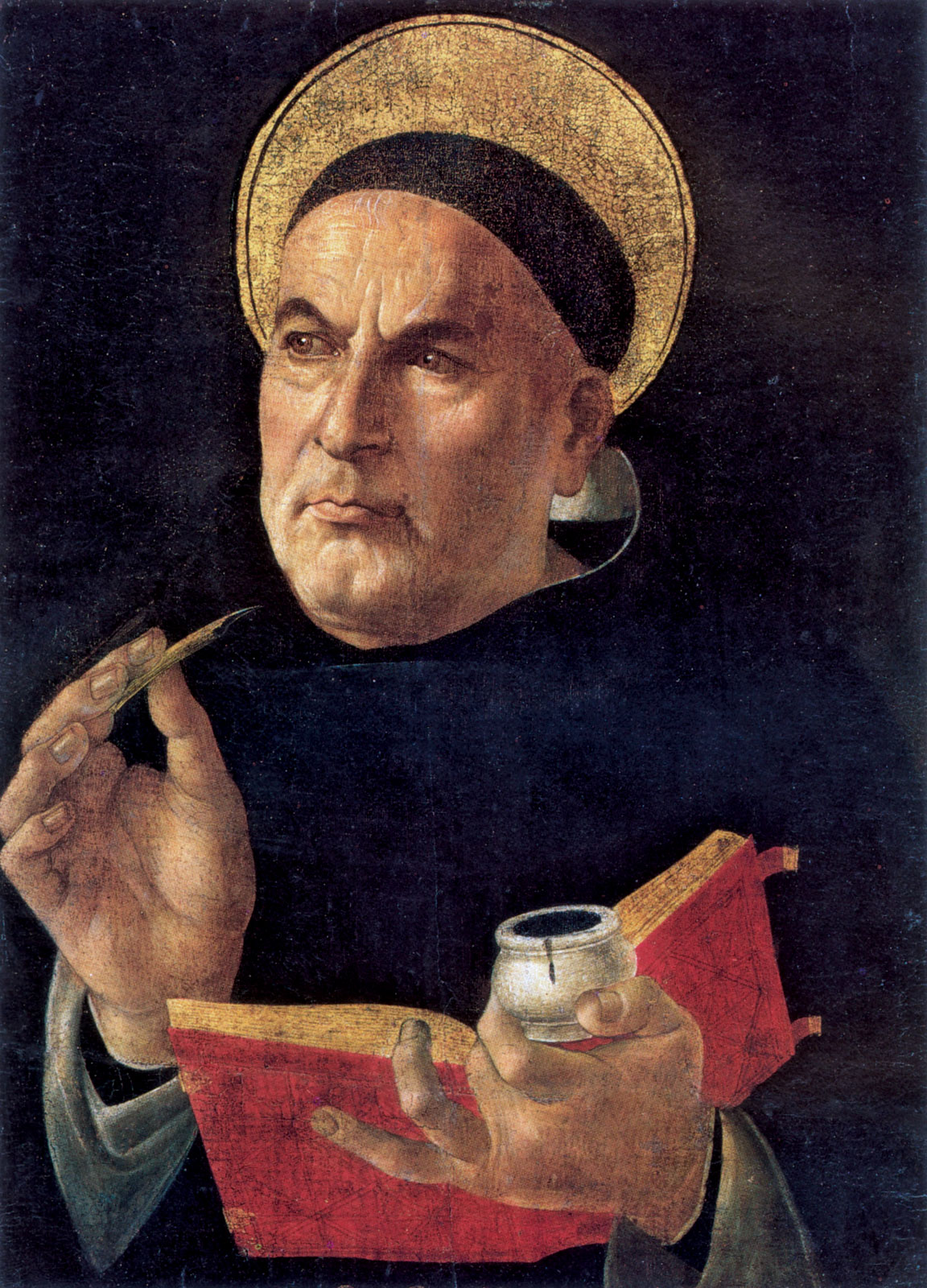
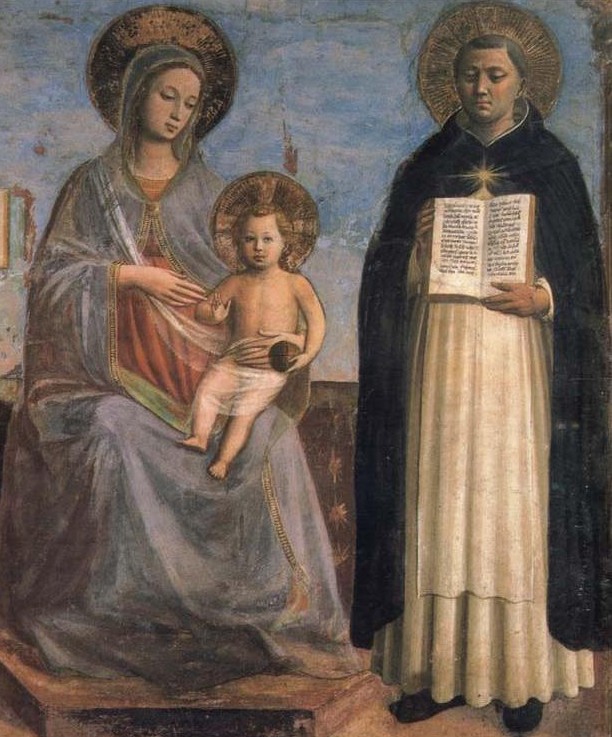
Through the intercession of St. Thomas Aquinas,
Grant me grace, O merciful God,
to desire ardently all that is pleasing to Thee,
to examine it prudently,
to acknowledge it truthfully,
and to accomplish it perfectly,
for the praise and glory of Thy name.
In particular, please obtain the favor I ask during this novena.
[Make your request here…]
Grant me, O Lord my God,
a mind to know you,
a heart to seek you,
wisdom to find you,
conduct pleasing to you,
faithful perseverance in waiting for you,
and a hope of finally embracing you.
Saturday of the Second Week in Ordinary Time – A Time of Lectio Divina for the Discerning Heart Podcast
As you begin, take a deep breath and exhale slowly. For at least the next few moments, surrender all the cares and concerns of this day to the Lord.
Say slowly from your heart “Jesus, I Trust In You…You Take Over”
Become aware that He is with you, looking upon you with love, wanting to be heard deep within in your heart…
From the Holy Gospel of St. Mark 16:15-18
Jesus showed himself to the Eleven and said to them:
‘Go out to the whole world; proclaim the Good News to all creation. He who believes and is baptised will be saved; he who does not believe will be condemned. These are the signs that will be associated with believers: in my name they will cast out devils; they will have the gift of tongues; they will pick up snakes in their hands, and be unharmed should they drink deadly poison; they will lay their hands on the sick, who will recover.’
What word made this passage come alive for you?
What did you sense the Lord saying to you?
Once more give the Lord an opportunity to speak to you:
Jesus showed himself to the Eleven and said to them:
‘Go out to the whole world; proclaim the Good News to all creation. He who believes and is baptised will be saved; he who does not believe will be condemned. These are the signs that will be associated with believers: in my name they will cast out devils; they will have the gift of tongues; they will pick up snakes in their hands, and be unharmed should they drink deadly poison; they will lay their hands on the sick, who will recover.’
What did your heart feel as you listened?
What did you sense the Lord saying to you?
Once more, through Him, with Him and in Him listen to the Word:
Jesus showed himself to the Eleven and said to them:
‘Go out to the whole world; proclaim the Good News to all creation. He who believes and is baptised will be saved; he who does not believe will be condemned. These are the signs that will be associated with believers: in my name they will cast out devils; they will have the gift of tongues; they will pick up snakes in their hands, and be unharmed should they drink deadly poison; they will lay their hands on the sick, who will recover.’
What touched your heart in this time of prayer?
What did your heart feel as you prayed?
What do you hope to carry with you from this time with the Lord?
Our Father, who art in heaven,
hallowed be thy name.
Thy kingdom come.
Thy will be done on earth, as it is in heaven.
Give us this day our daily bread,
and forgive us our trespasses,
as we forgive those who trespass against us,
and lead us not into temptation,
but deliver us from evil.
May the Lord bless us, and keep us from all evil, and bring us to everlasting life.
Amen
Excerpt from THE JERUSALEM BIBLE, copyright (c) 1966 by Darton, Longman & Todd, Ltd. and Doubleday, a division of Penguin Random House, Inc. Reprinted by Permission.
Fr. John Burns – Lift Up Your Heart on Inside the Pages with Kris McGregor
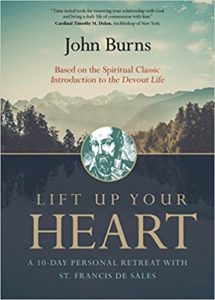
Fr. John Burns discusses his book, Lift Up Your Heart: A 10-Day Personal Retreat with St. Francis de Sales. The book brings St. Francis de Sales’ practical and profound wisdom to modern readers, guiding them through a structured retreat based on the saint’s classic Introduction to the Devout Life. Fr. Burns explains how the meditations are designed to help busy laypeople integrate faith into their daily lives using St. Francis’ method of creating a “spiritual bouquet” by carrying small graces from prayer into everyday tasks, making holiness accessible and actionable.
There’s relevance in St. Francis’ guidance for today’s world, where distractions and busyness often overshadow spiritual growth. Fr. Burns shares his hope that the book will inspire readers to embrace meditative prayer and daily choices for holiness. He suggests it as a tool for individual reflection or group study, particularly in programs like RCIA. By following this approach, readers can move closer to a vibrant, prayerful relationship with God and prepare their hearts for eternal life.
Discerning Hearts Reflection Questions
Embracing St. Francis de Sales’ Practical Wisdom: How can you incorporate St. Francis de Sales’ teachings into your busy daily life to grow in holiness?
Choosing Holiness Daily: What intentional steps can you take each day to prioritize your relationship with God and move toward heaven?
The Power of Spiritual Bouquets: How can you carry the fruits of your prayer throughout your day to maintain a connection with God amid distractions?
Understanding Heaven’s Urgency: How does reflecting on the ultimate goal of heaven shape your daily decisions and priorities?
Integrating Prayer and Action: In what ways can you ensure your prayer life influences your actions, making your entire day a hymn of praise to God?
The Role of Conversion in Daily Life: What areas of your life need transformation, and how can you invite God to guide that conversion?
Overcoming Distractions in Prayer: How can St. Francis’ practical advice about distractions help you persist in prayer despite challenges?
Finding Guidance in the Saints: How can viewing St. Francis de Sales as a spiritual director enhance your spiritual journey?
Recognizing the Call to Contemplation: How can you create space for deeper reflection and meditation amidst the busyness of life?
Responding to God’s Invitation: What choices can you make today to live more intentionally for God and embrace His love?
This practical book goes right to the heart of helping you kick the habit of floating along on your spiritual journey to start actively pursuing holiness and devotion to God. During the course of the retreat, you ll learn the basics of forming a daily prayer routine, including how to offer yourself to God, meditate on his love, and maintain peace in the face of suffering and clarity in the midst of temptation.
The meditations will help you:
Adopt gratitude as a daily prayer practice.
Examine and reorder your priorities and relationships to better reflect your love for God.
Discern between good and evil in your life.
Desire to love and serve as Jesus did.
In a very real sense, Burns helps you take St. Francis de Sales as your spiritual director for ten days. As you do so, you’ll feel God’s fatherly love and restart your faith life, equipped with the tools to connect with God and live for heaven now.
About the Author
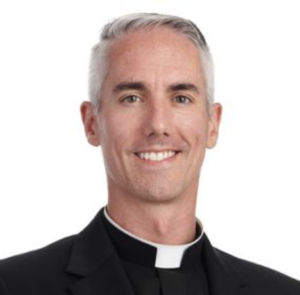
Fr. John Burns is a priest of the Archdiocese of Milwaukee. He is the author of the bestselling books Adore: A Guided Advent Journal for Prayer and Meditation, Return: A Guided Lent Journal for Prayer and Meditation, and Lift Up Your Heart: A 10-Day Personal Retreat with St. Francis de Sales. Ordained in 2010, Burns has served as an associate pastor and pastor in Milwaukee in addition to being an adjunct professor of moral theology at the Sacred Heart Seminary and School of Theology. He completed a doctorate in moral theology at the Pontifical University of the Holy Cross in Rome in 2019. His doctoral research focused on the theology of healing through forgiveness.
Burns speaks at conferences, preaches for missions, and directs retreats throughout the country. He works extensively with the Sisters of Life and St. Mother Teresa’s Missionaries of Charity, and has given retreats, conferences, and spiritual direction for the sisters in Africa, Europe, and the United States.
Virgin full of goodness,
Mother of mercy,
I entrust to you my body and my soul,
my thoughts and my actions,
my life and my death.
My Queen,
come to my aid
and deliver me from the snares of the devil.
Obtain for me the grace of loving
my Lord Jesus Christ, your Son,
with a true and perfect love,
and after him,
Mary,
of loving you with all my heart
and above all things.
Amen.
Through the intercession of St. Thomas Aquinas,
Grant me grace, O merciful God,
to desire ardently all that is pleasing to Thee,
to examine it prudently,
to acknowledge it truthfully,
and to accomplish it perfectly,
for the praise and glory of Thy name.
In particular, please obtain the favor I ask during this novena.
[Make your request here…]
Grant me, O Lord my God,
a mind to know you,
a heart to seek you,
wisdom to find you,
conduct pleasing to you,
faithful perseverance in waiting for you,
and a hope of finally embracing you.
Friday of the Second Week in Ordinary Time – A Time of Lectio Divina for the Discerning Heart Podcast
As you begin, take a deep breath and exhale slowly. For at least the next few moments, surrender all the cares and concerns of this day to the Lord.
Say slowly from your heart “Jesus, I Trust In You…You Take Over”
Become aware that He is with you, looking upon you with love, wanting to be heard deep within in your heart…
From the Holy Gospel of St. Mark 3:13-19
Jesus went up into the hills and summoned those he wanted. So they came to him and he appointed twelve; they were to be his companions and to be sent out to preach, with power to cast out devils. And so he appointed the Twelve: Simon to whom he gave the name Peter, James the son of Zebedee and John the brother of James, to whom he gave the name Boanerges or ‘Sons of Thunder’; then Andrew, Philip, Bartholomew, Matthew, Thomas, James the son of Alphaeus, Thaddaeus, Simon the Zealot and Judas Iscariot, the man who was to betray him.
What word made this passage come alive for you?
What did you sense the Lord saying to you?
Once more give the Lord an opportunity to speak to you:
Jesus went up into the hills and summoned those he wanted. So they came to him and he appointed twelve; they were to be his companions and to be sent out to preach, with power to cast out devils. And so he appointed the Twelve: Simon to whom he gave the name Peter, James the son of Zebedee and John the brother of James, to whom he gave the name Boanerges or ‘Sons of Thunder’; then Andrew, Philip, Bartholomew, Matthew, Thomas, James the son of Alphaeus, Thaddaeus, Simon the Zealot and Judas Iscariot, the man who was to betray him.
What did your heart feel as you listened?
What did you sense the Lord saying to you?
Once more, through Him, with Him and in Him listen to the Word:
Jesus went up into the hills and summoned those he wanted. So they came to him and he appointed twelve; they were to be his companions and to be sent out to preach, with power to cast out devils. And so he appointed the Twelve: Simon to whom he gave the name Peter, James the son of Zebedee and John the brother of James, to whom he gave the name Boanerges or ‘Sons of Thunder’; then Andrew, Philip, Bartholomew, Matthew, Thomas, James the son of Alphaeus, Thaddaeus, Simon the Zealot and Judas Iscariot, the man who was to betray him.
What touched your heart in this time of prayer?
What did your heart feel as you prayed?
What do you hope to carry with you from this time with the Lord?
Our Father, who art in heaven,
hallowed be thy name.
Thy kingdom come.
Thy will be done on earth, as it is in heaven.
Give us this day our daily bread,
and forgive us our trespasses,
as we forgive those who trespass against us,
and lead us not into temptation,
but deliver us from evil.
May the Lord bless us, and keep us from all evil, and bring us to everlasting life.
Amen
Excerpt from THE JERUSALEM BIBLE, copyright (c) 1966 by Darton, Longman & Todd, Ltd. and Doubleday, a division of Penguin Random House, Inc. Reprinted by Permission.
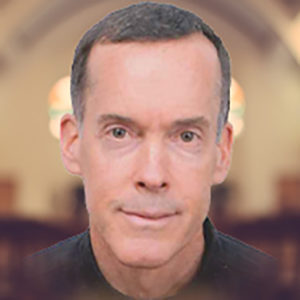
Purification of the Will for Love Alone – St. John of the Cross: Master of Contemplation with Fr. Donald Haggerty
Fr. Haggerty and Kris McGregor discuss St. John of the Cross’s teaching on the purification of the will, as outlined in Master of Contemplation. The spiritual journey of aligning our will with God’s, which is the essence of sanctity, and that true love of God requires surrendering self-centered desires and habitual tendencies to seek personal satisfaction, enabling a deeper union with God. Using examples like Martha and Mary from the Gospels, he shows us the challenge of choosing God’s will over worldly distractions, especially for laypeople living amid daily responsibilities.
Fr. Haggerty reflects on how cultivating a life rooted in selfless love leads to authentic joy and holiness, using Mother Teresa’s life as a vivid example. Her ability to prioritize acts of love—like stopping to aid a homeless man even when meeting the Pope—demonstrates a life fully surrendered to God.
Discerning Hearts Reflection Questions
The Alignment of Will and God’s Desire: Reflect on how your daily choices align with God’s will and seek ways to surrender self-centered motivations.
Finding Delight in God Alone: Examine where you find your happiness and whether it leads you closer to or distracts you from God.
The Priority of Love in Actions: Consider whether your actions are motivated by selfless love and how they reflect Christ’s presence in your life.
Letting Go of Worldly Attachments: Identify any material or worldly desires that hinder your spiritual growth and pray for the grace to let them go.
The Call to Serve in Daily Life: Ponder how you can embody Christ’s love in small acts of service, especially toward those in need.
Faithfulness in Your Vocation: Evaluate how well you are living out your vocation—whether in marriage, priesthood, or single life—with faithfulness and love.
Seeking God in Simplicity: Reflect on whether you have cultivated a sense of contentment with what you need rather than what you want.
Humility in Spiritual Growth: Pray for the humility to recognize and purify any prideful motivations in your spiritual or personal life.
Joy as a Fruit of Surrender: Meditate on how surrendering to God’s will has brought authentic joy to your life and how you can deepen this surrender.
Discerning the Better Part: Ask yourself how you can, like Mary of Bethany, choose the “better part” by prioritizing prayer and contemplation in your daily life.
An excerpt from St. John of the Cross: Master of Contemplation
“After exposing these principles of asceticism, we turn to the purification of the will by the theological virtue of charity. Saint John of the Cross treats this subject in the last section of book 3 of The Ascent of Mount Carmel. The teaching is not a matter simply of self-denial leading to an emptying of the will for God. While the ascetical task is important and required, what is indispensable for the grace of contemplation is a developed capacity for deeper self-emptying. No grace of contemplation can be expected as long as we indulge coveting tendencies in our lives. A release from immoderate, self-oriented desires that turn us inwardly upon ourselves is therefore a necessary preparation for any deeper life of prayer. Seeking to please ourselves as a motive for choices is always some variation of this damaging inward turn. In the view of Saint John of the Cross, this tendency demands serious efforts of reversal. If we aspire to the grace of contemplation, our will has to give itself with vigor to the will of God. We have to strive to give delight to God by our choices and by our renunciations, not seeking to find pleasure and delight simply for ourselves. As we turn away from pleasing ourselves, we become more empty and receptive inwardly to God’s promptings. The grace of contemplation in prayer then has an open window, if God chooses to bestow it. Otherwise, that window is sealed tight. The purpose of this chapter is to understand the deeper challenges in this purification of the will for the sake of contemplative graces. As the will exercises itself in interior self-renunciation, it opens itself to a loving union with the will of God. This increasing bond with the will of God is a necessary prerequisite for the prayer of contemplation.”
Haggerty, Donald. Saint John of the Cross: Master of Contemplation (pp. 120-121). Ignatius Press. Kindle Edition.
“The world tempts us either by attaching us to it in prosperity, or by filling us with fear of adversity. But faith overcomes this in that we believe in a life to come better than this one, and hence we despise the riches of this world and we are not terrified in the face of adversity.”
― Thomas Aquinas, The Catechetical Instructions
Through the intercession of St. Thomas Aquinas,
Grant me grace, O merciful God,
to desire ardently all that is pleasing to Thee,
to examine it prudently,
to acknowledge it truthfully,
and to accomplish it perfectly,
for the praise and glory of Thy name.
In particular, please obtain the favor I ask during this novena.
[Make your request here…]
Grant me, O Lord my God,
a mind to know you,
a heart to seek you,
wisdom to find you,
conduct pleasing to you,
faithful perseverance in waiting for you,
and a hope of finally embracing you.
Thursday of the Second Week in Ordinary Time – A Time of Lectio Divina for the Discerning Heart Podcast
As you begin, take a deep breath and exhale slowly. For at least the next few moments, surrender all the cares and concerns of this day to the Lord.
Say slowly from your heart “Jesus, I Trust In You…You Take Over”
Become aware that He is with you, looking upon you with love, wanting to be heard deep within in your heart…
From the Holy Gospel of St. Mark 3:7-12
Jesus withdrew with his disciples to the lakeside, and great crowds from Galilee followed him. From Judaea, Jerusalem, Idumaea, Transjordania and the region of Tyre and Sidon, great numbers who had heard of all he was doing came to him. And he asked his disciples to have a boat ready for him because of the crowd, to keep him from being crushed. For he had cured so many that all who were afflicted in any way were crowding forward to touch him. And the unclean spirits, whenever they saw him, would fall down before him and shout, ‘You are the Son of God!’ But he warned them strongly not to make him known.
What word made this passage come alive for you?
What did you sense the Lord saying to you?
Once more give the Lord an opportunity to speak to you:
Jesus withdrew with his disciples to the lakeside, and great crowds from Galilee followed him. From Judaea, Jerusalem, Idumaea, Transjordania and the region of Tyre and Sidon, great numbers who had heard of all he was doing came to him. And he asked his disciples to have a boat ready for him because of the crowd, to keep him from being crushed. For he had cured so many that all who were afflicted in any way were crowding forward to touch him. And the unclean spirits, whenever they saw him, would fall down before him and shout, ‘You are the Son of God!’ But he warned them strongly not to make him known.
What did your heart feel as you listened?
What did you sense the Lord saying to you?
Once more, through Him, with Him and in Him listen to the Word:
Jesus withdrew with his disciples to the lakeside, and great crowds from Galilee followed him. From Judaea, Jerusalem, Idumaea, Transjordania and the region of Tyre and Sidon, great numbers who had heard of all he was doing came to him. And he asked his disciples to have a boat ready for him because of the crowd, to keep him from being crushed. For he had cured so many that all who were afflicted in any way were crowding forward to touch him. And the unclean spirits, whenever they saw him, would fall down before him and shout, ‘You are the Son of God!’ But he warned them strongly not to make him known.
What touched your heart in this time of prayer?
What did your heart feel as you prayed?
What do you hope to carry with you from this time with the Lord?
Our Father, who art in heaven,
hallowed be thy name.
Thy kingdom come.
Thy will be done on earth, as it is in heaven.
Give us this day our daily bread,
and forgive us our trespasses,
as we forgive those who trespass against us,
and lead us not into temptation,
but deliver us from evil.
May the Lord bless us, and keep us from all evil, and bring us to everlasting life.
Amen
Excerpt from THE JERUSALEM BIBLE, copyright (c) 1966 by Darton, Longman & Todd, Ltd. and Doubleday, a division of Penguin Random House, Inc. Reprinted by Permission.
Leadership and Soberness – The Holy Rule of St. Benedict with Fr. Mauritius Wilde OSB
Fr. Mauritius Wilde discusses the virtue of soberness in leadership as described in the Rule of St. Benedict and Scripture. Soberness, understood as clarity and openness to truth, is essential for effective leadership, preventing decisions clouded by emotions like anger, pride, or envy. St. Benedict states the need for a leader’s inner peace, prudence, and mercy, as well as the need to create an environment where others can also find peace. Drawing on examples from Scripture, sober leaders not only make sound decisions but also act as stabilizing figures, much like St. Peter, whom Christ called a rock for his steadfastness.
Fr. Mauritius connects soberness to practical guidance for both monastic and everyday leadership, including parenting in the domestic church. It’s important for leaders to become self-aware, manage their emotions, and lead by example, as their demeanor directly influences those they serve. Soberness combined with mercy fosters trust and enables leaders to discern wisely while addressing challenges with compassion. This virtue is a gift of service to others, shaping communities with integrity and peace.
Discerning Hearts Reflection Questions
Soberness in Leadership: Reflect on how soberness in your leadership or daily responsibilities allows you to approach challenges with clarity and peace.
Influence of Emotions: Consider how your emotions might impact those you lead or interact with and what practices could help you achieve greater balance.
Integration of Mercy and Soberness: Examine ways to combine soberness with mercy in your decisions, ensuring both truth and compassion guide your actions.
Role Modeling Virtues: Reflect on the example you set for others, especially in how your inner peace or lack thereof shapes your family, workplace, or community.
Discernment Through Prayer: Contemplate how time with God in prayer can help you clear your mind and heart to discern and act in alignment with His will.
Leadership as Service: Consider how your leadership or influence can be a gift of service to others by fostering trust, peace, and wise decision-making.
Spiritual Readiness: Reflect on how cultivating virtues like soberness, prudence, and mercy can help you remain spiritually prepared for challenges and opportunities.
“He must, therefore, be versed in the divine law, that he may know whence “to bring forth new things and old” (Mt 13:52). Let him be chaste, sober, and merciful, and let him always exalt “mercy above judgment” (Jas 2:13), that he also may obtain mercy.
Let him hate vice, but love the brethren. And even in his corrections, let him act with prudence and not go to extremes, lest, while he aimeth to remove the rust too thoroughly, the vessel be broken. Let him always keep his own frailty in mind, and remember that “the bruised reed must not be broken” (Is 42:3). In this we are not saying that he should allow evils to take root, but that he cut them off with prudence and charity, as he shall see it is best for each one, as we have already said; and let him aim to be loved rather than feared.
Let him not be fussy or over-anxious, exacting, or headstrong; let him not be jealous or suspicious, because he will never have rest. In all his commands, whether they refer to things spiritual or temporal, let him be cautious and considerate. Let him be discerning and temperate in the tasks which he enjoineth, recalling the discretion of holy Jacob who saith: “If I should cause my flocks to be overdriven, they would all die in one day” (Gen 33:13). Keeping in view these and other dictates of discretion, the mother of virtues, let him so temper everything that the strong may still have something to desire and the weak may not draw back. Above all, let him take heed that he keep this Rule in all its detail; that when he hath served well he may hear from the Lord what the good servant heard who gave his fellow-servants bread in season: “Amen, I say to you,” He saith,”he shall set him over all his goods” (Mt 24:47).
If, however, anyone is found to break this rule, let him undergo heavy punishment, unless the needs of guests should arise, or the Abbot should perhaps give a command to anyone. But let even this be done with the utmost gravity and moderation.”
Father Mauritius Wilde, OSB, Ph.D., did his philosophical, theological and doctoral studies in Europe. He is the author of several books and directs retreats regularly. He serves as Prior at Sant’Anselmo in Rome. For more information about the ministry of the Missionary Benedictines of Christ the King Priory in Schuyler, NE
“Many cry to the Lord that they may win riches, that they may avoid losses; they cry that their family may be established, they ask for temporal happiness, for worldly dignities; and, lastly, they cry for bodily health, which is the patrimony of the poor. For these and such like things many cry to the Lord; hardly one cries for the Lord Himself! How easy it is for a man to desire all manner of things from the Lord and yet not desire the Lord Himself! As though the gift could be sweeter than the Giver!”
― Thomas Aquinas, On Prayer and The Contemplative Life
Through the intercession of St. Thomas Aquinas,
Grant me grace, O merciful God,
to desire ardently all that is pleasing to Thee,
to examine it prudently,
to acknowledge it truthfully,
and to accomplish it perfectly,
for the praise and glory of Thy name.
In particular, please obtain the favor I ask during this novena.
[Make your request here…]
Grant me, O Lord my God,
a mind to know you,
a heart to seek you,
wisdom to find you,
conduct pleasing to you,
faithful perseverance in waiting for you,
and a hope of finally embracing you.