“The Devil You Don’t Know: Recognizing and Resisting Evil in Everyday Life”
is not about some “sensationalistic” overview of the “creepy”, instead it is a solid resource for those seeking to vanquish the ordinary means in which evil disrupts and damages our spiritual lives. Highly recommended, I’ve passed this book along to many.
Podcast: Play in new window | Download (25.6MB) | Embed
You can find this book here
Publisher’s Weekly says it well:
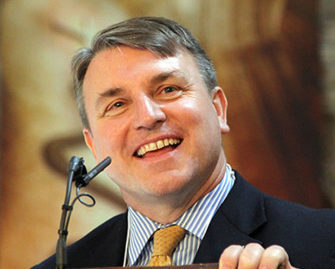
In some ways, it’s easy to believe in a devil who makes heads spin round and enables people to levitate. Ubiquitous movies and books about possession and exorcism have trained spiritual seekers to identify evil by its expected Hollywood conventions. By contrast, Rev. Louis J. Cameli, nationally renowned pastoral leader and priest of the Archdiocese of Chicago, paints a challenging, unsettling portrait of the devil as a formidable adversary who works great harm, often in quiet, less-seen ways.
While remaining a fixture of popular culture, the devil has–until now–been largely ignored in contemporary spiritual writing. Cameli exposes the devil’s tactics of deception, division, diversion, and discouragement, in individuals and also in institutions. This thoroughly biblical, deft exploration considers the personal and social dimensions of sin, and offers both enlightenment and hope in the power of Christ at work to overcome evil.
Tags: devil, evil, sin, spiritual warfare, work
This entry was posted on Friday, May 17th, 2013 at 7:19 am
You can follow any responses to this entry through the RSS 2.0 feed.
THE INTERIOR CASTLE
OR
THE MANSIONS
By
St. Teresa of Avila
The Seventh Mansions Chapter 1:
Podcast: Play in new window | Download (3.1MB) | Embed
For the pdf containing the complete text and footnotes click here
1. Sublime mysteries of these mansions. 2. St. Teresa abashed at treating such subjects. 3. Our Lord introduces His bride into His presence chamber. 4. Darkness of a soul in mortal sin. 5. Intercession for sinners. 6. The soul an interior world. 7. The spiritual nuptials. 8. Former favours differ from spiritual nuptials. 9. The Blessed Trinity revealed to the soul. 10. Permanence of Its presence in the soul. 11. The effects. 12. This presence is not always equally realized. 13. It is beyond the soul’s control. 14. The center of the soul remains calm. 15. The soul and the spirit distinct though united. 16. The soul and its faculties not identical.
Translated from the Autograph of St. Teresa of Jesus by
The Benedictines of Stanbrook
Thomas Baker, London [1921]
Dom Michael Barrett, O.S.B.Censor Deputatuus
Nihil Obstat:✠ Edward Apostolic Administrator Birmingham, Oscott.
February 24, 1921
Tags: darkness, Jesus, mp3, sin
This entry was posted on Thursday, May 2nd, 2013 at 9:45 pm
You can follow any responses to this entry through the RSS 2.0 feed.
Podcast: Play in new window | Download (2.8MB) | Embed
Day 9
“My Nature is Fire”:
In your nature, eternal Godhead,
I shall come to know my nature.
And what is my nature, boundless love?
It is fire,
because you are nothing but a fire of love.
And you have given humankind
a share in this nature,
for by the fire of love you created us.
And so with all other people
and every created thing;
you made them out of love.
O ungrateful people!
What nature has your God given you?
His very own nature!
Are you not ashamed to cut yourself off from such a noble thing
through the guilt of deadly sin?
O eternal Trinity, my sweet love!
You, light, give us light.
You, wisdom, give us wisdom.
You, supreme strength, strengthen us.
Today, eternal God,
let our cloud be dissipated
so that we may perfectly know and follow your Truth in truth,
with a free and simple heart.
God, come to our assistance!
Lord, make haste to help us!Amen.
Heavenly Father, your glory is in your saints. We praise your glory in the life of the admirable St. Catherine of Siena, virgin and doctor of the Church. Her whole life was a noble sacrifice inspired by an ardent love of Jesus, your unblemished Lamb. In troubled times she strenuously upheld the rights of His beloved spouse, The Church. Father, honor her merits and hear her prayers for each of us. Help us to pass unscathed through the corruption of this world, and to remain unshakably faithful to the church in word, deed, and example. Help us always to see in the Vicar of Christ an anchor in the storms of life, and a beacon of light to the harbor of your Love, in this dark night of your times and men’s souls. Grant also to each of us our special petition . . . (pause to pray for your own intentions). We ask this through Jesus, your Son, in the bond of the Holy Spirit. Amen.
St. Catherine of Siena, Pray for us.
For the complete novena visit the St. Catherine of Siena Novena Page
This entry was posted on Monday, April 29th, 2013 at 5:49 am
You can follow any responses to this entry through the RSS 2.0 feed.
Podcast: Play in new window | Download (2.2MB) | Embed
Day 5
To Monna Agnese wife of Francesco, a tailor of Florence
I desire to see thee clothed in true and perfect humility–for that is a little virtue which makes us great in the sight of God. This is the virtue which constrained and inclined God to make His most sweet Son incarnate in the Womb of Mary. It is as exalted as the proud are humbled; it shines in the sight of God and men; it binds the hands of the wicked, it unites the soul with God, it purifies and laves away the soil of our sin, and calls on God to show us mercy.
Heavenly Father, your glory is in your saints. We praise your glory in the life of the admirable St. Catherine of Siena, virgin and doctor of the Church. Her whole life was a noble sacrifice inspired by an ardent love of Jesus, your unblemished Lamb. In troubled times she strenuously upheld the rights of His beloved spouse, The Church. Father, honor her merits and hear her prayers for each of us. Help us to pass unscathed through the corruption of this world, and to remain unshakably faithful to the church in word, deed, and example. Help us always to see in the Vicar of Christ an anchor in the storms of life, and a beacon of light to the harbor of your Love, in this dark night of your times and men’s souls. Grant also to each of us our special petition . . . (pause to pray for your own intentions). We ask this through Jesus, your Son, in the bond of the Holy Spirit. Amen.
St. Catherine of Siena, Pray for us.
For the complete novena visit the St. Catherine of Siena Novena Page
Tags: humility, mercy, sin, st catherine of siena, virtue
This entry was posted on Thursday, April 25th, 2013 at 12:02 am
You can follow any responses to this entry through the RSS 2.0 feed.
Episode 2 – The School of Prayer: Reflections on the teachings of Pope Benedict XVI –
Faith and reason in the life of prayer. Allowing God to effect our minds, as well as our hearts. If you let God close you will be free…to let him in so close that God prays in you. Letting God’s love be the norm of our culture…in the other and in the poor. The role of silence in prayer and posture of kneeling.
Podcast: Play in new window | Download (25.7MB) | Embed
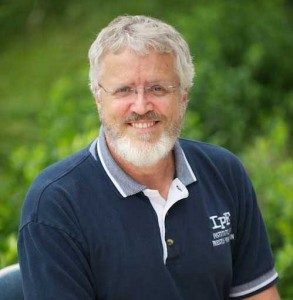
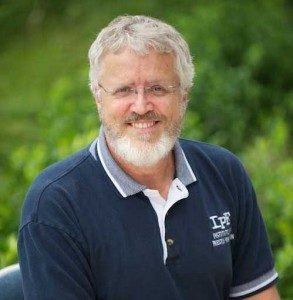
Deacon James Keating, PhD, the director of Theological Formation for the Institute for Priestly Formation, located at Creighton University, in Omaha.
From Pope Benedict’s 2nd audience on prayer:
A look at recent history reveals the failure of the predictions of those who, in the age of the Enlightenment, foretold the disappearance of religions and who exalted absolute reason, detached from faith, a reason that was to dispel the shadows of religious dogmatism and was to dissolve the “world of the sacred”, restoring to the human being freedom, dignity and autonomy from God. The experience of the past century, with the tragedy of the two World Wars, disrupted the progress that autonomous reason, man without God, seemed to have been able to guarantee.
The Catechism of the Catholic Church says: “In the act of creation, God calls every being from nothingness into existence…. Even after losing through his sin his likeness to God, man remains an image of his Creator, and retains the desire for the one who calls him into existence. All religions bear witness to man’s essential search for God” (n. 2566). We could say — as I explained in my last Catecheses — that there has been no great civilization, from the most distant epoch to our day, which has not been religious.
For more information on the “Institute of Priestly Formation” and for other material available by Deacon Keating, just click here
Don’t forget to pickup a copy of “Communion with Christ” , it is one of the best audio sets on prayer…ever!
Check out Deacon Keating’s “Discerning Heart” page
Tags: creation, Deacon James Keating, sin, witness
This entry was posted on Wednesday, April 17th, 2013 at 12:42 am
You can follow any responses to this entry through the RSS 2.0 feed.
FG#4 – Interior Freedom episode 2- Fountains of Grace: reflections on contemporary spiritual classics with Donna Garrett
Join host Donna Garrett, with Fr. Daniel Brandenburg, LC, as they discuss the spiritual classic “Interior Freedom” by Fr. Jacques Philippe a priest of Communaute des Beatitudes, an international association of the faithful of Pontifical Right founded in France in 1973. The members of the Community, which has a contemplative vocation based on Carmelite spirituality, are actively engaged in the service of the poor and the proclamation of the Gospel.
Podcast: Play in new window | Download (23.7MB) | Embed
Discussed in this episode, among other topics, from “Interior Freedom” page 75
“Let us ask ourselves this question, to what degree can the evil in my surroundings effect me? With the apologies to those I am going to scandalize,I say that the evil around us- the sins of others, of people in the church, of society-does not become an evil for us unless we let Him penetrate our hearts. The point isn’t that we should become indifferent. Just the opposite. The holier we are the more we will suffer due to the evil and sin in the world. But external evil only harms us to the degree we react badly to it, by fear, worry discouragement, sadness,giving up, rushing to apply hasty solutions that don’t solve anything judging, fostering bitterness and resentment, refusing to forgive and so on. Jesus say in St Mark’s Gospel, There is nothing outside of man which going into him can defile him but the things which come out of a man are what defile him. Harm does not come to us(our souls) from external circumstances, but from how we react to them interiorly.”

You can find “Interior Freedom” here

Fr. Jacques Philippe
.
Tags: Donna Garrett, evil, fear, hearts, sin, suffering
This entry was posted on Thursday, March 28th, 2013 at 1:08 pm
You can follow any responses to this entry through the RSS 2.0 feed.
“Joseph did as the angel of the Lord commanded him“
Podcast: Play in new window
| Download (2.9MB)
| Embed
an excerpt from today’s reflection by Don Schwager:
Are you prepared to obey the Lord in everything? Faith in God’s word and obedience to his commands go hand in hand. Joseph, like Mary, is a model of faith and justice. Matthew tells us that Joseph was a “just man”. John Chrysostom, the great 5th century father writes:“The concept of ‘just’ here signifies the man who possesses all the virtues. By ‘justice’ one at times understands only one virtue in particular, as in the phrase: the one who is not avaricious (greedy) is just. But ‘justice’ also refers to virtue in general. And it is in this sense, above all, that scripture uses the word ‘justice’. For example, it refers to: ‘a just man and true’ (cf. Job 1:1), or the two were just (cf. Luke 1:6). Joseph, then, being just, that is to say good and charitable…”
Joseph’s faith was put to the test when he discovered that his espoused wife Mary was pregnant. Joseph, being a just and God-fearing man, did not wish to embarrass, punish, or expose Mary to harm. To all outward appearances she had broken their solemn pledge to be faithful and chaste to one another. Joseph, no doubt took this troubling matter to God in prayer. He
was not hasty to judge or to react with hurt and anger. God rewarded him not only with guidance and consolation, but with the divine assurance that he had indeed called Joseph to be the husband of Mary and to assume a mission that would require the utmost faith, confidence, and trust in Almighty God. Joseph believed in the divine message to take Mary as his wife and to accept the child in her womb as the promised Messiah, who is both the only begotten Son of God and son of Mary conceived by the Holy Spirit.
Joseph was a worthy successor to the great patriarchs of the old covenant – Abraham, Isaac, and Jacob. Joseph followed the call of God through the mysterious circumstances that surrounded the coming of Jesus, the long-awaited Messiah who fulfilled all the promises made to Abraham and his offspring. God entrusted this silent, humble man with the unique privilege of raising, protecting, teaching, and training Jesus as a growing child. Joseph accepted his role of fatherly care with faith, trust, and obedience to the will of God. He is a model for all who are entrusted with the care, instruction, and protection of the young. Joseph is a faithful witness and servant of God’s unfolding plan of redemption. Are you ready to put your trust in the Lord to give you his help and guidance in fulfilling your responsibilities? God gives strength and guidance to those who seek his help, especially when we face trials, doubts, fears, perplexing circumstances, and what seems like insurmountable problems and challenges in our personal lives. God our heavenly Father has not left us alone, but has given us his only begotten Son Jesus as our savior, teacher, lord, and healer. Where do you need God’s help and guidance? Ask the Lord to increase your faith and trust in his promises and in his guiding hand in your life.
“Lord Jesus, you came to free us from the power of sin, fear, death, and Satan, and to heal and restore us to wholeness of life. May I always trust in your saving help, guidance, wisdom, and plan for my life”.
for the full reflection visit : Daily Reading and Meditation
Tags: angel, death, don schwager, fear, gospel of matthew, sin, st joseph
This entry was posted on Tuesday, March 19th, 2013 at 12:02 am
You can follow any responses to this entry through the RSS 2.0 feed.
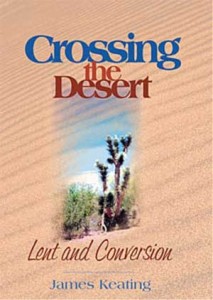
Episode 5 -Crossing the Desert: Lent and Conversion – “Leaving the Desert”. 
Podcast: Play in new window | Download (25.6MB) | Embed
“Celebrating the sacrament of reconciliation is, for many Catholics, a most daunting prospect. This sacrament has been the source of many jokes, composed perhaps by persons seeking to reduce the level of stress they feel regarding one of its main components: naming personal sin.
The naming of one’s own sin to oneself and to a priest is self-revelatory to the point of evoking anxiety. Initially, it can be true that some level of apprehension may accompany this sacrament, but over time with regular celebration of this form of worship, anxiety diminishes. Most positively the sacrament of reconciliation promotes truthful self-knowledge regarding sin in the context of Christ’s saving presence. Once someone experiences both the naming of sin and the reception of God’s mercy in this sacrament, he or she actually begins to celebrate this sacrament and see it as a great gift from Christ and his Church.”
Deacon James Keating, PhD, the director of Theological Formation for the Institute for Priestly Formation, located at Creighton University, in Omaha, is making available to ”Discerning Hearts” and all who listen, his series of programs entitled “Crossing the Desert”.
For more information on the “Institute of Priestly Formation” and for other material available by Deacon Keating, just click here
Check out Deacon Keating’s “Discerning Heart” page
Tags: creighton university, Deacon James Keating, institute for priestly formation, sacrament, sin
This entry was posted on Monday, March 18th, 2013 at 7:00 am
You can follow any responses to this entry through the RSS 2.0 feed.
It’s all about conversion…continually turning towards the Lord and allowing Him to heal us. Deliverance ministry really acknowledges the power of Jesus Christ to make all things new and to heal the damage done to us by sin and those spirits which get into our brokeness and wounds to drive us away from God. Neil Lozano has done extraordinary work with the “Unbound Ministries” ; it truly allow us to let the Father “deliver us from evil”. This is one of the best books I have ever read on the subject. Absolutely a must for everyone on the spiritual journey!!! “Be not afraid”, an
d really “all you need is love”.
find Neil’s work at www.heartofthefather.com
Podcast: Play in new window | Download (25.6MB) | Embed
From the book description:
Do you feel chained to a particular sin pattern that you cannot break?
Do you still feel guilty, ashamed, and doomed to repeat a besetting sin even after receiving the sacrament of Reconciliation?
Then you may find a way to spiritual freedom through deliverance prayer.
In Resisting the Devil, author Neal Lozano shows that sometimes evil spirits tell us lies that lock us into sins and personal problems. He explains the practice of deliverance, a way of dealing with such demonic influences that is supported by the teaching and traditionof the Catholic Church.
–Learn how to recognize the activity of evil spirits
–See how deliverance from spiritual bondage can be gentle, safe, and effective –Understand how deliverance differs from exorcism and how deliverance and Reconciliation can work together–Read the testimonies of women and men who have been freed through deliverance ministry.
Tags: conversion, deliverance ministry, devil, jesus christ, our sunday visitor, sin, spirits, spiritual journey, work
This entry was posted on Sunday, February 17th, 2013 at 12:45 am
You can follow any responses to this entry through the RSS 2.0 feed.
From the official Lourdes website (visit it …. it’s fantastic!)
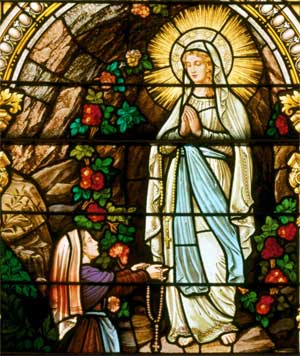
On 11th. February 1858 Bernadette, her sister Toinette and a friend of theirs, Jeanne, went looking for wood on the meadows and led towards “the place where the canal rejoins the River Gave”. They were in front of the Grotto of Massabielle. Toinette and Jeanne crossed the icy water, crying out with the cold; Bernadette hesitated to do this because of her chronic asthma. She heard “a noise like a gust of wind”, but “none of the trees were moving”. “Raising her head, she saw, in a hollow of the rock a small young lady, who looked at her and who smiled at her. This was the first Apparition of the Virgin Mary
More from the official site
On 25th. March 1858, the day of the sixteenth Apparition, Bernadette went to the Grotto, and on the instigation of the Parish Priest, Abbé‚ Peyramale, asked the Lady for her name. Three times Bernadette asked the question. On the fourth request, the Lady responds in dialect “Que soy era Immaculada Conception“. (“I am the Immaculate Conception”). Bernadette does not understand immediately the meaning of these words. The Immaculate Conception is, as the Church teaches, “Mary, conceived without sin, thanks to the merits of the Cross of Christ”. (The definition of the Dogma of the Immaculate Conception 1854) She goes to the Parish Priest to tell him the Lady’s name. He understands that it is the Mother of God who has appeared at the Grotto of Massabielle. Later the Bishop of Tarbes, Monseigneur Laurence, confirms this.
The Immaculate Conception is, as the Church teaches, “Mary, conceived without sin, thanks to the merits of the Cross of Christ”. Thus the Immaculate Conception is also the sign of what all people, recreated by God are called to be.
A prayer to Our Lady of Lourdes by Pope John Paul II
Podcast (devotionals-prayers): Play in new window
| Download (2.1MB)
| Embed
Hail Mary, poor and humble Woman,
Blessed by the Most High!
Virgin of hope, dawn of a new era,
We join in your song of praise,
to celebrate the Lord’s mercy,
to proclaim the coming of the Kingdom
and the full liberation of humanity.
Hail Mary, lowly handmaid of the Lord,
Glorious Mother of Christ!
Faithful Virgin, holy dwelling-place of the Word,
Teach us to persevere in listening to the Word,
and to be docile to the voice of the Spirit,
attentive to his promptings in the depths of our conscience
and to his manifestations in the events of history.
Hail Mary, Woman of sorrows,
Mother of the living!
Virgin spouse beneath the Cross, the new Eve,
Be our guide along the paths of the world.
Teach us to experience and to spread the love of Christ,
to stand with you before the innumerable crosses
on which your Son is still crucified.
Hail Mary, woman of faith,
First of the disciples!
Virgin Mother of the Church, help us always
to account for the hope that is in us,
with trust in human goodness and the Father’s love.
Teach us to build up the world beginning from within:
in the depths of silence and prayer,
in the joy of fraternal love,
in the unique fruitfulness of the Cross.
Holy Mary, Mother of believers,
Our Lady of Lourdes,
pray for us.
Amen.
Tags: Church, dogma of the immaculate conception, immaculate conception, our lady of lourdes, Parish Priest, sin, st. bernadette
This entry was posted on Monday, February 11th, 2013 at 12:14 am
You can follow any responses to this entry through the RSS 2.0 feed.
Podcast: Play in new window | Download (23.8MB) | Embed
Archbishop Lucas offers insights on the US Catholic Catechism for Adults Chapter 26:
The Second Commandment forbids the wrong use or misuse of God’s name. There are a number of ways in which this happens. Blasphemy uses the name of God and of Jesus Christ as well as those of the Blessed Mother and the saints in an offensive manner. The Catechism teaches that blasphemy consists “in uttering against God—inwardly or outwardly—words of hatred, reproach, or defiance” (CCC, no. 2148). This is gravely sinful. Habitual disrespect for God, displayed in cursing and even in the use of vulgar language, can create an attitude that erodes our relationship with the Lord.
At the same time, we recognize diminished culpability when the name of God is used because of an outburst of undisciplined speech due to passion or unexpected incitement to anger. We need to cultivate a persistent reverence for sacred names; if we do not, we can end up giving bad example and also fall into the sin of blasphemy. It should also be noted that in Scripture, the sometimes passionate language of the Prophets, in which they lament the troubles of their times and utter loud complaints to God, is not blasphemy or the taking of God’s name in vain. It is actually prayer addressed to God.
United States Conference of Catholic Bishops (USCCB)
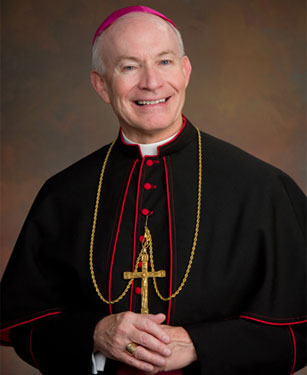
The Most Reverend George J. Lucas leads the Archdiocese of Omaha.
For other episodes in the visit our Archbishop George Lucas page
This programs is based on:
More information can be found here.
We wish to thank the USCCB for the permissions granted for use of relevant material used in this series.
Also we wish to thank Jim Carroll and Bruce McGregor for his vocal talents in this episode.
Tags: Archbishop Lucas, relationship, sin, USCCB
This entry was posted on Tuesday, February 5th, 2013 at 7:02 am
You can follow any responses to this entry through the RSS 2.0 feed.
Podcast: Play in new window | Download (1.4MB) | Embed
“You are all fair, O Mary, and there is in you no stain of original sin.” O Mary, conceived without sin, pray for us who have recourse to thee. O brilliant star of sanctity, as on that lovely day, upon a rough rock in Lourdes you spoke to the child Bernadette and a fountain broke from the plain earth and miracles happened and the great shrine of Lourdes began, so now I beseech you to hear our fervent prayer and do, we beseech you, grant us the petition we now so earnestly seek.
(make your request)
O Brilliant star of purity, Mary Immaculate, Our Lady of Lourdes, glorious in your assumption, triumphant in your coronation, show unto us the mercy of the Mother of God, Virgin Mary, Queen and Mother, be our comfort, hope, strength, and consolation. Amen.
Our Lady of Lourdes, pray for us.
Saint Bernadette, pray for us.
Tags: assumption, Mary Immaculate, our lady of lourdes novena, sin, virgin mary
This entry was posted on Monday, February 4th, 2013 at 7:27 am
You can follow any responses to this entry through the RSS 2.0 feed.

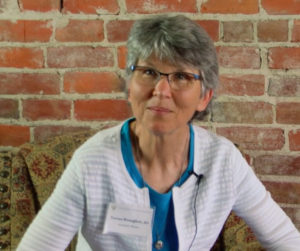
Teresa Monaghen, of Pro Sanctity and Fr. John Sianchuck, C.Ss.R., a Ukranian Byzantine priest do a great job of explaining the Western and Eastern understanding of this great mystery.
Take a listen to the discussion posted above, that Bruce and I had with Teresa Monaghen, from Pro Sanctity and Fr. John Sianchuk, C.Ss.R., a Ukrainian Redemptorist priest discuss the difference and similarities of Western and Eastern understanding of the Immaculate Conception of the Blessed Virgin Mary
Podcast: Play in new window | Download (34.7MB) | Embed
From the Catechism of the Catholic Church on the Immaculate Conception,
“490 To become the mother of the Savior, Mary “was enriched by God with gifts appropriate to such a role.”132 The angel Gabriel at the moment of the annunciation salutes her as “full of grace”.133 In fact, in order for Mary to be able to give the free assent of her faith to the announcement of her vocation, it was necessary that she be wholly borne by God’s grace.
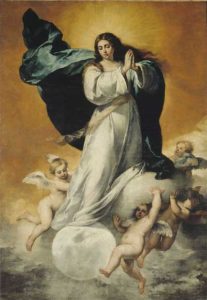
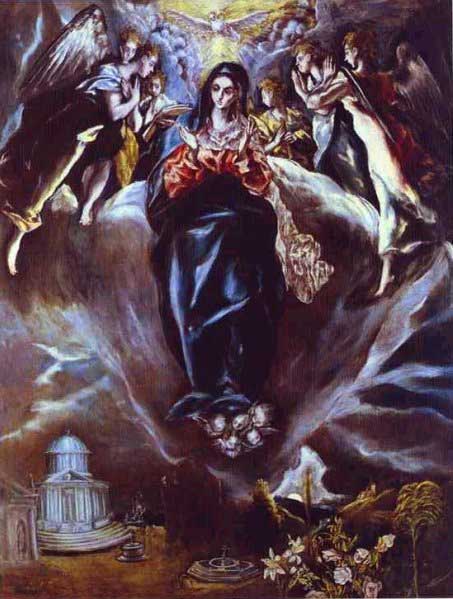
491 Through the centuries the Church has become ever more aware that Mary, “full of grace” through God,134 was redeemed from the moment of her conception. That is what the dogma of the Immaculate Conception confesses, as Pope Pius IX proclaimed in 1854:
- The most Blessed Virgin Mary was, from the first moment of her conception, by a singular grace and privilege of almighty God and by virtue of the merits of Jesus Christ, Savior of the human race, preserved immune from all stain of original sin.135
492 The “splendor of an entirely unique holiness” by which Mary is “enriched from the first instant of her conception” comes wholly from Christ: she is “redeemed, in a more exalted fashion, by reason of the merits of her Son”.136 The Father blessed Mary more than any other created person “in Christ with every spiritual blessing in the heavenly places” and chose her “in Christ before the foundation of the world, to be holy and blameless before him in love”.137
493 The Fathers of the Eastern tradition call the Mother of God “the All-Holy” (Panagia), and celebrate her as “free from any stain of sin, as though fashioned by the Holy Spirit and formed as a new creature”.138 By the grace of God Mary remained free of every personal sin her whole life long. ”
This video does a nice job of tracking the history of the dogma
Tags: angel gabriel, ark of the covenant, blessed virgin mary, catechism of the catholic church, dogma of the immaculate conception, eastern tradition, immaculate conception, John Sianchuk, mary full of grace, mother of god, new ark, new creature, pope pius ix, sin, singular grace, teresa monaghen
This entry was posted on Saturday, December 8th, 2012 at 12:08 am
You can follow any responses to this entry through the RSS 2.0 feed.
“For with God nothing will be impossible”
Podcast: Play in new window | Download (3.5MB) | Embed
an excerpt from today’s reflection by Don Schwager:
What is the key that can unlock the power and grace of God’s kingdom in our personal lives? Faith and obedience for sure! When Adam and Eve disobeyed God, they immediately experienced the consequence of their action – separation from the God who loved them. God in his mercy promised them a Redeemer who would pay the price for their sin and the sin of the world. We see the marvelous unfolding of God’s plan of redemption in the events leading up to the Incarnation, the birth of the Messiah. Mary’s prompt response of “yes” to the divine message is a model of faith for all believers. Mary believed God’s promises even when they seemed impossible. She was full of grace because she trusted that what God said was true and would be fulfilled. She was willing and eager to do God’s will, even if it seemed difficult or costly. God gives us grace and he expects us to respond with the same willingness, obedience, and heart-felt trust as Mary did. When God commands he also gives the grace, strength, and means to respond. We can either yield to his grace or resist and go our own way. Do you believe in God’s promises and do you yield to his grace?
“Heavenly Father, you offer us abundant grace, mercy, and forgiveness through your Son, Our Lord Jesus Christ. Help me to live a grace-filled life as Mary did by believing in your promises and by giving you my unqualified “yes” to your will and to your plan for my life.”
for the full reflection visit : Daily Reading and Meditation
Tags: blessed virgin mary, blessed virgin mother, don schwager, forgiveness, full of grace, gospel of luke, immaculate conception, mercy, sin, solemnity of the immaculate conception
This entry was posted on Saturday, December 8th, 2012 at 12:02 am
You can follow any responses to this entry through the RSS 2.0 feed.
Podcast: Play in new window | Download (6.4MB) | Embed
O God,
who by the Immaculate Conception
of the Blessed Virgin Mary,
did prepare a worthy dwelling place for Your Son,
we beseech You that,
as by the foreseen death of this, Your Son,
You did preserve Her from all stain,
so too You would permit us,
purified through Her intercession,
to come unto You.

Through the same Lord Jesus Christ,
Your Son, who lives and reigns with You
in the unity of the Holy Spirit,
God, world without end.
Amen.
O Mother of the King of the Universe,
most perfect member of the human race,
“our tainted nature’s solitary boast,”
we turn to you as mother,
advocate, and mediatrix. O Holy Mary,
assist us in our present necessity.
By your Immaculate Conception,
O Mary conceived without sin,
we humbly beseech you from the bottom of our heart
to intercede for us with your Divine Son
and ask that we be granted the favor for which we now plead…
(State your intention here…)
O Mary of the Immaculate Conception,
Mother of Christ,
you had influence with your Divine Son while upon this earth;
you have the same influence now in heaven.
Pray for us
and obtain for us from him
the granting of my petition if it be the Divine Will.
Amen.
On the last day of this Novena, recite the Litany of the Blessed Virgin.
Tags: Divine Son, heaven, immaculate conception, sin
This entry was posted on Friday, December 7th, 2012 at 10:56 am
You can follow any responses to this entry through the RSS 2.0 feed.