FJ2 – Navigating Life, Death, and Ethical Dilemmas – The Final Journey with Dr. Stephen Doran M.D. – Discerning Hearts Catholic Podcasts

Episode 2 – Navigating Life, Death, and Ethical Dilemmas – The Final Journey with Dr. Stephen Doran, M.D.

In this podcast episode, Dr. Stephen Doran and Kris McGregor discuss the nature of death from both medical and spiritual viewpoints. Dr. Doran, a neurosurgeon and deacon, defines death clinically as the cessation of bodily functions but emphasizes its more profound significance in Catholicism as the soul’s separation from the body. He discusses the challenges in medical practice, especially around end-of-life decisions, highlighting the importance of aligning with God’s will and providing unbiased information to families.

The conversation also explores Dr. Doran’s journey to becoming a deacon and how it has enriched his medical practice. Ethical and moral considerations in medicine, particularly in the context of brain death and technological advancements, are addressed. Dr. Doran underscores the need for decision-making principles grounded in science and faith.

The episode touches on issues like euthanasia and assisted suicide, noting their impact on medical ethics and practice. Dr. Doran concludes by encouraging healthcare professionals to integrate love and faith into their work and personal lives, reinforcing the central role of love in all aspects of life.

For more episodes in the series, visit The Final Journey: Insights from a Catholic Doctor and Neurosurgeon w/ Dr. Stephen Doran M.D.  – Discerning Hearts Podcasts.


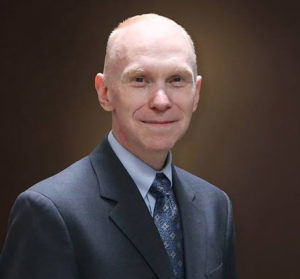
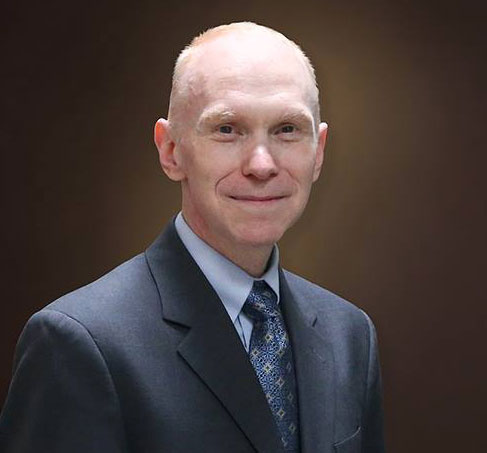
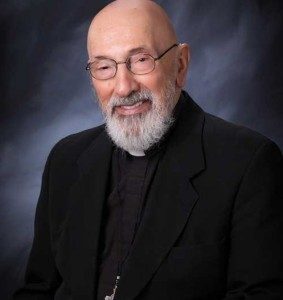
Stephen Doran, M.D., a board-certified neurosurgeon with over twenty-five years of experience, is an ordained permanent deacon and serves as the bioethicist for the Archdiocese of Omaha. His writings in bioethics, neurosurgery, and gene therapy for brain disorders have been widely published in national media outlets, academic journals, and neurosurgery textbooks. He is married with five sons. He co-founded Seeking Truth Catholic Bible Study with his wife, Sharon.


Discerning Hearts reflection questions for this episode:

  1. Understanding Death’s Conundrum: How does the conversation highlight the challenges people face in understanding and making decisions about death in today’s complex world of medical advancements?
  2. Letting Go and Conforming to God’s Will: In what ways does the podcast discuss the significance of letting go and conforming one’s will to God, especially in the context of dealing with end-of-life decisions?
  3. Integration of Faith in Medical Practice: How does Dr. Stephen Doran reflect on the integration of his faith into his role as a neurosurgeon and deacon, and why is it essential for clinicians to be more than just doctors who happen to be Catholic?
  4. The Role of Physicians in Providing Information: What is emphasized regarding the role of physicians, particularly in situations where decisions about withholding nutrition, palliative care, or hospice care need to be addressed? How does Dr. Doran approach providing information to families facing these decisions?
  5. Challenges of Evolving Technology: How does the podcast address the challenges posed by advancing medical technology, especially in areas like determining brain death, and how do these challenges intersect with ethical, moral, and faith-based considerations?
  6. The Witness of Dying Well: How does the conversation highlight the importance of dying well as a witness to the community, and what impact can a person’s approach to death have on those witnessing it, regardless of their faith background?
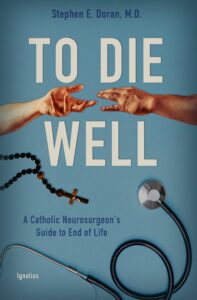

You can find the book here

From the book description:

Dr. Stephen Doran draws from his vast experience as a neurosurgeon, a bioethicist, and a permanent deacon to present the Catholic perspective on the art of dying well. The spiritual and moral issues related to death and the process of dying can be challenging and complicated. To Die Well provides a detailed yet readily understandable guide to these topics.

Each chapter begins with a story from Dr. Doran’s personal or professional life that not only provides context for the topic at hand but also gently draws the reader toward the personal realities of dying. The first part focuses on the moral issues that surround death and dying, including end-of-life medical decisions. The second part is devoted to the Catholic spiritual understanding of dying and the rites that accompany the death of a Catholic.

To Die Well will help readers contemplate, pray about, and prepare for the end of their earthly lives.
 

POA13 – Help from the Saints – Put On The Armor – A Manual for Spiritual Warfare w/Dr. Paul Thigpen Ph.D. – Discerning Hearts Podcasts

Help from the Saints – Put On The Armor: A Manual for Spiritual Warfare with Dr. Paul Thigpen Ph.D. Put On The Armor - A Manual for Spiritual Warfare w/Dr. Paul Thigpen Ph.D. 2

Dr. Thigpen offers insights on the Manual for Spiritual Warfare Chapter 9:

WORDS FROM THE SAINTS

The saints are veterans of the spiritual war that continues to rage in this world. Their insights, born of long experience in combat with the Enemy, can make us wise and strong in battle.
POA6 - "Know your Weapons" pt. 1 - Put On The Armor - A Manual for Spiritual Warfare w/Dr. Paul Thigpen Ph.D.

Visit here for other episodes in this series:
Put On The Armor – A Manual for Spiritual Warfare w/Dr. Paul Thigpen Ph.D.

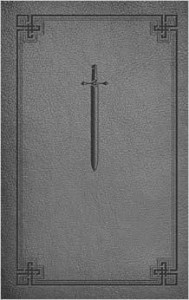
The “Manual for Spiritual Warfare” can be found here

Paul Thigpen, Ph.D, is the Editor of TAN Books in Charlotte, North Carolina. An internationally known speaker, best-selling author and award-winning journalist, Paul has published forty-three books in a wide variety of genres and subjects: history and biography, spirituality and apologetics, anthologies and devotionals, family life and children’s books, study guides and reference works, fiction and collections of poetry and prayers.

Paul graduated from Yale University in 1977 summa cum laude, Phi Beta Kappa, with Distinction in the Major of Religious Studies. He was later awarded the George W. Woodruff Fellowship at Emory University in Atlanta, where he earned an M.A. (1993) and a Ph.D. (1995) in Historical Theology. In 1993 he was named as a Jacob K. Javits Fellow by the U.S. Department of Education. He has served on the faculty of several universities and colleges.

In 2008 Paul was appointed by the United States Conference of Catholic Bishops to their National Advisory Council for a four-year term. He has served the Church as a theologian, historian, apologist, evangelist, and catechist in a number of settings,speaking frequently in Catholic and secular media broadcasts and at conferences, seminars, parish missions, and scholarly gatherings.


St. Albert the Great – The Doctors of the Church: The Charism of Wisdom w/ Dr. Matthew Bunson – Discerning Hearts Podcast

St. Albert the Great – The Doctors of the Church: The Charism of Wisdom with Dr. Matthew BunsonDr. Matthew Bunson Doctors of the Church Podcast St. Albert the Great

Dr. Matthew Bunson discusses the life, times and teachings of St. Albert the Great.

Born: 1193, Lauingen, Germany
Died: November 15, 1280, Cologne, Germany
Education: University of Padua

For more on St. Albert the Great and his teachings:

From Vatican.va, an excerpt from the teachings oPope Benedict XVI 

From the General Audience on St. Albert the Great

One of the great masters of medieval theology is St Albert the Great.

The title “Great”, (Magnus), with which he has passed into history indicates the vastness and depth of his teaching, which he combined with holiness of life. However, his contemporaries did not hesitate to attribute to him titles of excellence even then. One of his disciples, Ulric of Strasbourg, called him the “wonder and miracle of our epoch”.

He was born in Germany at the beginning of the 13th century. When he was still young he went to Italy, to Padua, the seat of one of the most famous medieval universities. He devoted himself to the study of the so-called “liberal arts”: grammar, rhetoric, dialectics, arithmetic, geometry, astronomy and music, that is, to culture in general, demonstrating that characteristic interest in the natural sciences which was soon to become the favourite field for his specialization. During his stay in Padua he attended the Church of the Dominicans, whom he then joined with the profession of the religious vows. Hagiographic sources suggest that Albert came to this decision gradually. His intense relationship with God, the Dominican Friars’ example of holiness, hearing the sermons of Blessed Jordan of Saxony, St Dominic’s successor at the Master General of the Order of Preachers, were the decisive factors that helped him to overcome every doubt and even to surmount his family’s resistence. God often speaks to us in the years of our youth and points out to us the project of our life. As it was for Albert, so also for all of us, personal prayer, nourished by the Lord’s word, frequent reception of the Sacraments and the spiritual guidance of enlightened people are the means to discover and follow God’s voice. He received the religious habit from Bl. Jordan of Saxony.

After his ordination to the priesthood, his superiors sent him to teach at various theological study centres annexed to the convents of the Dominican Fathers. His brilliant intellectual qualities enabled him to perfect his theological studies at the most famous university in that period, the University of Paris. From that time on St Albert began his extraordinary activity as a writer that he was to pursue throughout his life.

Prestigious tasks were assigned to him. In 1248 he was charged with opening a theological studium at Cologne, one of the most important regional capitals of Germany, where he lived at different times and which became his adopted city. He brought with him from Paris an exceptional student, Thomas Aquinas. The sole merit of having been St Thomas’ teacher would suffice to elicit profound admiration for St Albert. A relationship of mutual esteem and friendship developed between these two great theologians, human attitudes that were very helpful in the development of this branch of knowlege. In 1254, Albert was elected Provincial of the Dominican Fathers’ “Provincia Teutoniae” Teutonic Province which included communities scattered over a vast territory in Central and Northern Europe.

He distinguished himself for the zeal with which he exercised this ministry, visiting the communities and constantly recalling his confreres to fidelity, to the teaching and example of St Dominic.

His gifts did not escape the attention of the Pope of that time, Alexander iv, who wanted Albert with him for a certain time at Anagni where the Popes went frequently in Rome itself and at Viterbo, in order to avail himself of Albert’s theological advice. The same Supreme Pontiff appointed Albert Bishop of Regensburg, a large and celebrated diocese, but which was going through a difficult period. From 1260 to 1262, Albert exercised this ministry with unflagging dedication, succeeding in restoring peace and harmony to the city, in reorganizing parishes and convents and in giving a new impetus to charitable activities.

In the year 1263-1264, Albert preached in Germany and in Bohemia, at the request of Pope Urban iv. He later returned to Cologne and took up his role as lecturer, scholar and writer. As a man of prayer, science and charity, his authoritative intervention in various events of the Church and of the society of the time were acclaimed: above all, he was a man of reconciliation and peace in Cologne, where the Archbishop had run seriously foul of the city’s institutions; he did his utmost during the Second Council of Lyons, in 1274, summoned by Pope Gregory X, to encourage union between the Latin and Greek Churches after the separation of the great schism with the East in 1054. He also explained the thought of Thomas Aquinas which had been the subject of objections and even quite unjustified condemnations.

He died in his cell at the convent of the Holy Cross, Cologne, in 1280, and was very soon venerated by his confreres. The Church proposed him for the worship of the faithful with his beatification in 1622 and with his canonization in 1931, when Pope Pius XI proclaimed him Doctor of the Church. This was certainly an appropriate recognition of this great man of God and outstanding scholar, not only of the truths of the faith but of a great many other branches of knowledge; indeed, with a glance at the titles of his very numerous works, we realize that there was something miraculous about his culture and that his encyclopedic interests led him not only to concern himself with philosophy and theology, like other contemporaries of his, but also with every other discipline then known, from physics to chemistry, from astronomy to minerology, from botany to zoology.

For this reason Pope Pius XII named him Patron of enthusiasts of the natural sciences and also called him “Doctor universalis” precisely because of the vastness of his interests and knowledge.

For more visit Vatican.va


For more from Dr. Matthew Bunson check out his Discerning Hearts page

Dr. Matthew E. Bunson is a Register senior editor and a senior contributor to EWTN News. For the past 20 years, he has been active in the area of Catholic social communications and education, including writing, editing, and teaching on a variety of topics related to Church history, the papacy, the saints, and Catholic culture. He is faculty chair at Catholic Distance University, a senior fellow of the St. Paul Center for Biblical Theology, and the author or co-author of over 50 books including The Encyclopedia of Catholic History, The Pope Encyclopedia, We Have a Pope! Benedict XVI, The Saints Encyclopedia and best-selling biographies of St. Damien of Molokai and St. Kateri Tekakwitha.

Wednesday of the Thirty-Second Week in Ordinary Time – A Time of Lectio Divina for the Discerning Heart Podcast
Wednesday of the Thirty-Second Week in Ordinary Time – A Time of Lectio Divina for the Discerning Heart Podcast
As you begin, take a deep breath and exhale slowly.  For at least the next few moments, surrender all the cares and concerns of this day to the Lord.

Say slowly from your heart “Jesus, I Trust In You…You Take Over”

Become aware that He is with you, looking upon you with love, wanting to be heard deep within in your heart…

From the Holy Gospel According to St. Luke 17:7-10

Jesus said to his disciples: ‘Which of you, with a servant ploughing or minding sheep, would say to him when he returned from the fields, “Come and have your meal immediately”? Would he not be more likely to say, “Get my supper laid; make yourself tidy and wait on me while I eat and drink. You can eat and drink yourself afterwards”? Must he be grateful to the servant for doing what he was told? So with you: when you have done all you have been told to do, say, “We are merely servants: we have done no more than our duty.”’

What word made this passage come alive for you?

What did you sense the Lord saying to you?

Once more give the Lord an opportunity to speak to you:

Jesus said to his disciples: ‘Which of you, with a servant ploughing or minding sheep, would say to him when he returned from the fields, “Come and have your meal immediately”? Would he not be more likely to say, “Get my supper laid; make yourself tidy and wait on me while I eat and drink. You can eat and drink yourself afterwards”? Must he be grateful to the servant for doing what he was told? So with you: when you have done all you have been told to do, say, “We are merely servants: we have done no more than our duty.”’

What did your heart feel as you listened?

What did you sense the Lord saying to you?

Once more, through Him, with Him and in Him listen to the Word:

Jesus said to his disciples: ‘Which of you, with a servant ploughing or minding sheep, would say to him when he returned from the fields, “Come and have your meal immediately”? Would he not be more likely to say, “Get my supper laid; make yourself tidy and wait on me while I eat and drink. You can eat and drink yourself afterwards”? Must he be grateful to the servant for doing what he was told? So with you: when you have done all you have been told to do, say, “We are merely servants: we have done no more than our duty.”’

What touched your heart in this time of prayer?

What did your heart feel as you prayed?

What do you hope to carry with you from this time with the Lord?


Our Father, who art in heaven,

hallowed be thy name.

Thy kingdom come.

Thy will be done on earth, as it is in heaven.

Give us this day our daily bread,

and forgive us our trespasses,

as we forgive those who trespass against us,

and lead us not into temptation,

 but deliver us from evil.

Amen

Excerpt from THE JERUSALEM BIBLE, copyright (c) 1966 by Darton, Longman & Todd, Ltd. and Doubleday, a division of Penguin Random House, Inc. Reprinted by Permission.

LST9 – The Passion of St. Therese – The Letters of St. Therese of Lisieux with Fr. Timothy Gallagher – Discerning Hearts Podcast

The Passion of St. Therese – The Letters of St. Therese of Lisieux with Fr. Timothy GallagherBA6 - "Refuse to Accept Discouragement" - Begin Again: The Spiritual Legacy of Ven. Bruno Lanteri with Fr. Timothy Gallagher

In this conversation, Fr. Gallagher reflects on the suffering of St. Therese and her experience of it in light of the “Little Way” as seen in her letters and the observations from others.

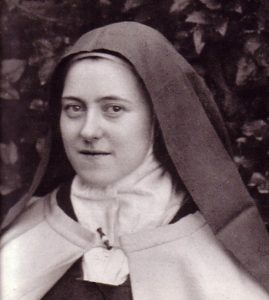
St. Therese of Liesuex

Here are some of the various texts Fr. Gallagher refers to in this episode:

The Letters of St. Therese of Lisieux, Vol. I: 1877-1890 (Critical edition of the complete works of Saint Thérèse of Lisieux)

Letters of St. Therese of Lisieux, Vol. II

This is one of the letters Fr. Gallagher refers to in this episode
An Excerpt from LT 226 From Thérèse to P. Roulland.

May 9, 1897

I do not understand, Brother, how you seem to doubt your immediate entrance into heaven if the infidels were to take your life. I know one must be very pure to appear before the God of all Holiness, but I know, too, that the Lord is infinitely just; and it is this justice which frightens so many souls that is the object of my joy and confidence. To be just is not only to exercise severity in order to punish the guilty; it is also to recognize right intentions and to reward virtue. I expect as much from God’s justice as from His mercy. It is because He is just that “He is compassionate and filled with gentleness, slow to punish, and abundant in mercy, for He knows our frailty, He remembers we are only dust. As a father has tenderness for his children, so the Lord has compassion on us!!” 6 Oh, Brother, when hearing these beautiful and consoling words of the Prophet-King, how can we doubt that God will open the doors of His kingdom to His children who loved Him even to sacrificing all for Him, who have not only left their family and their country to make Him known and loved, but even desire to give their life for Him whom they love…. Jesus was very right in saying that there is no greater love than that! 7 How would He allow Himself to be overcome in generosity? How would He purify in the flames of purgatory souls consumed in the fires of divine love? It is true that no human life is exempt from faults; only the Immaculate Virgin presents herself absolutely pure before the divine Majesty. Since she loves us and since she knows our weakness, what have we to fear? Here are a lot of sentences to express my thought, or rather not to succeed in expressing it, I wanted simply to say that it seems to me all missionaries are martyrs by desire and will and that, as a consequence, not one should have to go to purgatory. If there remains in their soul at the moment of appearing before God some trace of human weakness, the Blessed Virgin obtains for them the grace of making an act of perfect love, and then she gives them the palm and the crown that they so greatly merited.

This is, Brother, what I think of God’s justice; 8 my way is all confidence and love. I do not understand souls who fear a Friend so tender. At times, when I am reading certain spiritual treatises in which perfection is shown through a thousand obstacles, surrounded by a crowd of illusions, my poor little mind quickly tires; I close the learned book that is breaking my head and drying up my heart, 9 and I take up Holy Scripture. 10 Then all seems luminous to me; a single word uncovers for my soul infinite horizons, perfection seems simple to me, I see it is sufficient to recognize one’s nothingness and to abandon oneself as a child into God’s arms. Leaving to great souls, to great minds the beautiful books I cannot understand, much less put into practice, I rejoice at being little since children alone and those who resemble them will be admitted to the heavenly banquet. 11 I am very happy there are many mansions in God’s kingdom, 12 for if there were only the one whose description and road seems incomprehensible to me, I would not be able to enter there. I would like, however, not to be too far from your mansion; in consideration of your merits, I hope God will give me the favor of sharing in your glory, just as on earth the sister of a conqueror, were she deprived of the gifts of nature, shares in the honors bestowed on her brother in spite of her own poverty.

St. Therese of Lisieux. Letters of St. Therese of Lisieux, Volume II: General Correspondence 1890-1897 (Critical Edition of the Complete Works of Saint Therese of Lisieux Book 2) (Kindle Locations 7175-7190). ICS publications. Kindle Edition..


Father Timothy M. Gallagher, O.M.V., was ordained in 1979 as a member of the Oblates of the Virgin Mary, a religious community dedicated to retreats and spiritual formation according to the Spiritual Exercises of St. Ignatius.  Fr. Gallagher is featured on the EWTN series “Living the Discerning Life:  The Spiritual Teachings of St. Ignatius of Loyola”. For more information on how to obtain copies of Fr. Gallaghers’s various books and audio which are available for purchase, please visit  his  website:   frtimothygallagher.org

For the other episodes in this series check out “The Letters of St. Therese of Lisieux with Fr. Timothy Gallagher – Discerning Hearts” page

“Who Are the Wise Virgins?” – Building a Kingdom of Love with Msgr. John Esseff – Discerning Hearts Podcasts

“Who Are the Wise Virgins?” – Building a Kingdom of Love with Msgr. John Esseff

Join Msgr. John Esseff as he answers the question: “Who are the wise virgins?” in this exploration of the Gospel of Matthew 25:1-13.

Gospel  MT 25:1-13

Jesus told his disciples this parable:
“The kingdom of heaven will be like ten virgins
who took their lamps and went out to meet the bridegroom.
Five of them were foolish and five were wise.
The foolish ones, when taking their lamps,
brought no oil with them,
but the wise brought flasks of oil with their lamps.
Since the bridegroom was long delayed,
they all became drowsy and fell asleep.
At midnight, there was a cry,
‘Behold, the bridegroom! Come out to meet him!’
Then all those virgins got up and trimmed their lamps.
The foolish ones said to the wise,
‘Give us some of your oil,
for our lamps are going out.’
But the wise ones replied,
‘No, for there may not be enough for us and you.
Go instead to the merchants and buy some for yourselves.’
While they went off to buy it,
the bridegroom came
and those who were ready went into the wedding feast with him.
Then the door was locked.
Afterwards the other virgins came and said,
‘Lord, Lord, open the door for us!’
But he said in reply,
‘Amen, I say to you, I do not know you.’
Therefore, stay awake,
for you know neither the day nor the hour.”

Msgr. John A. Esseff is a Roman Catholic priest in the Diocese of Scranton.  He was ordained on May 30, 1953, by the late Bishop William J. Hafey, D.D. at St. Peter’s Cathedral in Scranton, PA.  Msgr. Esseff served as a retreat director and confessor to St. Mother Teresa.    He continues to offer direction and retreats for the Sisters of the Missionaries of Charity.  Msgr. Esseff encountered St.  Padre Pio,  who would become a spiritual father to him.  He has lived in areas around the world,  serving in the Pontifical Missions, a Catholic organization established by St. Pope John Paul II to bring the Good News to the world especially to the poor.  Msgr. Esseff assisted the founders of the Institute for Priestly Formation.  He continues to serve as a retreat leader and director to bishops, priests and sisters and seminarians, and other religious leaders around the world.   

Sunday of the Thirty-Second Week in Ordinary Time – A Time of Lectio Divina for the Discerning Heart Podcast
Sunday of the Thirty-Second Week in Ordinary Time – A Time of Lectio Divina for the Discerning Heart Podcast

As you begin, take a deep breath and exhale slowly.  For at least the next few moments, surrender all the cares and concerns of this day to the Lord.

Say slowly from your heart “Jesus, I Trust In You…You Take Over”

Become aware that He is with you, looking upon you with love, wanting to be heard deep within in your heart…

From the Holy Gospel According to St. Matthew 25:1-13

Jesus told this parable to his disciples: ‘The kingdom of heaven will be like this: Ten bridesmaids took their lamps and went to meet the bridegroom. Five of them were foolish and five were sensible: the foolish ones did take their lamps, but they brought no oil, whereas the sensible ones took flasks of oil as well as their lamps. The bridegroom was late, and they all grew drowsy and fell asleep. But at midnight there was a cry, “The bridegroom is here! Go out and meet him.” At this, all those bridesmaids woke up and trimmed their lamps, and the foolish ones said to the sensible ones, “Give us some of your oil: our lamps are going out.” But they replied, “There may not be enough for us and for you; you had better go to those who sell it and buy some for yourselves.” They had gone off to buy it when the bridegroom arrived. Those who were ready went in with him to the wedding hall and the door was closed. The other bridesmaids arrived later. “Lord, Lord,” they said “open the door for us.” But he replied, “I tell you solemnly, I do not know you.” So stay awake, because you do not know either the day or the hour.’

What word made this passage come alive for you?

What did you sense the Lord saying to you?

Once more give the Lord an opportunity to speak to you:

Jesus told this parable to his disciples: ‘The kingdom of heaven will be like this: Ten bridesmaids took their lamps and went to meet the bridegroom. Five of them were foolish and five were sensible: the foolish ones did take their lamps, but they brought no oil, whereas the sensible ones took flasks of oil as well as their lamps. The bridegroom was late, and they all grew drowsy and fell asleep. But at midnight there was a cry, “The bridegroom is here! Go out and meet him.” At this, all those bridesmaids woke up and trimmed their lamps, and the foolish ones said to the sensible ones, “Give us some of your oil: our lamps are going out.” But they replied, “There may not be enough for us and for you; you had better go to those who sell it and buy some for yourselves.” They had gone off to buy it when the bridegroom arrived. Those who were ready went in with him to the wedding hall and the door was closed. The other bridesmaids arrived later. “Lord, Lord,” they said “open the door for us.” But he replied, “I tell you solemnly, I do not know you.” So stay awake, because you do not know either the day or the hour.’

What did your heart feel as you listened?

What did you sense the Lord saying to you?

Once more, through Him, with Him and in Him listen to the Word:

Jesus told this parable to his disciples: ‘The kingdom of heaven will be like this: Ten bridesmaids took their lamps and went to meet the bridegroom. Five of them were foolish and five were sensible: the foolish ones did take their lamps, but they brought no oil, whereas the sensible ones took flasks of oil as well as their lamps. The bridegroom was late, and they all grew drowsy and fell asleep. But at midnight there was a cry, “The bridegroom is here! Go out and meet him.” At this, all those bridesmaids woke up and trimmed their lamps, and the foolish ones said to the sensible ones, “Give us some of your oil: our lamps are going out.” But they replied, “There may not be enough for us and for you; you had better go to those who sell it and buy some for yourselves.” They had gone off to buy it when the bridegroom arrived. Those who were ready went in with him to the wedding hall and the door was closed. The other bridesmaids arrived later. “Lord, Lord,” they said “open the door for us.” But he replied, “I tell you solemnly, I do not know you.” So stay awake, because you do not know either the day or the hour.’

What touched your heart in this time of prayer?

What did your heart feel as you prayed?

What do you hope to carry with you from this time with the Lord?


Our Father, who art in heaven,

hallowed be thy name.

Thy kingdom come.

Thy will be done on earth, as it is in heaven.

Give us this day our daily bread,

and forgive us our trespasses,

as we forgive those who trespass against us,

and lead us not into temptation,

 but deliver us from evil.

Amen

Excerpt from THE JERUSALEM BIBLE, copyright (c) 1966 by Darton, Longman & Todd, Ltd. and Doubleday, a division of Penguin Random House, Inc. Reprinted by Permission.

Episode 16 – The Drama of Atheist Humanism – Fr. Joseph Fessio S.J., Vivian Dudro, and Joseph Pearce – FBC Podcast


Each one of us is a whole world, say Dostoyevsky and De Lubac. Fr. Fessio, Joseph Pearce, and Vivian Dudro continue to read Henri de Lubac’s analysis of the great Fyodor Dostoyevsky in “The Drama of Atheist Humanism.”


You can find the book here

De Lubac traces the origin of 19th century attempts to construct a humanism apart from God, the sources of contemporary atheism which purports to have “moved beyond God.” The three persons he focuses on are Feuerbach, who greatly influenced Marx; Nietzsche, who represents nihilism; and Comte, who is the father of all forms of positivism.

He then shows that the only one who really responded to this ideology was Dostoevsky, a kind of prophet who criticizes in his novels this attempt to have a society without God. Despite their historical and scholarly appearance, de Lubac’s work clearly refers to the present.

As he investigates the sources of modern atheism, particularly in its claim to have definitely moved beyond the idea of God, he is thinking of an ideology prevalent today in East and West which regards the Christian faith as a completely outdated.


Fr. Joseph Fessio S.J.
Vivian Dudro
Joseph Pearce


St. Leo the Great – The Doctors of the Church: The Charism of Wisdom with Dr. Matthew Bunson – Discerning Hearts Podcasts

Dr. Matthew Bunson discusses the life, times and teachings of St. Leo the Great.

Born: Tuscany, Italy

Died: November 10, 461 AD, Rome, Italy
For more on St. Leo the Great and his teachings
From Vatican.va, an excerpt from the teachings of Pope Benedict XVI General Audience 2008

Aware of the historical period in which he lived and of the change that was taking place – from pagan Rome to Christian Rome – in a period of profound crisis, Leo the Great knew how to make himself close to the people and the faithful with his pastoral action and his preaching. He enlivened charity in a Rome tried by famines, an influx of refugees, injustice and poverty. He opposed pagan superstitions and the actions of Manichaean groups. He associated the liturgy with the daily life of Christians:  for example, by combining the practice of fasting with charity and almsgiving above all on the occasion of the Quattro tempora, which in the course of the year marked the change of seasons. In particular, Leo the Great taught his faithful – and his words still apply for us today – that the Christian liturgy is not the memory of past events, but the actualization of invisible realities which act in the lives of each one of us. This is what he stressed in a sermon (cf. 64, 1-2) on Easter, to be celebrated in every season of the year “not so much as something of the past as rather an event of the present”. All this fits into a precise project, the Holy Pontiff insisted:  just as, in fact, the Creator enlivened with the breath of rational life man formed from the dust of the ground, after the original sin he sent his Son into the world to restore to man his lost dignity and to destroy the dominion of the devil through the new life of grace.

This is the Christological mystery to which St Leo the Great, with his Letter to the Council of Ephesus, made an effective and essential contribution, confirming for all time – through this Council – what St Peter said at Caesarea Philippi. With Peter and as Peter, he professed: “You are the Christ, the Son of the living God”. And so it is that God and man together “are not foreign to the human race but alien to sin” (cf. Serm. 64). Through the force of this Christological faith he was a great messenger of peace and love. He thus shows us the way:  in faith we learn charity. Let us therefore learn with St Leo the Great to believe in Christ, true God and true Man, and to implement this faith every day in action for peace and love of neighbour.

For more visit Vatican.va


Dr. Matthew E. Bunson is a Register senior editor and a senior contributor to EWTN News. For the past 20 years, he has been active in the area of Catholic social communications and education, including writing, editing, and teaching on a variety of topics related to Church history, the papacy, the saints and Catholic culture. He is faculty chair at Catholic Distance University, a senior fellow of the St. Paul Center for Biblical Theology, and the author or co-author of over 50 books including The Encyclopedia of Catholic History, The Pope Encyclopedia, We Have a Pope! Benedict XVI, The Saints Encyclopedia and best-selling biographies of St. Damien of Molokai and St. Kateri Tekakwitha.

FJ1 – Embarking on the Journey – The Final Journey with Dr. Stephen Doran M.D. – Discerning Hearts Catholic Podcasts

Episode 1 – Embarking on the Journey – The Final Journey with Dr. Stephen Doran, M.D.

In this conversation, Dr. Stephen Doran, a Catholic deacon and neurosurgeon, and series host Kris McGregor, discuss his experiences with end-of-life care and the importance of contemplating death. He emphasizes the inevitability of death and the need for individuals to prepare for it, both spiritually and practically. Dr. Doran also shares his personal experience with his father-in-law’s death, which was a profound and holy time that deeply impacted him and his family. He stresses that preparation for death should begin now and that it can be approached in a way that isn’t scary. The conversation highlights the importance of deep listening, discernment, and integrating death into the experience of life.

For more episodes in the series, visit The Final Journey: Insights from a Catholic Doctor and Neurosurgeon w/ Dr. Stephen Doran M.D.  – Discerning Hearts Podcasts


Stephen Doran, M.D., a board-certified neurosurgeon with over twenty-five years of experience, is an ordained permanent deacon and serves as the bioethicist for the Archdiocese of Omaha. His writings in bioethics, neurosurgery, and gene therapy for brain disorders have been widely published in national media outlets, academic journals, and neurosurgery textbooks. He is married with five sons. He co-founded Seeking Truth Catholic Bible Study with his wife, Sharon.


Discerning Hearts reflection questions for this episode:

  1. Facing the Inevitability: How does Dr. Stephen Doran express the inevitability of death as a shared destination for everyone?
  2. Vocational Roles and Balance: In what ways does Dr. Doran discuss the challenge of balancing various vocational roles, including being a doctor, deacon, husband, and father, while relying on God’s grace?
  3. The Importance of Storytelling: How does Dr. Doran use storytelling in his book to draw people into the concrete realities of end-of-life experiences, as opposed to relying solely on clinical or dogmatic teachings?
  4. The Journey to Neurosurgery: What influenced Dr. Doran’s decision to pursue neurosurgery, and how does he reflect on the weight of the responsibility associated with this medical field?
  5. Being Present in Life-Changing Moments: How does Dr. Doran describe the privilege and challenge of being present with patients during life-changing moments, especially in the context of neurosurgery?
  6. A Holy Death: Based on the story of Dr. Doran’s father-in-law, Mike, how does the experience of a holy death impact the family’s perception of death, making it less scary and more integrated into the fabric of life?


You can find the book here

From the book description:

Dr. Stephen Doran draws from his vast experience as a neurosurgeon, a bioethicist, and a permanent deacon to present the Catholic perspective on the art of dying well. The spiritual and moral issues related to death and the process of dying can be challenging and complicated. To Die Well provides a detailed yet readily understandable guide to these topics.

Each chapter begins with a story from Dr. Doran’s personal or professional life that not only provides context for the topic at hand but also gently draws the reader toward the personal realities of dying. The first part focuses on the moral issues that surround death and dying, including end-of-life medical decisions. The second part is devoted to the Catholic spiritual understanding of dying and the rites that accompany the death of a Catholic.

To Die Well will help readers contemplate, pray about, and prepare for the end of their earthly lives.