Day 6 – St. John of the Cross Contemplative Novena – Discerning Hearts Catholic Podcast
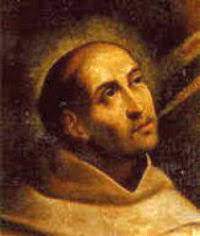
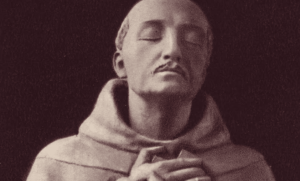
St. John of the Cross you have said:
The soul, desiring to be possessed by this immense God, for love of Whom she feels that her heart is robbed and wounded, unable to endure her sickness any longer, deliberately asks Him … to show her His beauty, His divine essence, and to kill her with this revelation, and thereby free her from the flesh since she cannot see and enjoy Him as she wants. She makes this request by displaying before Him the sickness and yearning of her heart, in which she perseveres suffering for love of Him, unable to find a cure in anything less than this glorious vision of His divine essence.
Spiritual Canticle, I. 11:2; Kavanaugh & Rodriguez, 1973; pp. 448-449
Prayer for Peace from St. John of the Cross
O Blessed Jesus, grant me stillness of soul in You. Let Your mighty calmness reign in me. Rule me, O King of gentleness, King of peace. Give me control, control over my words, thoughts and actions. From all irritability, want of meekness, want of gentleness, O dear Lord, deliver me. By Your own deep patience give me patience, stillness of soul in You. Make me in this, and in all, more and more like You. Amen.
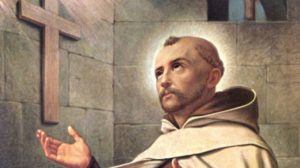
Lord God, you gave Saint John of the Cross
the grace of complete self-denial
and an ardent love for the cross of Christ.
Grant that by following always in his footsteps
we may come to the eternal vision of your glory.
And through his intercession, if it be in accord with your holy will,
Grant the petition we bring before you in this novena.
We ask this through our Lord Jesus Christ, your Son,
who lives and reigns with you in the unity of the Holy Spirit,
God, for ever and ever.
En el nombre del Padre, del Hijo y del Espíritu Santo. Amén.
“Señor mío, Jesucristo, Dios y Hombre verdadero, creador y redentor mío, por ser vos quien sois, y porque os amo sobre todas las cosas, me pesa de todo corazón haberos ofendido.
Propongo enmendarme y confesarme a su tiempo y ofrezco cuanto hiciere en satisfacción de mis pecados, y confío por vuestra bondad y misericordia infinita, que me perdonaréis y me daréis gracia para nunca más pecar. Así lo espero por intercesión de mi Madre, nuestra Señora la Virgen de Guadalupe. Amén”.
Octavo día
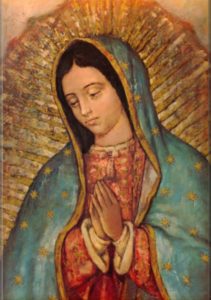
¡Oh Santísima Virgen de Guadalupe! ¡Qué misteriosa y qué acertada estuvo la mano del Artífice Supremo, bordando tu vestido con esa orla de oro finísimo que le sirve de guarnición! Aludió sin duda a aquel finísimo oro de la caridad y del amor de Dios con que fueron enriquecidas tus acciones. Y ¿quién duda, Señora, que esa tu encendida caridad y amor de Dios estuvo siempre acompañada del amor al prójimo y que no, por verte triunfante en la patria celestial, te has olvidado de nosotros?
Abre el seno de tus piedades a quien es tan miserable; dale la mano a quien caído te invoca para levantarse; tráete la gloria de haber encontrado en mí una misericordia proporcionada, más que todas, a tu compasión y misericordia. Amén.
Padre Nuestro
Padre nuestro, que estás en el cielo, santificado sea tu nombre, venga a nosotros tu reino, hágase tu voluntad, en la tierra como en el cielo. Danos hoy nuestro pan de cada día, perdona nuestras ofensas, como también nosotros perdonamos a los que nos ofenden. No nos dejes caer en la tentación, y líbranos del mal. Amén
Ave Maria
Dios te Salve, María, llena eres de gracia, el Señor está contigo. Bendita tú eres entre todas las mujeres y bendito es el fruto de tu vientre, Jesús. Santa María, Madre de Dios, ruega por nosotros pecadores, ahora y en la hora de nuestra muerte. Amén
Gloria
Gloria al Padre y al Hijo y al Espíritu Santo. Como era en el principio ahora y siempre, por los siglos de los siglos. Amén
Nuestra Señora de Guadalupe, ruega por nosotros. Amén
En el nombre del Padre, del Hijo y del Espíritu Santo. Amén
Day 5 – St. John of the Cross Contemplative Novena – Discerning Hearts Catholic Podcast
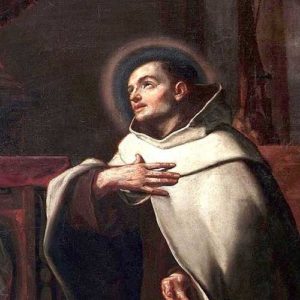
St. John of the Cross you have said:
It is clear that the desires weary and fatigue the soul; for they are like restless and discontented children, who are ever demanding this or that from their mother, and are never contented. And even as one that digs because he covets a treasure is wearied and fatigued, even so is the soul wearied and fatigued in order to attain that which its desires demand of it; and although in the end it may attain it, it is still weary, because it is never satisfied
Ascent of Mount Carmel. Trans. E. Allison Peers, Book 1, Chapter 6, Paragraph 6
Prayer for Peace from St. John of the Cross
O Blessed Jesus, grant me stillness of soul in You. Let Your mighty calmness reign in me. Rule me, O King of gentleness, King of peace. Give me control, control over my words, thoughts and actions. From all irritability, want of meekness, want of gentleness, O dear Lord, deliver me. By Your own deep patience give me patience, stillness of soul in You. Make me in this, and in all, more and more like You. Amen.
Lord God, you gave Saint John of the Cross
the grace of complete self-denial
and an ardent love for the cross of Christ.
Grant that by following always in his footsteps
we may come to the eternal vision of your glory.
And through his intercession, if it be in accord with your holy will,
Grant the petition we bring before you in this novena.
We ask this through our Lord Jesus Christ, your Son,
who lives and reigns with you in the unity of the Holy Spirit,
God, for ever and ever.
The Immaculate Conception – Building a Kingdom of Love with Msgr. John Esseff
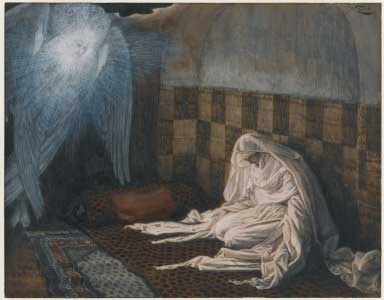
On the the Solemnity of the Immaculate Conception, Msgr. Esseff reflects on the significance of the Immaculate Conception of Mary within the broader plan of salvation history. He uses Genesis, Ephesians, and the Gospel of Luke to show us God’s eternal plan to reconcile humanity with Himself through Jesus Christ. Humanity’s fall through Adam and Eve introduced sin and death into the world, but God’s response was the plan of redemption, preordained before creation, culminating in the birth of Christ. Mary, conceived without sin, is presented as the new Eve, uniquely chosen to bring Jesus into the world. Her “yes” to the angel Gabriel is seen as a pivotal moment in God’s plan, countering the disobedience of the first parents and initiating the ultimate defeat of sin, Satan, and death.
Through Jesus’ suffering, death, and resurrection, humanity is adopted as children of God and incorporated into Christ’s body, the Church. He encourages us to see the Immaculate Conception as a profound reminder of God’s love and the invitation to holiness.
Discerning Hearts Reflection Questions
God’s Eternal Plan: How does reflecting on God’s plan for redemption before creation deepen your trust in His providence?
The Fall and Redemption: In what ways can recognizing the effects of original sin in your life inspire a greater appreciation for Christ’s saving work?
Mary’s Role in Salvation: How does the Immaculate Conception help you understand Mary’s unique role in God’s plan and her intercession for you?
Adoption in Christ: What does it mean to you personally to be adopted into God’s family through Jesus Christ?
Living as the Body of Christ: How can you live more fully as a member of Christ’s body, united with Him and His Church?
Advent Preparation: In this Advent season, how are you preparing your heart to welcome Christ more fully into your life?
Power of the Holy Spirit: How do you experience the Holy Spirit working in your life to bring about holiness and transformation?
Contemplating Mary’s Example: How can Mary’s fiat, her “yes” to God, inspire you to trust and surrender to His will in your own life?
“After the man, Adam, had eaten of the tree,
the LORD God called to the man and asked him, “Where are you?”
He answered, “I heard you in the garden;
but I was afraid, because I was naked,
so I hid myself.”
Then he asked, “Who told you that you were naked?
You have eaten, then,
from the tree of which I had forbidden you to eat!”
The man replied, “The woman whom you put here with me
she gave me fruit from the tree, and so I ate it.”
The LORD God then asked the woman,
“Why did you do such a thing?”
The woman answered, “The serpent tricked me into it, so I ate it.”Then the LORD God said to the serpent:
“Because you have done this, you shall be banned
from all the animals
and from all the wild creatures;
on your belly shall you crawl,
and dirt shall you eat
all the days of your life.
I will put enmity between you and the woman,
and between your offspring and hers;
he will strike at your head,
while you strike at his heel.”The man called his wife Eve,
because she became the mother of all the living.”
Brothers and sisters:
Blessed be the God and Father of our Lord Jesus Christ,
who has blessed us in Christ
with every spiritual blessing in the heavens,
as he chose us in him, before the foundation of the world,
to be holy and without blemish before him.
In love he destined us for adoption to himself through Jesus Christ,
in accord with the favor of his will,
for the praise of the glory of his grace
that he granted us in the beloved.
In him we were also chosen,
destined in accord with the purpose of the One
who accomplishes all things according to the intention of his will,
so that we might exist for the praise of his glory,
we who first hoped in Christ.
“The angel Gabriel was sent from God
to a town of Galilee called Nazareth,
to a virgin betrothed to a man named Joseph,
of the house of David,
and the virgin’s name was Mary.
And coming to her, he said,
“Hail, full of grace! The Lord is with you.”
But she was greatly troubled at what was said
and pondered what sort of greeting this might be.
Then the angel said to her,
“Do not be afraid, Mary,
for you have found favor with God.
Behold, you will conceive in your womb and bear a son,
and you shall name him Jesus.
He will be great and will be called Son of the Most High,
and the Lord God will give him the throne of David his father,
and he will rule over the house of Jacob forever,
and of his Kingdom there will be no end.”
But Mary said to the angel,
“How can this be,
since I have no relations with a man?”
And the angel said to her in reply,
“The Holy Spirit will come upon you,
and the power of the Most High will overshadow you.
Therefore the child to be born
will be called holy, the Son of God.
And behold, Elizabeth, your relative,
has also conceived a son in her old age,
and this is the sixth month for her who was called barren;
for nothing will be impossible for God.”
Mary said, “Behold, I am the handmaid of the Lord.
May it be done to me according to your word.”
Then the angel departed from her.”
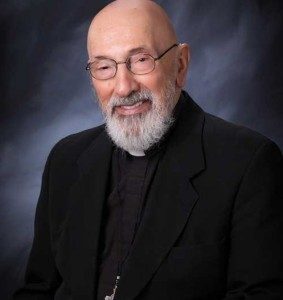
Msgr. John A. Esseff is a Roman Catholic priest in the Diocese of Scranton. Msgr. Esseff served as a retreat director and confessor to St. Teresa of Calcutta. He continues to offer direction and retreats for the sisters of the Missionaries of Charity around the world. Msgr. Esseff encountered St. Padre Pio, who would become a spiritual father to him. He has lived in areas around the world, serving in the Pontifical missions, a Catholic organization established by Pope St. John Paul II to bring the Good News to the world, especially to the poor. Msgr. Esseff assisted the founders of the Institute for Priestly Formation and continues to serve as a spiritual director for the Institute. He continues to serve as a retreat leader and director to bishops, priests and sisters and seminarians, and other religious leaders around the world.
The Second Sunday of Advent – Building a Kingdom of Love with Msgr. John Esseff
On the Second Sunday of Advent, Msgr. John Esseff focuses on Advent as a season of hope, preparation, and trust in God. Reflecting on Mary’s surrender during the Annunciation and as the ultimate model of faith and dependence on God. Msgr. Esseff reminds us of the transformative power of repentance, faith, and love; using a moving testimony of a woman miraculously healed at Lourdes underscores the greater miracle of selfless love and intercessory prayer for others.
The scriptural themes of redemption urge us to live courageously and joyfully as the “new Jerusalem,” radiating God’s glory. We must have confidence in Christ’s victory, encouraging listeners to embrace the sacraments and prepare for the Lord’s coming with renewed faith.
Discerning Hearts Reflection Questions
Faith in Surrender: How can Mary’s complete trust in God inspire you to surrender your fears and uncertainties to His will?
Trust in God’s Providence: In what areas of your life do you need to let go of self-reliance and place total dependence on God?
Love as a Miracle: How does the testimony of selfless prayer and intercession challenge you to prioritize the needs of others in your relationship with God?
Advent Preparation: How are you preparing your heart during this Advent season to welcome Christ with joy and trust?
Living the Beatitudes: How can you embrace the struggles and challenges in your life as opportunities to live out the Beatitudes with faith and courage?
Joy Amidst Suffering: What steps can you take to find joy and hope in God’s promises, even during times of personal or communal suffering?
Being the New Jerusalem: How can you reflect God’s light and love in your daily actions, becoming a witness to His glory and redemption?
Embracing the Sacraments: How do the Eucharist and other sacraments strengthen your faith and empower you to live as a disciple of Christ?
In the fifteenth year of the reign of Tiberius Caesar,
when Pontius Pilate was governor of Judea,
and Herod was tetrarch of Galilee,
and his brother Philip tetrarch of the region
of Ituraea and Trachonitis,
and Lysanias was tetrarch of Abilene,
during the high priesthood of Annas and Caiaphas,
the word of God came to John the son of Zechariah in the desert.
John went throughout the whole region of the Jordan,
proclaiming a baptism of repentance for the forgiveness of sins,
as it is written in the book of the words of the prophet Isaiah: A voice of one crying out in the desert:
“Prepare the way of the Lord,
make straight his paths.
Every valley shall be filled
and every mountain and hill shall be made low.
The winding roads shall be made straight,
and the rough ways made smooth,
and all flesh shall see the salvation of God.”
Msgr. John A. Esseff is a Roman Catholic priest in the Diocese of Scranton. Msgr. Esseff served as a retreat director and confessor to St. Teresa of Calcutta. He continues to offer direction and retreats for the sisters of the Missionaries of Charity around the world. Msgr. Esseff encountered St. Padre Pio, who would become a spiritual father to him. He has lived in areas around the world, serving in the Pontifical missions, a Catholic organization established by Pope St. John Paul II to bring the Good News to the world, especially to the poor. Msgr. Esseff assisted the founders of the Institute for Priestly Formation and continues to serve as a spiritual director for the Institute. He continues to serve as a retreat leader and director to bishops, priests and sisters and seminarians, and other religious leaders around the world.
Sunday of the 2nd week of Advent – An Advent Lectio Divina for the Discerning Heart
From the Holy Gospel According to St. Luke 3:1-6
In the fifteenth year of Tiberius Caesar’s reign, when Pontius Pilate was governor of Judaea, Herod tetrarch of Galilee, his brother Philip tetrarch of the lands of Ituraea and Trachonitis, Lysanias tetrarch of Abilene, during the pontificate of Annas and Caiaphas the word of God came to John son of Zechariah, in the wilderness. He went through the whole Jordan district proclaiming a baptism of repentance for the forgiveness of sins, as it is written in the book of the sayings of the prophet Isaiah:
A voice cries in the wilderness:
Prepare a way for the Lord,
make his paths straight.
Every valley will be filled in,
every mountain and hill be laid low,
winding ways will be straightened
and rough roads made smooth.
And all mankind shall see the salvation of God.
What word made this passage come alive for you?
What did you sense the Lord saying to you?
Once more give the Lord an opportunity to speak to you:
In the fifteenth year of Tiberius Caesar’s reign, when Pontius Pilate was governor of Judaea, Herod tetrarch of Galilee, his brother Philip tetrarch of the lands of Ituraea and Trachonitis, Lysanias tetrarch of Abilene, during the pontificate of Annas and Caiaphas the word of God came to John son of Zechariah, in the wilderness. He went through the whole Jordan district proclaiming a baptism of repentance for the forgiveness of sins, as it is written in the book of the sayings of the prophet Isaiah:
A voice cries in the wilderness:
Prepare a way for the Lord,
make his paths straight.
Every valley will be filled in,
every mountain and hill be laid low,
winding ways will be straightened
and rough roads made smooth.
And all mankind shall see the salvation of God.
What did your heart feel as you listened?
What did you sense the Lord saying to you?
Once more, through Him, with Him and in Him listen to the Word:
In the fifteenth year of Tiberius Caesar’s reign, when Pontius Pilate was governor of Judaea, Herod tetrarch of Galilee, his brother Philip tetrarch of the lands of Ituraea and Trachonitis, Lysanias tetrarch of Abilene, during the pontificate of Annas and Caiaphas the word of God came to John son of Zechariah, in the wilderness. He went through the whole Jordan district proclaiming a baptism of repentance for the forgiveness of sins, as it is written in the book of the sayings of the prophet Isaiah:
A voice cries in the wilderness:
Prepare a way for the Lord,
make his paths straight.
Every valley will be filled in,
every mountain and hill be laid low,
winding ways will be straightened
and rough roads made smooth.
And all mankind shall see the salvation of God.
What touched your heart in this time of prayer?
What did your heart feel as you prayed?
What do you hope to carry with you from this time with the Lord?
Our Father, who art in heaven,
hallowed be thy name.
Thy kingdom come.
Thy will be done on earth, as it is in heaven.
Give us this day our daily bread,
and forgive us our trespasses,
as we forgive those who trespass against us,
and lead us not into temptation,
but deliver us from evil.
May the Lord bless us, and keep us from all evil, and bring us to everlasting life.
Amen
Excerpt from THE JERUSALEM BIBLE, copyright (c) 1966 by Darton, Longman & Todd, Ltd. and Doubleday, a division of Penguin Random House, Inc. Reprinted by Permission.
Day 4 – St. John of the Cross Contemplative Novena
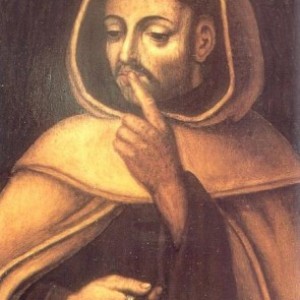
St. John of the Cross you have said:
The road and ascent to God, then, necessarily demands a habitual effort to renounce and mortify the appetites; the sooner this mortification is achieved, the sooner the soul reaches the top. But until the appetites are eliminated, a person will not arrive, no matter how much virtue he practices. For he will fail to acquire perfect virtue, which lies in keeping the soul empty, naked, and purified of every appetite.
… Until slumber comes to the appetites through the mortification of sensuality, and until this very sensuality is stilled in such a way that the appetites do not war against the spirit, the soul will not walk out to genuine freedom, to the enjoyment of union with its Beloved.
The Ascent Of Mount Carmel, I.5.6; Kavanaugh & Rodriguez, 1973; p. 83
Prayer for Peace from St. John of the Cross
O Blessed Jesus, grant me stillness of soul in You. Let Your mighty calmness reign in me. Rule me, O King of gentleness, King of peace. Give me control, control over my words, thoughts and actions. From all irritability, want of meekness, want of gentleness, O dear Lord, deliver me. By Your own deep patience give me patience, stillness of soul in You. Make me in this, and in all, more and more like You. Amen.
Lord God, you gave Saint John of the Cross
the grace of complete self-denial
and an ardent love for the cross of Christ.
Grant that by following always in his footsteps
we may come to the eternal vision of your glory.
And through his intercession, if it be in accord with your holy will,
Grant the petition we bring before you in this novena.
We ask this through our Lord Jesus Christ, your Son,
who lives and reigns with you in the unity of the Holy Spirit,
God, for ever and ever.
Day 3 – St. John of the Cross Contemplative Novena
St. John of the Cross you have said:
Before this Divine fire of love is introduced into the substance of the soul, and is united with it, by means of a purity and purgation that is perfect and complete, this flame is wounding the soul, and destroying and consuming in it the imperfections of its evil habits; and this is the operation of the Holy Spirit, wherein he prepares it for Divine union and the transformation of its substance in God through love.
Saint John of the Cross, taken from Saint John of the Cross: Poems, translated by Willis Barnstone (New York: New Directions, 1972).
Prayer for Peace from St. John of the Cross
O Blessed Jesus, grant me stillness of soul in You. Let Your mighty calmness reign in me. Rule me, O King of gentleness, King of peace. Give me control, control over my words, thoughts and actions. From all irritability, want of meekness, want of gentleness, O dear Lord, deliver me. By Your own deep patience give me patience, stillness of soul in You. Make me in this, and in all, more and more like You. Amen.
Lord God, you gave Saint John of the Cross
the grace of complete self-denial
and an ardent love for the cross of Christ.
Grant that by following always in his footsteps
we may come to the eternal vision of your glory.
And through his intercession, if it be in accord with your holy will,
Grant the petition we bring before you in this novena.
We ask this through our Lord Jesus Christ, your Son,
who lives and reigns with you in the unity of the Holy Spirit,
God, for ever and ever.
Adam English – The Saint Who Would Be Santa on Inside the Pages with Kris McGregor
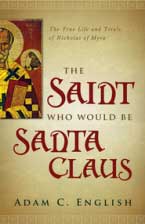
In this episode of Inside the Pages, Kris McGregor talks to Dr. Adam English about his book, The Saint Who Would Be Santa Claus: The True Life and Trials of Nicholas of Myra.
Exploring the historical figure of St. Nicholas, distinguishing him from the popularized Santa Claus; Dr. English explains that Nicholas was a Christian bishop in Asia Minor during the 3rd and 4th centuries, a time when Christianity transformed from a persecuted faith to the favored religion of the Roman Empire. Known for his generosity, justice, and pastoral care, Nicholas inspired stories like helping impoverished families with dowries, which later became the foundation for his association with gift-giving.
The book also talks about Nicholas’s role in combating paganism, supporting marriage, and advocating for orthodoxy at the Council of Nicaea.
The True Identity of St. Nicholas
How does understanding the historical St. Nicholas deepen your appreciation for his example of Christian virtue and service?
Generosity Beyond Our Walls
How can you emulate St. Nicholas’s generosity by serving those outside your immediate family or community?
Celebrating St. Nicholas in Advent
What traditions could you adopt or adapt to honor St. Nicholas’s feast day as part of your Advent and Christmas preparations?
Faith Amid Persecution
How does St. Nicholas’s perseverance during intense persecution inspire you to remain faithful in challenging circumstances?
The Value of Marriage
What lessons can you draw from St. Nicholas’s support for marriage as a good and noble estate in your own life or in guiding others?
Advocating for Orthodoxy
How can St. Nicholas’s participation in the Council of Nicaea encourage you to defend and articulate your Catholic faith today?
Distinguishing Cultural Traditions
What steps can you take to reconcile secular Christmas traditions with a deeper focus on Christ and St. Nicholas’s Christian legacy?
Integrating Faith and Action
How can St. Nicholas’s life inspire you to integrate acts of charity with your spiritual growth and faith journey?
About the Book
“With his rosy cheeks and matching red suit–and ever-present elf and reindeer companions–Santa Claus may be the most identifiable of fantastical characters. But what do we really know of jolly old Saint Nicholas, “patron saint” of Christmastime? Ask about the human behind the suit, and the tale we know so well quickly fades into myth and folklore.
In The Saint Who Would Be Santa Claus, religious historian Adam English tells the true and compelling tale of Saint Nicholas, bishop of Myra. Around the fourth century in what is now Turkey, a boy of humble circumstance became a man revered for his many virtues. Chief among them was dealing generously with his possessions, once lifting an entire family out of poverty with a single–and secret–gift of gold, so legend tells. Yet he was much more than virtuous. As English reveals, Saint Nicholas was of integral influence in events that would significantly impact the history and development of the Christian church, including the Council of Nicaea, the destruction of the temple to Artemis in Myra, and a miraculous rescue of three falsely accused military officers. And Nicholas became the patron saint of children and sailors, merchants and thieves, as well as France, Russia, Greece, and myriad others.
Weaving together the best historical and archaeological evidence available with the folklore and legends handed down through generations, English creates a stunning image of this much venerated Christian saint. With prose as enjoyable as it is informative, he shows why the life–and death–of Nicholas of Myra so radically influenced the formation of Western history and Christian thought, and did so in ways many have never realized.”
About the Author
Adam C. English is Associate Professor of Religion at Campbell University where he teaches on the philosophy of religion, constructive theology, and the history of Christian thought. He lives near Raleigh, North Carolina.
Day 2 – St. John of the Cross Contemplative Novena
St. John of the Cross you have said:
When there is union of love, the image of the Beloved is so sketched in the will and drawn so vividly, that it is true to say that the Beloved lives in the lover and the lover in the Beloved. Love produces such likeness in this transformation of lovers that one can say each is the other and both are one. The reason is, that in the union and transformation of love, each gives possession of self to the other, and each leaves and exchanges self for the other. Thus each one lives in the other and is the other, and both are one in the transformation of love. (1)
…Thus, no one … can disturb the soul that is liberated and purged of all things and united with God. She enjoys now in this state a habitual sweetness and tranquility which is never lost or lacking to her. (2)
O Blessed Jesus, grant me stillness of soul in You. Let Your mighty calmness reign in me. Rule me, O King of gentleness, King of peace. Give me control, control over my words, thoughts and actions. From all irritability, want of meekness, want of gentleness, O dear Lord, deliver me. By Your own deep patience give me patience, stillness of soul in You. Make me in this, and in all, more and more like You. Amen.
Lord God, you gave Saint John of the Cross
the grace of complete self-denial
and an ardent love for the cross of Christ.
Grant that by following always in his footsteps
we may come to the eternal vision of your glory.And through his intercession, if it be in accord with your holy will,
Grant the petition we bring before you in this novena.
We ask this through our Lord Jesus Christ, your Son,
who lives and reigns with you in the unity of the Holy Spirit,
God, for ever and ever.

 From the Holy Gospel According to St. Luke 3:1-6