A Christmas Novena Day 1 – Mp3 audio and Text – Discerning Hearts Podcast


Day 1 – Joy
O Lord, infant Jesus, fill us with Joy! The birth of any child is a cause for joy and so much more is the birth of You our Savior. We pray in union with Mary, Your mother, for a greater joy this Christmas.

Divine Infant,
after the wonders of Your birth in Bethlehem,
You wished to extend Your infinite mercy to the whole world
by calling the Wise Men by heavenly inspiration to Your crib,
which was in this way changed into a royal throne.
You graciously received those holy men
who were obedient to the Divine call
and hastened to Your feet.
They recognized and worshipped You as Prince of Peace,
the Redeemer of mankind,
and the very Son of God.

Show us also Your goodness and almighty power.
Enlighten our minds,
strengthen our wills,
and inflame our hearts to know You,
to serve You,
and to love You in this life,
that we may merit to find our joy in You eternally in the life to come.

Jesus, most powerful Child,
We implore You again to help us
with the intentions we hold in the depths of our hearts.

Divine Child, great omnipotent God,
I implore through Your most Holy Mother’s most powerful intercession,
and through the boundless mercy of Your omnipotence as God,
for a favorable answer to my prayer during this Novena.
Grant us the grace of possessing You eternally
with Mary and Joseph
and of adoring You with Your holy angels and saints.
Amen.
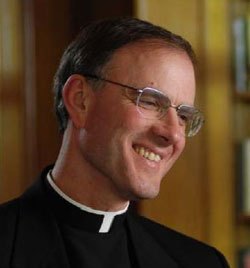
DWG8 – Two Modes of Discernment – The Discernment of God’s Will in Everyday Decisions with Fr. Timothy Gallagher – Discerning Hearts Podcast

Two Modes of Discernment – “What am I to do?” The Discernment of God’s Will in Everyday Decisions with Fr. Timothy Gallagher
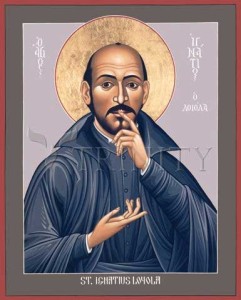
Fr. Timothy Gallagher continues his teaching on St. Ignatius of Loyola’s three modes of discernment, focusing here on the first and second modes. The first mode is a clarity beyond doubting, in which a person receives an unmistakable certainty about God’s will that cannot be shaken. This is illustrated through vocation stories. Such clarity may arise suddenly or gradually, but remains stable over time. It’s important in confirming this kind of clarity with a wise spiritual guide, especially when the decision involves major life commitments, so that discernment is not carried out in isolation.

When such unmistakable clarity does not occur, St. Ignatius proposes a second mode of discernment, which unfolds through attention to spiritual consolation and spiritual desolation. Father Gallagher explains consolation as interior movements of joy, peace, love of God, and renewed faith, hope, and charity, often accompanied by a sense of God’s closeness. Desolation, by contrast, involves heaviness, confusion, discouragement, and a pull away from spiritual life. Over time, by noticing consistent patterns—how consolation draws the heart toward one option and desolation pushes against it—a person can gain sufficient clarity about God’s direction. Father Gallagher illustrates this with St. Ignatius’s own discernment about poverty in the Jesuits, showing how repeated experiences of consolation consistently pointed him toward one choice, forming the basis of a sound decision.


Discerning Hearts Reflection Questions:

  1. Where in my life have I experienced a clarity that seemed steady and peaceful, and how did I respond to it?
  2. Am I currently facing a decision that invites me to seek God’s will through prayer, the sacraments, and wise counsel?
  3. How do I recognize moments of spiritual consolation in my daily prayer and ordinary activities?
  4. What patterns of heaviness, discouragement, or confusion have I noticed that may indicate spiritual desolation?
  5. When I experience interior joy and peace, which choices seem to draw my heart more deeply toward God?
  6. How do I typically react during times of spiritual dryness, and do those reactions help or hinder my openness to God?
  7. In what ways might keeping track of consolation and desolation over time bring greater clarity to an important decision?
  8. Who is a spiritually wise person I can turn to for guidance when discerning significant choices in my life?


From The Discernment of God’s Will in Everyday Decisions:

Three Times in which a Sound and Good Choice May Be Made

The first time is when God Our Lord so moves and attracts the will that, without doubting or being able to doubt, the devout soul follows what is shown to it, as St. Paul and St. Matthew did in following Christ our Lord.

The second time is when sufficient clarity and understanding is received through experience of consolations and desolations, and through experience of discernment of different spirits.

The third time is one of tranquility, when one considers first for what purpose man is born, that is, to praise God our Lord and save his soul, and, desiring this, chooses as a means to this end some life or state within the bounds of the Church, so that he may be helped in the service of his Lord and the salvation of his soul. I said a tranquil time, that is, when the soul is not agitated by different spirits, and uses its natural powers freely and tranquilly.

If the choice is not made in the first or second time, two ways of making it in this third time are given below.”


Father Timothy M. Gallagher, O.M.V., was ordained in 1979 as a member of the Oblates of the Virgin Mary, a religious community dedicated to retreats and spiritual formation according to the Spiritual Exercises of St. Ignatius.  Fr. Gallagher is featured on the EWTN series “Living the Discerning Life:  The Spiritual Teachings of St. Ignatius of Loyola”. For more information on how to obtain copies of Fr. Gallaghers’s various books and audio which are available for purchase, please visit  his  website:   frtimothygallagher.org

For the other episodes in this series check out Fr. Timothy Gallagher’s “Discerning Hearts” page

Day 15: The Sacred Vigil of Love – From the writings of Caryll Houselander – Discerning Hearts Podcasts

Caryll Houselander image used with permission from TRINITY ICONS

Day 15: The Sacred Vigil of Love

The fostering of an infant’s life is a thing of terror as well as of beauty. We are face to face with life at its most precious, housed in its frailest. That life depends for its survival upon us, upon the intelligence, the skill, the perseverance, the unceasing, untiring vigilance of our love.

It requires of us love that is as strong as the worn and hollowed rock, as delicate as the dew that trembles in it.

We stand on one side of the cradle, death stands on the other. The new life is still a spark, a spark that we kneel to fan with the warm breath of our own life, a spark that death could blow out so easily.

So is it with the Christ-life in each of us and in the world. It is lodged in little ones, in the weakest and puniest, and love and death stand over it, face to face. In the mysterious period of natural life between birth and babyhood, there is a parable of the Christ-life in the soul.

Commentary:  Caryll Houselander draws a powerful parallel between the fragile care required for a newborn and the nurturing of Christ’s love within our souls. She conveys the delicate responsibility we have in fostering the Christ-life, which, like an infant, relies on our unwavering vigilance and love. Just as a newborn depends completely on those who care for it, the life of Christ within us depends on our attentiveness, our perseverance, and our willingness to protect and nurture this divine presence. Houselander reminds Catholics of the awe-inspiring and at times fearsome responsibility of sustaining this spark of Christ’s life, which requires both tender love and strong resilience.

Personal Reflection: Reflect on how you might nurture the life of Christ within yourself and others. How can you protect and foster this divine presence with loving vigilance? Consider small ways in which you can cultivate patience, care, and attentiveness to keep this spark of Christ’s love burning brightly.

Houselander quote from:  Caryll Houselander, The Reed of God, Sheed & Ward, 1944


For more reflections visit:
Caryll Houselander  – Discerning Hearts Catholic Podcasts


Image © Trinity Icons / Joseph M. Malham
Image used with permission
To purchase your own copy, visit Trinity Icons


Day 16 – Weakness – An Advent Journey for the Discerning Heart – Discerning Hearts Podcasts

An Advent Journey for the Discerning Heart:
Prepare your heart for Christ through Scripture, the saints, and the gentle practice of daily listening.

Part Three: Listening Through Trials, Weakness, and Silence

DAY 16 – Weakness

“My grace is sufficient for you, for my power is made perfect in weakness.”
2 Corinthians 12.9 RSV


Weakness is one of the most vulnerable places in the spiritual life. It is where we feel limited, fragile, unable to do what we desire, or unable to rise in the ways we once could. Weakness is uncomfortable. It exposes how much we need God. Yet Advent teaches us that Christ comes precisely into those places where we feel small.

Weakness is not a defect in the life of prayer. It is an invitation. It draws the heart away from self reliance and into deeper trust. When we feel weak, we slow down. We become more honest. We recognize the truth that we cannot save ourselves. Weakness reveals our poverty and opens us to receive the grace that only God can give.

In weakness, listening becomes sharper. We lean more into God’s voice because we cannot lean on ourselves. Weakness becomes a space of surrender, a quiet recognition that only God can carry what feels beyond us.

Advent reminds us that Christ was born into weakness so that none of our frailty would be foreign to Him.

Journey with the Saints –

St. Thérèse of Lisieux

“It is weakness that gives us confidence, for the strong have no need of being supported.”
St. Thérèse of Lisieux, Manuscript C

St. Thérèse saw weakness not as something to shame, but as the very place where God’s mercy rests most gently. Her Little Way teaches that weakness becomes strength when it is offered to Christ. The weaker she felt, the more she entrusted herself to Him. The less she could rely on herself, the more room there was for God to act.

For St. Thérèse, weakness was not an obstacle to holiness. It was the path to it. She learned that God does not wait for us to be strong. He meets us in our littleness and fills what we lack with His love. Weakness becomes grace when we place it entirely in His hands.

Reflection for the Listening Heart

Today invites you to look gently at your own weakness. Not with frustration or shame, but with honesty. Weakness can reveal where God is trying to reach you. It can show you the exact places where His grace desires to enter.

Do not hide your weakness from Christ. Bring it into the light. Weakness teaches surrender. It teaches patience. It teaches dependence on a God who holds you with tenderness. The listening heart learns to remain open in weakness because Christ is near in every fragile place.

Ask yourself: Where do I feel weak today. How is Christ asking me to trust Him in the place where I feel least capable.

A Simple Practice for Today

Choose one area of weakness and offer it simply to God. Say, “Lord, this is where I need You most.” Later in the day, repeat slowly, “Your power is made perfect here.” Let this truth rest gently within you.

Prayer

Lord Jesus, meet me in my weakness. Fill my limitations with Your strength. Teach me to rely on Your grace rather than my own abilities. Help me trust that You are working in every fragile place of my heart. Let my weakness become a resting place for Your power. Amen.


For more of the episodes of
An Advent Journey for the Discerning Heart with Kris McGregor visit here


Citations for Day 16

2 Corinthians 12.9 RSV
St. Thérèse of Lisieux, Manuscript C

© Discerning Hearts. All rights reserved.

Day 14: Patience in the Hidden Growth of Sorrow – From the writings of Caryll Houselander – Discerning Hearts Podcasts

Caryll Houselander image used with permission from TRINITY ICONS

Day 14:  Patience in the Hidden Growth of Sorrow

Sometimes this Advent season of the soul is a recurring rhythm through life, deliberately chosen as such or simply given to us. Sometimes it is the immediate result of conversion or of a new awareness of God or of an increase of Love.

Sometimes it is a painful experience. It may be that a soul brimmed with love becomes dumb, inarticulate, blind, seeing only darkness, unable to give things that it longs to give to a world of children asking for bread.

This simply means that the Holy Spirit of Love, by which Christ was conceived in that heart, is compelling it to suffer the period of growth.

The light is shining in the darkness, but the darkness does not comprehend it.

To a soul in such a condition, peace will come as soon as it turns to Our Lady and imitates her. In her the Word of God chose to be silent for the season measured by God. She, too, was silent; in her the light of the world shone in darkness. Today, in many souls, Christ asks that He may grow secretly, that He may be the light shining in the darkness.

We ought to let everything grow in us, as Christ grew in Mary. And we ought to realise that in everything that does grow quietly in us, Christ grows. We should let thoughts and words and songs grow slowly and unfold in darkness in us.

Commentary:  Caryll Houselander reflects on the “Advent season of the soul” as a time when, even in silence and darkness, Christ grows within us. This hidden growth can be challenging, especially when we feel brimming with love yet find ourselves unable to express or act on it. Houselander encourages us to look to Mary as a model of patient, silent surrender. Just as she held the Incarnate Word in silence and allowed Him to grow within her, we too are called to let Christ grow in us without rushing the process. Even in the moments when we feel unable to give or express ourselves fully, God is at work in our hidden depths, transforming us.

Personal Reflection: Consider a place of silence or frustration in your spiritual life where you feel “in the dark.” How might you imitate Mary’s trust in God’s timing, allowing Christ to grow quietly within you, even if you don’t yet see the fruit? Embrace this season as an opportunity for Christ to unfold slowly in your heart.

Houselander quote from:  Caryll Houselander, The Reed of God, Sheed & Ward, 1944


For more reflections visit:
Caryll Houselander  – Discerning Hearts Catholic Podcasts


Image © Trinity Icons / Joseph M. Malham
Image used with permission
To purchase your own copy, visit Trinity Icons


Day 15 – Confusion – An Advent Journey for the Discerning Heart – Discerning Hearts Podcasts


An Advent Journey for the Discerning Heart:
Prepare your heart for Christ through Scripture, the saints, and the gentle practice of daily listening.

Part Three: Listening Through Trials, Weakness, and Silence

DAY 15 – Confusion

“Trust in the Lord with all your heart, and do not rely on your own insight.”
Proverbs 3.5 RSV


Interior confusion is one of the most painful trials in the spiritual life. It is the moment when the heart cannot see clearly, when intentions feel tangled, when choices seem uncertain, and when prayer does not offer the clarity we desire. Advent teaches us that confusion is not a sign of God’s absence. It is often the place where He is quietly working.

Confusion humbles the soul. It reminds us that we cannot navigate life by our own light. It teaches us to rely on God rather than our own understanding. When the heart enters confusion, the Lord invites us to slow down, listen more deeply, and trust that He is guiding even when our thoughts feel clouded.

The discerning heart learns that confusion is not failure. It is a spiritual moment that invites surrender, trust, and patience. In confusion, God draws the heart away from self-reliance and toward dependence on Him. This interior dimness often becomes the doorway to a clearer, deeper faith.

Advent reveals that Christ is near even when we cannot see the way forward.

Journey with the Saints –

St. John Henry Newman

“I do not ask to see the distant scene. One step enough for me.”
St. John Henry Newman, Hymn “Lead, Kindly Light,” stanza 1

St. John Henry Newman understood the experience of confusion deeply. His journey was marked by moments when everything familiar seemed uncertain. Rather than resisting this darkness, he allowed it to become the place where trust was strengthened. Newman teaches that God often leads the soul one step at a time, without revealing the whole path.

For Newman, confusion was not something to escape. It was something to walk through with Christ. He believed that when our understanding fails, God is inviting us to rely on His wisdom rather than our own. The heart grows in faith when it chooses trust in the midst of uncertainty.

Newman’s life reminds us that spiritual confusion can become a holy place. It is often there that God clears away our illusions, teaches simplicity, and forms a deeper fidelity.

Reflection for the Listening Heart

Today invites you to notice the places where you feel uncertain or unclear. Confusion can make us want to rush, fix, or force an answer. Yet spiritual wisdom teaches the opposite. Confusion invites us to slow down and let God lead.

Listening becomes deeper in confusion. It is here that the heart learns to be patient. It is here that the soul learns to trust without seeing. Confusion teaches humility, because it shows us that only God can direct our steps.

Ask yourself: Where do I feel confused today. What would it look like to let Christ hold this confusion instead of trying to solve it alone.

A Simple Practice for Today

Take a moment to place your confusion before God. Simply say, “Lord, I give You what I cannot understand.” Later in the day, pause again and repeat, “One step is enough if You are with me.” Let these prayers become acts of trust.

Prayer

Lord Jesus, meet me in my confusion. Calm the thoughts that swirl within me and steady my heart in Your presence. Teach me to trust You when I cannot see the way forward. Guide my steps gently and help me to rest in the truth that You are with me. One step at a time is enough, because You are my light. Amen.


For more of the episodes of
An Advent Journey for the Discerning Heart with Kris McGregor visit here


Citations for Day 15

Proverbs 3.5 RSV
St. John Henry Newman, Hymn “Lead, Kindly Light,” stanza 1

© Discerning Hearts. All rights reserved.

The 3rd Sunday of Advent – Building a Kingdom of Love with Msgr. John Esseff – Discerning Hearts Podcast

The 3rd Sunday of Advent – The  Joy of Christ’s Coming – Building a Kingdom of Love with Msgr. John Esseff

In this Third Sunday of Advent reflection, Msgr. John Esseff proclaims the joy of Christ’s coming and the deep mystery of Jesus dwelling within those who are baptized. Drawing from the prophet Isaiah and the Gospel of Matthew, he reflects on the signs that reveal the Messiah: the blind see, the deaf hear, the lame walk, the dead are raised, and the poor receive the good news.

Msgr. Esseff focuses on Jesus’ response to John the Baptist’s question from prison and the fulfillment of Isaiah’s promises. He explains that John the Baptist stands as the greatest born of women, yet those united to Christ through baptism share a deeper intimacy with him. This union is not symbolic. It is real, lived daily through baptism, confirmation, and the Eucharist.

He speaks about light and darkness in human lives, noting that many are born into families marked by suffering, addiction, or division. Yet Christ’s light already lives within them. Rather than seeing only wounds or spiritual struggle, Msgr. Esseff urges listeners to recognize the presence of Jesus at work within their own life stories.

A central invitation of the episode is to pray through the Stations of the Cross during Advent, not as a Lenten exercise but as a way of recognizing Christ’s life unfolding within personal experiences. False accusation, betrayal, forgiveness, abandonment, suffering, and perseverance become places of union with Jesus. Each fall is not the end but a return to grace through Christ who lives within the soul.

The episode closes with a call to patience, trust, and joy. Christ is coming, not only in history or at Christmas, but ever more deeply into the lives of those who allow him to live and act through them.


Discerning Hearts Reflection Questions

  1. Where in my life do I see signs of Christ’s light already at work, even amid struggle or pain?

  2. How does recognizing Jesus living within me change the way I view my past experiences?

  3. Which Station of the Cross most reflects something I am carrying right now?

  4. Where am I being invited to return to grace after a fall?

  5. How can I live Advent with greater patience and joy as I await Christ’s coming?


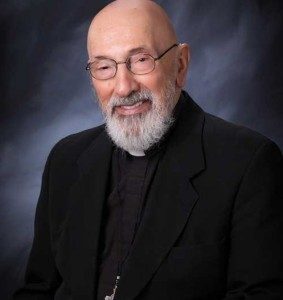
Msgr. John A. Esseff is a Roman Catholic priest in the Diocese of Scranton.  Msgr. Esseff served as a retreat director and confessor to St. Teresa of Calcutta.    He continues to offer direction and retreats for the sisters of the Missionaries of Charity around the world.  Msgr. Esseff encountered St.  Padre Pio,  who would become a spiritual father to him.  He has lived in areas around the world,  serving in the Pontifical missions, a Catholic organization established by Pope St. John Paul II to bring the Good News to the world, especially to the poor.  Msgr. Esseff assisted the founders of the Institute for Priestly Formation and continues to serve as a spiritual director for the Institute.  He continues to serve as a retreat leader and director to bishops, priests and sisters and seminarians, and other religious leaders around the world.  

Day 14 – Dryness – An Advent Journey for the Discerning Heart – Discerning Hearts Podcasts


An Advent Journey for the Discerning Heart:
Prepare your heart for Christ through Scripture, the saints, and the gentle practice of daily listening.

Week Two: Following the Voice of Christ

DAY 14 – Dryness

“O God, thou art my God, I seek thee, my soul thirsts for thee; my flesh faints for thee, as in a dry and weary land where no water is.”
Psalm 63.1 RSV


Dryness is one of the most common and most misunderstood experiences in the spiritual life. It is the season when prayer feels flat, when God seems distant, and when the heart feels unable to respond with its usual warmth. Advent does not hide this reality. It teaches us to listen through it.

Dryness is not abandonment. It is not punishment. Dryness is often the moment when God invites us to love Him with purity rather than feeling. When the heart no longer leans on emotion, it learns to lean on faith. When prayer no longer feels easy, we discover whether we truly desire God or only the comfort His presence brings.

Dryness has a purpose. It strengthens fidelity. It clarifies intention. It deepens trust. It teaches the soul to stay with Christ even when the path feels dark or barren. In these moments, the discerning heart remains steady, not because it feels God, but because it chooses Him.

God often speaks quietly within dryness. His voice becomes gentle and small. To listen in dryness is to stay at His side even when the way is not clear.

Journey with the Saints –

St. Teresa of Calcutta

“I look and do not see, listen and do not hear.”
From her private letters, Come Be My Light

St. Teresa of Calcutta endured decades of interior dryness while continuing to radiate charity. Her letters reveal a profound experience of feeling the absence of God while living a life completely anchored in Him. She continued to pray, to serve, and to choose love even when she felt no consolation at all.

For St. Teresa, dryness became a participation in the thirst of Christ. She believed that remaining faithful in dryness was itself an offering of love. Her fidelity in prayer did not flow from emotion. It flowed from trust. She teaches us that in dryness, God invites the soul to cleave to Him in a deeper and more selfless way.

St. Teresa’s witness shows that holiness does not depend on how we feel. It depends on how we love, especially when the heart feels nothing in return.

Reflection for the Listening Heart

Today invites you to acknowledge the times when prayer feels empty or when God seems far away. Dryness reveals how easily the heart relies on feelings rather than faith. Yet dryness is often the place where the deepest spiritual growth happens, because it calls the soul to choose God for His sake alone.

You do not need to fix dryness. You only need to remain in it with Christ. He is with you even when you feel nothing. He is closer than you know. Dryness becomes holy when it is offered in love and when it teaches the heart to persevere gently and faithfully.

Ask yourself: How is Christ inviting me to remain with Him in dryness today. What small act of fidelity can I offer even when I feel nothing.

A Simple Practice for Today

Spend one quiet minute saying, “Lord, I choose You.” Let this be your offering in dryness. Later in the day, repeat the same prayer slowly, without pushing for feeling or clarity. Let it be a simple act of fidelity.

Prayer

Lord Jesus, be with me in dryness. When my heart feels empty, remain near. Teach me to choose You even without consolation. Strengthen my faith so I may love You with a steady heart. Help me to stay close to You in this quiet place where You work in hidden ways. Amen.


For more of the episodes of
An Advent Journey for the Discerning Heart with Kris McGregor visit here


Citations for Day 14

Psalm 63.1 RSV
St. Teresa of Calcutta, Come Be My Light (private letters)

© Discerning Hearts. All rights reserved.

Day 13: The True Fruit of Advent in Suffering – From the writings of Caryll Houselander – Discerning Hearts Podcasts

Caryll Houselander image used with permission from TRINITY ICONS

Day 13: The True Fruit of Advent in Suffering

We need the season of Advent; we need it in suffering, in joy, and in thought. We need it in everything that is to bear fruit in our lives. People sometimes get disheartened because they have read that suffering ennobles and have met people who seem to have come out of the crucible like pure silver, made beautiful by suffering; but it seems to them that in their own case it is quite the opposite. They find that, however hard they try not to be, they are irritable; that astonishing stabs of bitterness afflict them, that far from being more sympathetic, more understanding, there is a numbness, a chill on their emotions: they cannot respond to others at all; they seem not to love anyone any more; and they even shrink from, and dread the very presence of, those who are compassionate and who care for them. They say that in their case suffering is certainly a failure.

The truth is that they are too impatient to wait for the season of Advent in sorrow to run its course; a seed contains all the life and loveliness of the flower, but it contains it in a little hard black pip of a thing which even the glorious sun will not enliven unless it is buried under the earth. There must be a period of gestation before a nything can flower.”

Commentary:  Caryll Houselander reminds us that Advent is a time not only for joyful expectation but also for deep, sometimes painful growth. She speaks to those who, in the face of suffering, feel they are failing because they don’t experience immediate transformation or nobility. Instead of emerging like “pure silver,” they may find themselves bitter, numb, or unable to connect with others. Houselander encourages us to understand that suffering doesn’t always yield visible or immediate beauty. Like the silent growth of Christ in Mary, the fruit of our suffering may be hidden, slowly transforming us in ways we cannot yet perceive. Advent teaches us to be patient and gentle with ourselves in these times, trusting that God is at work even in our apparent failures.

Personal Reflection: Consider any struggles or difficulties you may be facing. Rather than judging yourself for not “feeling” transformed, allow yourself to rest in God’s silent work within you. How can you cultivate patience with yourself, trusting that this season will bear fruit in time?

Houselander quote from:  Caryll Houselander, The Reed of God, Sheed & Ward, 1944


For more reflections visit:
Caryll Houselander  – Discerning Hearts Catholic Podcasts


Image © Trinity Icons / Joseph M. Malham
Image used with permission
To purchase your own copy, visit Trinity Icons


AR#12 – St. Therese and the Present Moment – Advent Reflections with Deacon James Keating Ph.D.

St. Therese of Lisieux said the following: “If I did not simply live from one moment to another, it would be impossible for me to be patient. But I only look at the present. I forget the past, and I take good care not to forestall the future.” In these remarks, St. Therese is trying to point to the truth that is buried deep within the Christian revelation. God only lives in the present moment. He holds all time together in the present. For ourselves, we get lost many times in the past, which could breed nostalgia and grief. Or we anxiously and fearfully try to make the present come quicker. This Advent, ask the Lord for the grace to live in the present so that our gratitude towards all that He is giving us now will deepen. And in our deepening gratitude, will be born a new fervor for worship. For worship is the fruit of the grateful heart.

Deacon James Keating, Ph.D., is a professor of Spiritual Theology and serves as a spiritual director at Kenrick Glennon Seminary in St. Louis, MO. 

We highly recommend – The Eucharist and the Hope of Conversion with Deacon James Keating Ph.D. Discerning Hearts Podcast


For more from Deacon James Keating check out his “Discerning Heart” page