Day 18 – Fear – An Advent Journey for the Discerning Heart – Discerning Hearts Podcasts


An Advent Journey for the Discerning Heart:
Prepare your heart for Christ through Scripture, the saints, and the gentle practice of daily listening.

Part Three: Listening Through Trials, Weakness, and Silence
DAY 18 – Fear

“When I am afraid, I put my trust in You.”
Psalm 56:3 RSV


Fear touches every human heart. We long for security, assurance, and answers. We want to know that we are safe and that there is a solution waiting for what troubles us. Yet fear, when left unchecked, can cripple the very movement of faith that would lead us toward those things. It narrows our vision, boxes us into what we know, and blinds us to the new and unexpected ways God desires to act in our lives.

There is a fear that protects, the kind that keeps us from danger or awakens the conscience to sin. This holy fear is the beginning of wisdom. But there is also a fear that confines. It is the fear that doubts God’s goodness, hesitates to trust His timing, and clings to control. That fear keeps us from receiving grace.

The discerning heart must learn to recognize both kinds. Christ calls us not to eliminate fear but to bring it to Him, where love can transform it. “There is no fear in love, but perfect love casts out fear.” (1 John 4:18) The love of God does not always remove uncertainty. It fills it with His presence. Faith grows when we choose to move toward Him even when the outcome is unclear.

Advent reveals this mystery: divine love enters the world where human fear reigns, and through Christ, teaches the heart to trust again. In Him, we learn that faith is not the denial of fear, but the act of bringing our fear into His presence. When the heart surrenders its need for control, grace restores peace and confidence. God does not remove every uncertainty, but He remains with us in it, guiding and protecting us with His love.

Journey with the Saints –

St. Pio of Pietrelcina

“Pray, hope, and don’t worry. Worry is useless. God is merciful and will hear your prayer.”
St. Pio of Pietrelcina, Letters, Vol. III

For St. Padre Pio, fear was not something to wrestle with alone but something to entrust to God. He taught that peace begins when we stop trying to manage everything by our own strength. The things that belong to God—the outcome of events, the timing of answers, the care of those we love—must be placed back in His hands.

Pio endured misunderstanding, illness, persecution, and interior trial, yet his words remained steady: “Fear nothing. God is with you, and He is more powerful than all the evil in the world.” His calm came from knowing that God’s providence governs every circumstance.

He shows the discerning heart that faith does not erase fear. It transforms it. When fear is lifted to God in prayer, grace renews strength and trust begins to grow again.

Reflection for the Listening Heart

Where am I clinging to certainty or control?
Where do I demand answers rather than trust God’s unfolding?

Fear often disguises itself as the desire for safety. But when it leads me to shrink from grace, it becomes a chain that holds me back from the very assurance I seek. God does not want to silence our fears as much as He wants to meet us within them.

The discerning heart learns to tell the difference between the fear that protects and the fear that confines. Faith listens for God’s invitation to move toward love, even when the path is uncertain.

Ask yourself: What fear keeps me boxed into the possible I can imagine, instead of the endless possibilities God can bring?

A Simple Practice for Today

Choose one verse from today’s Scripture, perhaps “When I am afraid, I put my trust in You.”
Sit with it for one quiet minute and say, “Speak, Lord, I am listening.”
Later in the day, pause and take a slow breath. Say, “Lord, free me from the fear that limits Your work in me.”
Let both moments open your heart to the greater possibilities of faith.

Prayer

Lord Jesus, You know my longing for certainty and control.
When I am afraid, teach me to trust You more than my own plans.
Through the witness of St. Padre Pio, help me to pray with confidence, to hope with peace,
and to believe that Your love holds possibilities beyond what I can imagine.
Let Your perfect love cast out fear and make my heart ready for Your coming.
Come Lord Jesus.
Amen.


For more of the episodes of
An Advent Journey for the Discerning Heart with Kris McGregor visit here


Citations for Day 18

Psalm 56:3–4 (RSV)
1 John 4:18 (RSV)
St. Padre Pio, Letters, Vol. III

© Discerning Hearts. All rights reserved.
WOM18 – The Gift of Grace – The Way of Mystery with Deacon James Keating – Discerning Hearts Podcast


The Gift of Grace – The Way of Mystery with Deacon James Keating

Deacon James Keating describes the spiritual journey from attachment to sin into a life shaped by Christ’s light. This shift usually begins through pain or restlessness that awakens a desire for something deeper. As a person moves away from sin and leans into virtue, the presence of Christ becomes clearer, forming the mind and heart through prayer, scripture, worship, and especially the Eucharist. Over time, a person stops acting in isolation and instead makes choices with Christ dwelling within, seeking His guidance in every moral question. This inner communion brings freedom, joy, and clarity, not constraint, because the Christian life becomes a relationship of deepening love rather than instant transformation.

Worship shapes moral life because it immerses the soul in Christ’s life, death, and resurrection. Practical discernment includes immediately handing temptations over to Christ before they take root in the imagination and lead the will astray. All ethical questions are to be placed within the mystery of Christ rather than secular ideologies. A well-formed conscience draws from scripture, the Eucharist, and the Church’s teaching authority, which safeguards doctrine and prevents confusion born from private theories or theological trends. True renewal in the Church arises where Catholics rediscover authentic teaching, which challenges one toward holiness and aligns life with Christ rather than cultural pressures.


Discerning Hearts Reflection Questions

  1. How has Christ begun to bring light into areas of your life where you once felt restless or dissatisfied?
  2. In what ways does your participation in the Eucharist shape the choices you make throughout the week?
  3. Where do you still rely on your own independence rather than inviting Christ into your decisions?
  4. How quickly do you turn to Christ when you notice temptation arising within you?
  5. What helps you enter worship not as a routine, but as a living encounter with God?
  6. How do you place your daily moral questions within the mystery of Christ rather than cultural or personal preferences?
  7. In what ways could your conscience be more deeply formed by scripture and the Church’s teaching?
  8. How does your relationship with Christ affect the way you evaluate what is truly good or meaningful?
  9. What practices help you remain attentive to Christ dwelling within you throughout the day?
  10. How is God inviting you to grow in humility when receiving teaching or correction within the Church?

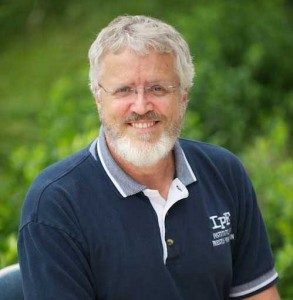
Deacon James Keating, Ph.D., is a professor of Spiritual Theology and serves as a spiritual director at Kenrick Glennon Seminary in St. Louis, MO.

Check out Deacon Keating’s “Discerning Heart” page

The 3rd Sunday of Advent – Building a Kingdom of Love with Msgr. John Esseff – Discerning Hearts Podcast

The 3rd Sunday of Advent – The  Joy of Christ’s Coming – Building a Kingdom of Love with Msgr. John Esseff

In this Third Sunday of Advent reflection, Msgr. John Esseff proclaims the joy of Christ’s coming and the deep mystery of Jesus dwelling within those who are baptized. Drawing from the prophet Isaiah and the Gospel of Matthew, he reflects on the signs that reveal the Messiah: the blind see, the deaf hear, the lame walk, the dead are raised, and the poor receive the good news.

Msgr. Esseff focuses on Jesus’ response to John the Baptist’s question from prison and the fulfillment of Isaiah’s promises. He explains that John the Baptist stands as the greatest born of women, yet those united to Christ through baptism share a deeper intimacy with him. This union is not symbolic. It is real, lived daily through baptism, confirmation, and the Eucharist.

He speaks about light and darkness in human lives, noting that many are born into families marked by suffering, addiction, or division. Yet Christ’s light already lives within them. Rather than seeing only wounds or spiritual struggle, Msgr. Esseff urges listeners to recognize the presence of Jesus at work within their own life stories.

A central invitation of the episode is to pray through the Stations of the Cross during Advent, not as a Lenten exercise but as a way of recognizing Christ’s life unfolding within personal experiences. False accusation, betrayal, forgiveness, abandonment, suffering, and perseverance become places of union with Jesus. Each fall is not the end but a return to grace through Christ who lives within the soul.

The episode closes with a call to patience, trust, and joy. Christ is coming, not only in history or at Christmas, but ever more deeply into the lives of those who allow him to live and act through them.


Discerning Hearts Reflection Questions

  1. Where in my life do I see signs of Christ’s light already at work, even amid struggle or pain?

  2. How does recognizing Jesus living within me change the way I view my past experiences?

  3. Which Station of the Cross most reflects something I am carrying right now?

  4. Where am I being invited to return to grace after a fall?

  5. How can I live Advent with greater patience and joy as I await Christ’s coming?


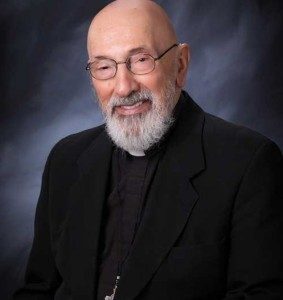
Msgr. John A. Esseff is a Roman Catholic priest in the Diocese of Scranton.  Msgr. Esseff served as a retreat director and confessor to St. Teresa of Calcutta.    He continues to offer direction and retreats for the sisters of the Missionaries of Charity around the world.  Msgr. Esseff encountered St.  Padre Pio,  who would become a spiritual father to him.  He has lived in areas around the world,  serving in the Pontifical missions, a Catholic organization established by Pope St. John Paul II to bring the Good News to the world, especially to the poor.  Msgr. Esseff assisted the founders of the Institute for Priestly Formation and continues to serve as a spiritual director for the Institute.  He continues to serve as a retreat leader and director to bishops, priests and sisters and seminarians, and other religious leaders around the world.  

WOM17 – Mystical Experience and Consoling Prayer – The Way of Mystery with Deacon James Keating – Discerning Hearts Podcast


Mystical Experience and Consoling Prayer – The Way of Mystery with Deacon James Keating

Deacon James Keating explains how God draws the heart toward himself through ordinary prayer and through growth out of serious sin. He describes “consoling prayer,” the simple joy and peace one begins to notice when turning to God—often after the hard early work of conversion, repentance, and regular prayer. Over time, prayer becomes something we desire rather than an obligation, and affection for God gently replaces past attachments to sin. God can unexpectedly visit us during ordinary moments of the day, stirring love for him outside of set prayer times. These moments are like spontaneous interior invitations that deepen closeness with Christ.

He also speaks of union through the sacraments—especially the Eucharist—where Christ is truly present even when affection is absent. Acting according to a well-formed conscience is itself another real union with Christ, because choosing the good unites us to the One who is Truth, even when doing so brings difficulty or misunderstanding in the culture. Ongoing purification, participation in parish life, and concrete practices such as confession, spiritual direction, works of mercy, and friendships rooted in Christ gradually reorder the heart. Conversion is a continual turning toward Christ in the Eucharist, letting him heal attachments to sin and make us new.


Discerning Hearts Reflection Questions

  1. When have I experienced prayer as something I genuinely look forward to rather than a duty?
  2. In what areas of my life do I still seek comfort from old habits instead of turning to Christ?
  3. How open am I to unexpected moments of prayer during my ordinary day?
  4. What keeps me from approaching the Eucharist with a heart ready for inner change?
  5. When choosing the good becomes costly, how do I remain faithful to conscience?
  6. Which practices in my parish are truly helping my heart turn toward Christ?
  7. What specific attachment to sin do I need to surrender to the Lord right now?

Deacon James Keating, Ph.D., is a professor of Spiritual Theology and serves as a spiritual director at Kenrick Glennon Seminary in St. Louis, MO.

Check out Deacon Keating’s “Discerning Heart” page

The 2nd Sunday of Advent – Building a Kingdom of Love with Msgr. John Esseff – Discerning Hearts Podcast

The 2nd Sunday of Advent – A Call to Wake Up, Repent, and Enter the Light of JesusBuilding a Kingdom of Love with Msgr. John Esseff

In this Advent reflection, Msgr. John Esseff turns to the figure of John the Baptist and the call to repentance that prepares the way for the Lord. He explains that John stands at the culmination of Old Testament prophecy, announcing the arrival of the Messiah and calling all people to conversion. Yet Jesus teaches that the least in the kingdom is greater than John, because Christians carry Christ within them. This means the true tragedy is not simply breaking commandments but failing to live as Christ in the world.

Msgr. Esseff then guides listeners through examples of interior patterns that separate the soul from union with Jesus. He speaks about judgmental attitudes, envy, lust, unforgiveness, gluttony, and other deep tendencies that distort the heart. Each one acts like a hidden disease that wounds the life of Christ within the person. Advent becomes a time to uncover these wounds through honest examination and to bring them to the Lord for healing.

He urges listeners to call upon the Holy Spirit, who reveals the core wound with gentleness, not accusation. The Spirit convicts with light and love, while the enemy accuses and discourages. Confession is offered as a powerful path to healing, where the cross penetrates the soul and restores union with Christ.

Msgr. Esseff encourages priests to open the confessional during Advent and calls all Christians to stop judging one another and instead direct loved ones to the Holy Spirit, who alone can reveal the truth of the heart. Advent is presented as a privileged time to awaken, repent, and prepare for the coming of the Lord, who desires to bring healing, renewal, and unity to every soul.


Discerning Hearts Reflection Questions

  1. What interior pattern or tendency separates me most from Christ right now?
  2. When I examine my heart, do I hear the accusing voice or the gentle clarity of the Holy Spirit?
  3. Where have I allowed judgment, envy, or resentment to shape my thoughts or relationships?
  4. What wound or habit is the Holy Spirit inviting me to bring to confession this Advent?
  5. How can I prepare my heart to welcome Christ more deeply during this season?


Msgr. John A. Esseff is a Roman Catholic priest in the Diocese of Scranton.  Msgr. Esseff served as a retreat director and confessor to St. Teresa of Calcutta.    He continues to offer direction and retreats for the sisters of the Missionaries of Charity around the world.  Msgr. Esseff encountered St.  Padre Pio,  who would become a spiritual father to him.  He has lived in areas around the world,  serving in the Pontifical missions, a Catholic organization established by Pope St. John Paul II to bring the Good News to the world, especially to the poor.  Msgr. Esseff assisted the founders of the Institute for Priestly Formation and continues to serve as a spiritual director for the Institute.  He continues to serve as a retreat leader and director to bishops, priests and sisters and seminarians, and other religious leaders around the world.  

WOM16 – The Internal World and External Presence of God – The Way of Mystery with Deacon James Keating – Discerning Hearts


The Internal World and External Presence of God – The Way of Mystery with Deacon James Keating

Deacon James Keating explains that experiencing God’s love begins with grace. God reaches the heart through intellect and affection, but many miss these moments because they are distracted or constantly driven by ego. Silence allows us to perceive God’s presence—whether through beauty, acts of kindness, or gratitude. Asking God directly for the gift of knowing His love, being attentive to the movements of the heart, and recognizing that this union often begins in moments of consoling prayer. Such prayer is not confined to formal worship; it can arise unexpectedly, even outside the church. The Eucharist prepares us to make a space for God rather than forcing His action. Faith—not sensation—is at the core of sacramental life, and remaining faithful in the absence of feelings still brings genuine closeness to God.

Authentic spiritual union deepens when conscience is followed, even when it causes suffering. Acting on truth at personal cost draws us into Christ’s own obedience and sacrifice. This suffering is not a sign of abandonment but a participation in the Paschal mystery, where union with Christ matters more than comfort. Saints such as St. Bernadette, St. Edith Stein, and St. Maximilian Kolbe willingly faced hardship because intimacy with Christ outweighed fear. Daily moral decisions—large or small—are sustained not by human strength but by Christ’s presence received through prayer and the Eucharist. In these ways—consoling prayer, sacramental life, fidelity to conscience, and union in suffering—the soul begins to taste heaven on earth.


Discerning Hearts Reflection Questions

  1. When was the last time I slowed down to notice God reaching out to me through beauty, kindness, or gratitude?
  2. How do I make space for silence in my daily life so that God can communicate His presence to my heart?
  3. Do I pray not only to believe in God’s love, but also to truly know and experience it?
  4. How do I approach the Eucharist—as a demand for spiritual sensation or as an act of faith and readiness?
  5. Have I noticed moments of consolation in prayer outside formal worship, and how did I respond to them?
  6. When my conscience reveals a difficult truth, do I trust Christ enough to follow it even when suffering is involved?
  7. In what areas of life do I cling to comfort or ego instead of surrendering to God’s invitation to deeper union?
  8. How does my experience of sacramental life shape my willingness to put others first in small, everyday sacrifices?
  9. What fears keep me from seeking Christ’s will, and how can I bring those fears into prayer?
  10. Where have I seen God sustain me through a painful decision, and how did that deepen my relationship with Him?

Deacon James Keating, Ph.D., is a professor of Spiritual Theology and serves as a spiritual director at Kenrick Glennon Seminary in St. Louis, MO.

Check out Deacon Keating’s “Discerning Heart” page

The 1st Sunday of Advent – Building a Kingdom of Love with Msgr. John Esseff – Discerning Hearts Podcast

The 1st Sunday of Advent – A Call to Wake Up, Repent, and Enter the Light of JesusBuilding a Kingdom of Love with Msgr. John Esseff

On the First Sunday of Advent, Msgr. Esseff shares two deeply moving testimonies that reveal the power of love, faith, and the kingship of Christ. The first story follows a Christian couple who defied medical advice to abort their “defective” child, trusting instead in God’s providence. Their faith was rewarded with the birth of a healthy baby who grew into a successful firefighter.

In this first Sunday of Advent reflection, Msgr. John Esseff invites listeners into the season with a call to spiritual wakefulness. Drawing from the Gospel of Matthew, he explains Jesus’ warning that some will be united with him at his coming while others will be left behind. The key difference is union with Christ, a union formed through baptism, nourished by grace, and renewed through repentance.

Msgr. Esseff speaks about the early Church, the outpouring of the Holy Spirit, and the ongoing need for every Christian to “put on the Lord Jesus Christ.” He warns that sin separates the soul from Christ and dims the light God desires to radiate through us. Advent is presented as a time to return to that light, confront the shadows in our lives, and seek healing through confession, prayer, and intentional spiritual discipline.

The episode also explores Advent’s connection to peace. Drawing from Isaiah, Msgr. Esseff prays for a world where nations turn weapons into instruments of cultivation, and where each person commits to the peace Christ brings. He shares personal experiences of confession, transformation, and encounters with families seeking deeper union with God.

As the episode closes, he encourages listeners to begin an Advent journal, undertake a sincere spiritual inventory, and allow the Holy Spirit to reveal areas of darkness that need grace. For Msgr. Esseff, Advent is the doorway to a renewed life in Christ, a season where hearts awaken, grace deepens, and the soul prepares to welcome the light of Christmas.


Discerning Hearts Reflection Questions

  1. What area of my life most needs the light of Christ as Advent begins?

  2. Where have I allowed habits or attitudes to separate me from Jesus?

  3. What specific action can I take this week to grow in holiness and peace?

  4. How is God calling me to make room for deeper union with him this Advent?

  5. What step toward reconciliation or virtue is the Holy Spirit prompting in my heart?


Gospel Matthew 27:37-44

Jesus said to his disciples:
“As it was in the days of Noah,
so it will be at the coming of the Son of Man.
In those days before the flood,
they were eating and drinking,
marrying and giving in marriage,
up to the day that Noah entered the ark.
They did not know until the flood came and carried them all away.
So will it be also at the coming of the Son of Man.
Two men will be out in the field;
one will be taken, and one will be left.
Two women will be grinding at the mill;
one will be taken, and one will be left.
Therefore, stay awake!
For you do not know on which day your Lord will come.
Be sure of this: if the master of the house
had known the hour of night when the thief was coming,
he would have stayed awake
and not let his house be broken into.
So too, you also must be prepared,
for at an hour you do not expect, the Son of Man will come.”


.”Lectionary for Mass for Use in the Dioceses of the United States, second typical edition, Copyright © 2001, 1998, 1997, 1986, 1970 Confraternity of Christian Doctrine


Msgr. John A. Esseff is a Roman Catholic priest in the Diocese of Scranton.  Msgr. Esseff served as a retreat director and confessor to St. Teresa of Calcutta.    He continues to offer direction and retreats for the sisters of the Missionaries of Charity around the world.  Msgr. Esseff encountered St.  Padre Pio,  who would become a spiritual father to him.  He has lived in areas around the world,  serving in the Pontifical missions, a Catholic organization established by Pope St. John Paul II to bring the Good News to the world, especially to the poor.  Msgr. Esseff assisted the founders of the Institute for Priestly Formation and continues to serve as a spiritual director for the Institute.  He continues to serve as a retreat leader and director to bishops, priests and sisters and seminarians, and other religious leaders around the world.  

WOM15 – The Unitive Way – The Way of Mystery with Deacon James Keating – Discerning Hearts Podcast


The Unitive Way – The Way of Mystery with Deacon James Keating

Deacon Keating explains how spiritual growth develops through three stages. Catholic moral teaching is not an unreachable ideal. Drawing on Pope John Paul II’s Veritatis Splendor, he says real transformation is possible because the power of Christ’s resurrection works within us. The purgative stage involves turning away from attachment to sin, often a difficult shift. The illuminative stage brings a growing attraction to virtue and inner peace. Keating uses Thomas Merton’s experience to show how grace reaches us in ordinary life—on a morning commute or after attending Mass.

The unitive stage goes further: one begins not only to love virtue but to love Christ Himself, the source of all virtue. This is like tasting heaven on earth and reflects Scripture’s nuptial imagery—God desires a relationship of love with His people. The sacramental life of the Church nourishes this union. Keating invites listeners to become attentive to God’s quiet arrivals in everyday moments: a sudden clarity, peace, or prompting of conscience. When these come, remain in that presence as long as it naturally lasts, letting grace deepen love for God and uncover anything that blocks receiving Him more fully.


Discerning Hearts Reflection Questions

  1. In what areas of my life do I still cling to sin, and how might I open these places to Christ’s healing power?
  2. When have I experienced a new affection for virtue, and how did I sense grace at work in that moment?
  3. Do I live as though Jesus is truly alive within me, influencing my choices and desires?
  4. How does the sacramental life—especially the Eucharist—deepen my relationship with Christ rather than simply improve my behavior?
  5. Where in ordinary life might God be quietly visiting me, and how can I become more attentive to His subtle presence?
  6. What attitudes or habits might be blocking me from receiving His love more fully, and how can I bring them to confession?
  7. How do I understand the unitive way as a relationship of love rather than an achievement of spiritual “success”?
  8. When I sense God’s presence, do I linger with Him as long as prudence allows, or do I rush back to distraction?

Deacon James Keating, Ph.D., is a professor of Spiritual Theology and serves as a spiritual director at Kenrick Glennon Seminary in St. Louis, MO.

Check out Deacon Keating’s “Discerning Heart” page

Christ the King and the Victory of Jesus – Building a Kingdom of Love with Msgr. John Esseff – Discerning Hearts Podcast

Christ the King and the Victory of Jesus – Building a Kingdom of Love with Msgr. John Esseff

In this episode of Building a Kingdom of Love, Msgr. John Esseff reflects on the Solemnity of Christ the King. He turns to the Gospel of Luke to show how Jesus reigns from the cross, victorious in love. Msgr. Esseff explains that Christ conquers sin through his mercy, conquers the devil through his authority, and conquers death through the glory of his Resurrection. He shares personal experiences from mission work around the world and encourages listeners to trust in the power of Jesus rather than fear evil. With Kris McGregor, he discusses how Christ brings divine order to creation and how each baptized person has a distinct mission within the Body of Christ. The episode closes with hope in the eternal life promised to all who live in Christ.


Discerning Hearts Reflection Questions

  1. Where do I need to invite Christ to bring his mercy into my life right now?

  2. What fears about evil or darkness do I need to surrender to the authority of Jesus?

  3. How is Christ asking me to participate in the life and mission of the Church today?

  4. How does the kingship of Christ shape the way I view suffering, death, and eternal life?

  5. What role has God entrusted to me within the Body of Christ at this moment of my life?


Msgr. John A. Esseff is a Roman Catholic priest in the Diocese of Scranton.  Msgr. Esseff served as a retreat director and confessor to St. Teresa of Calcutta.    He continues to offer direction and retreats for the sisters of the Missionaries of Charity around the world.  Msgr. Esseff encountered St.  Padre Pio,  who would become a spiritual father to him.  He has lived in areas around the world,  serving in the Pontifical missions, a Catholic organization established by Pope St. John Paul II to bring the Good News to the world, especially to the poor.  Msgr. Esseff assisted the founders of the Institute for Priestly Formation and continues to serve as a spiritual director for the Institute.  He continues to serve as a retreat leader and director to bishops, priests and sisters and seminarians, and other religious leaders around the world.  


WOM14 – Transformation – The Way of Mystery with Deacon James Keating – Discerning Hearts Podcast


Transformation – The Way of Mystery with Deacon James Keating

Deacon Keating and Kris McGregor discuss how scandals within the Church, particularly clergy abuse, have damaged trust but do not negate the truth that Christ continues to teach through the Church’s magisterium. Deacon Keating distinguishes between the unchanging fidelity of Christ’s promise to guide the Church in matters of doctrine and the personal failures of individual bishops and priests. Some people use these failures as a pretext to disregard Church teaching and remain entrenched in their own patterns of sin. It frames this dynamic as a moment when confusion and resentment can open the door to deeper spiritual distortion, leading people to disconnect from the very spiritual authority meant to help them heal.

The Eucharist is the privileged place where Christ reshapes the mind and heart. Mass—especially the silence after receiving Communion—becomes a space to bring doubts, disagreements, and personal wounds before Christ, allowing Him to purify motivations and lead one into clearer moral understanding. Even those in grave sin, who cannot receive sacramental Communion, still receive graces simply by remaining present at Mass, praying honestly, and remaining within the community rather than isolating themselves. Christ always offers Himself, always calls people toward conversion, and that authentic love sometimes includes hearing difficult truths about one’s life.


Discerning Hearts Reflection Questions

  1. How do I respond interiorly when I witness failures in Church leadership, and do those reactions draw me closer to Christ or farther from Him?
  2. In what ways might I use the sins of others—especially clergy—as a shield to avoid confronting my own need for conversion?
  3. Do I bring my doubts or disagreements with Church teaching honestly before Christ in prayer, especially after receiving or attending the Eucharist?
  4. What self-interests, fears, or wounds might influence my resistance to particular moral teachings?
  5. How consistently do I remain within the worshiping community even when I feel unworthy, embarrassed, or spiritually conflicted?
  6. When I refrain from Communion because of grave sin, do I still approach Mass as a place where Christ seeks to heal and guide me?
  7. Do I listen attentively to preaching—especially difficult preaching—as a possible act of Christ’s love for my soul?
  8. How aware am I of the real impact my freely chosen actions have on my relationship with Jesus and others?
  9. What areas of my life need deeper repentance before I can authentically celebrate Communion with Christ?
  10. How might I allow Christ to purify my motives so that my desire for truth becomes stronger than my attachment to comfort or personal preference?

Deacon James Keating, Ph.D., is a professor of Spiritual Theology and serves as a spiritual director at Kenrick Glennon Seminary in St. Louis, MO.

Check out Deacon Keating’s “Discerning Heart” page