The 3rd Sunday of Advent – The Joy of Christ’s Coming – Building a Kingdom of Love with Msgr. John Esseff
In this Third Sunday of Advent reflection, Msgr. John Esseff proclaims the joy of Christ’s coming and the deep mystery of Jesus dwelling within those who are baptized. Drawing from the prophet Isaiah and the Gospel of Matthew, he reflects on the signs that reveal the Messiah: the blind see, the deaf hear, the lame walk, the dead are raised, and the poor receive the good news.
Msgr. Esseff focuses on Jesus’ response to John the Baptist’s question from prison and the fulfillment of Isaiah’s promises. He explains that John the Baptist stands as the greatest born of women, yet those united to Christ through baptism share a deeper intimacy with him. This union is not symbolic. It is real, lived daily through baptism, confirmation, and the Eucharist.
He speaks about light and darkness in human lives, noting that many are born into families marked by suffering, addiction, or division. Yet Christ’s light already lives within them. Rather than seeing only wounds or spiritual struggle, Msgr. Esseff urges listeners to recognize the presence of Jesus at work within their own life stories.
A central invitation of the episode is to pray through the Stations of the Cross during Advent, not as a Lenten exercise but as a way of recognizing Christ’s life unfolding within personal experiences. False accusation, betrayal, forgiveness, abandonment, suffering, and perseverance become places of union with Jesus. Each fall is not the end but a return to grace through Christ who lives within the soul.
The episode closes with a call to patience, trust, and joy. Christ is coming, not only in history or at Christmas, but ever more deeply into the lives of those who allow him to live and act through them.
Discerning Hearts Reflection Questions
Where in my life do I see signs of Christ’s light already at work, even amid struggle or pain?
How does recognizing Jesus living within me change the way I view my past experiences?
Which Station of the Cross most reflects something I am carrying right now?
Where am I being invited to return to grace after a fall?
How can I live Advent with greater patience and joy as I await Christ’s coming?
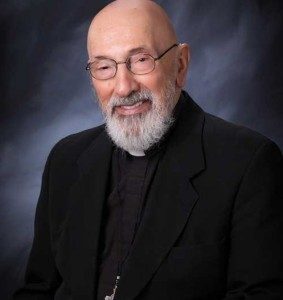
Msgr. John A. Esseff is a Roman Catholic priest in the Diocese of Scranton. Msgr. Esseff served as a retreat director and confessor to St. Teresa of Calcutta. He continues to offer direction and retreats for the sisters of the Missionaries of Charity around the world. Msgr. Esseff encountered St. Padre Pio, who would become a spiritual father to him. He has lived in areas around the world, serving in the Pontifical missions, a Catholic organization established by Pope St. John Paul II to bring the Good News to the world, especially to the poor. Msgr. Esseff assisted the founders of the Institute for Priestly Formation and continues to serve as a spiritual director for the Institute. He continues to serve as a retreat leader and director to bishops, priests and sisters and seminarians, and other religious leaders around the world.
Our Lady of Guadalupe – Building a Kingdom of Love with Msgr. John Esseff
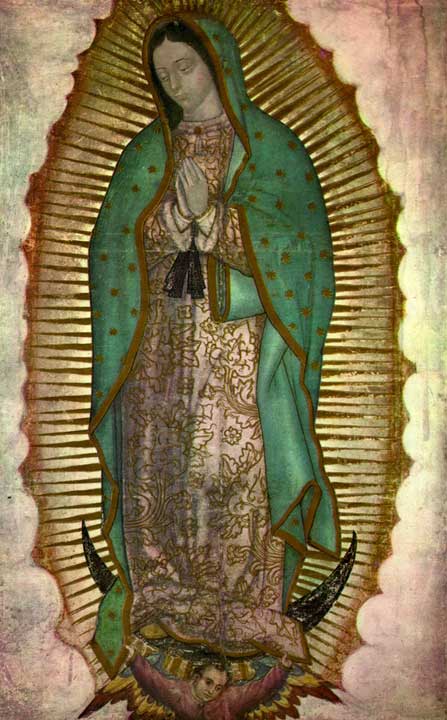
Msgr. John Esseff reflects on the Feast of Our Lady of Guadalupe as a decisive moment of renewal for the Church, set against the turmoil of 16th-century Europe and the vast conversion that followed in Mexico. He situates Mary’s 1531 appearance to Juan Diego within salvation history, drawing connections to the woman clothed with the sun in Revelation and to the Annunciation in Luke’s Gospel. Her request for a simple church and her choice of a poor, elderly Indigenous man reveal a maternal closeness that transformed an entire continent, leading millions to enter the Church at a time when many were leaving elsewhere.
He invites everyone across the Americas to hear Mary’s words personally: “Do you not know that I am your mother?” Msgr. Esseff links this to St. John Paul II’s call for the Church in North and South America to see itself as one body, meeting at this Marian center. He encourages a posture of humility, openness, and attentiveness to those often overlooked, reminding us that Mary’s tenderness reaches every stage of life. As Advent approaches, the feast becomes an invitation to receive her care anew, to pray for unity across cultures, and to walk toward Christmas knowing we are held under her mantle.
Discerning Hearts Reflection Questions
How do I personally receive Mary’s words, “Do you not know that I am your mother,” in my current season of life?
In what ways might God be inviting renewal in my heart through simplicity, humility, and trust like that shown by Juan Diego?
How open am I to listening to God’s voice when it comes through people or circumstances I might normally overlook?
What attitudes do I hold toward Catholics in other cultures, especially in Latin America, and how might Mary be calling me to greater unity?
As I prepare for Christmas, how can I place my worries more fully under Mary’s maternal care?
Where do I resist being sent as a messenger of God’s love because I feel inadequate or unimportant?
How does the image of Our Lady of Guadalupe help me see the Church as one family across the Americas?
“God’s temple in heaven was opened,
and the ark of his covenant could be seen in the temple.
A great sign appeared in the sky, a woman clothed with the sun,
with the moon under her feet,
and on her head a crown of twelve stars.
She was with child and wailed aloud in pain as she labored to give birth.
Then another sign appeared in the sky;
it was a huge red dragon, with seven heads and ten horns,
and on its heads were seven diadems.
Its tail swept away a third of the stars in the sky
and hurled them down to the earth.
Then the dragon stood before the woman about to give birth,
to devour her child when she gave birth.
She gave birth to a son, a male child,
destined to rule all the nations with an iron rod.
Her child was caught up to God and his throne.
The woman herself fled into the desert
where she had a place prepared by God.
Then I heard a loud voice in heaven say:
“Now have salvation and power come,
and the Kingdom of our God
and the authority of his Anointed.”
From the Office of Readings:
From a report by Don Antonio Valeriano, a Native American author of the sixteenth century
(Nicon Mopohua, 12th ed., 3-9, 21)
The Voice of the Turtledove has been heard in our land
At daybreak one Saturday morning in 1531, on the very first days of the month of December, an Indian named Juan Diego was going from the village where he lived to Tlatelolco in order to take part in divine worship and listen to God’s commandments. When he came near the hill called Tepeyac, dawn had already come, and Juan Diego heard someone calling him from the very top of the hill: “Juanito, Juan Dieguito.”
He went up the hill and caught sight of a lady of unearthly grandeur whose clothing was as radiant as the sun. She said to him in words both gentle and courteous: “Juanito, the humblest of my children, know and understand that I am the ever virgin Mary, Mother of the true God through whom all things live. It is my ardent desire that a church be erected here so that in it I can show and bestow my love, compassion, help, and protection to all who inhabit this land and to those others who love me, that they might call upon and confide in me. Go to the Bishop of Mexico to make known to him what I greatly desire. Go and put all your efforts into this.”
When Juan Diego arrived in the presence of the Bishop, Fray Juan de Zumarraga, a Franciscan, the latter did not seem to believe Juan Diego and answered: “Come another time, and I will listen at leisure.”
Juan Diego returned to the hilltop where the Heavenly Lady was waiting, and he said to her: “My Lady, my maiden, I presented your message to the Bishop, but it seemed that he did not think it was the truth. For this reason I beg you to entrust your message to someone more illustrious who might convey it in order that they may believe it, for I am only an insignificant man.”
She answered him: “Humblest of my sons, I ask that tomorrow you again go to see the Bishop and tell him that I, the ever virgin holy Mary, Mother of God, am the one who personally sent you.”
But on the following day, Sunday, the Bishop again did not believe Juan Diego and told him that some sign was necessary so that he could believe that it was the Heavenly Lady herself who sent him. And then he dismissed Juan Diego.
On Monday Juan Diego did not return. His uncle, Juan Bernardino, became very ill, and at night asked Juan to go to Tlatelolco at daybreak to call a priest to hear his confession.
Juan Diego set out on Tuesday, but he went around the hill and passed on the other side, toward the east, so as to arrive quickly in Mexico City and to avoid being detained by the Heavenly Lady. But she came out to meet him on that side of the hill and said to him: “Listen and understand, my humblest son. There is nothing to frighten and distress you. Do not let your heart be troubled, and let nothing upset you. Is it not I, your Mother, who is here? Are you not under my protection? Are you not, fortunately, in my care? Do not let your uncle’s illness distress you. It is certain that he has already been cured. Go up to the hilltop, my son, where you will find flowers of various kinds. Cut them, and bring them into my presence.”
When Juan Diego reached the peak, he was astonished that so many Castilian roses had burst forth at a time when the frost was severe. He carried the roses in the folds of his tilma (mantle) to the Heavenly Lady. She said to him: “My son, this is the proof and the sign which you will bring to the Bishop so that he will see my will in it. You are my ambassador, very worthy of trust.”
Juan Diego set out on his way, now content and sure of succeeding. On arriving in the Bishop’s presence, he told him: “My lord, I did what you asked. The Heavenly Lady complied with your request and fulfilled it. She sent me to the hilltop to cut some Castilian roses and told me to bring them to you in person. And this I am doing, so that you can see in them the sign you seek in order to carry out her will. Here they are; receive them.”
He immediately opened up his white mantle, and as all the different Castilian roses scattered to the ground, there was drawn on the cloak and suddenly appeared the precious image of the ever virgin Mary, Mother of God, in the same manner as it is today and is kept in her shrine of Tepeyac.
The whole city was stirred and came to see and admire her venerable image and to offer prayers to her; and following the command which the same Heavenly Lady gave to Juan Bernardino when she restored him to health, they called her by the name that she herself had used: “the ever virgin holy Mary of Guadalupe.”
The Immaculate Conception – Building a Kingdom of Love with Msgr. John Esseff
On the the Solemnity of the Immaculate Conception, Msgr. Esseff reflects on the significance of the Immaculate Conception of Mary within the broader plan of salvation history. He uses Genesis, Ephesians, and the Gospel of Luke to show us God’s eternal plan to reconcile humanity with Himself through Jesus Christ. Humanity’s fall through Adam and Eve introduced sin and death into the world, but God’s response was the plan of redemption, preordained before creation, culminating in the birth of Christ. Mary, conceived without sin, is presented as the new Eve, uniquely chosen to bring Jesus into the world. Her “yes” to the angel Gabriel is seen as a pivotal moment in God’s plan, countering the disobedience of the first parents and initiating the ultimate defeat of sin, Satan, and death.
Through Jesus’ suffering, death, and resurrection, humanity is adopted as children of God and incorporated into Christ’s body, the Church. He encourages us to see the Immaculate Conception as a profound reminder of God’s love and the invitation to holiness.
Discerning Hearts Reflection Questions
How does reflecting on God’s plan for redemption before creation deepen your trust in His providence?
In what ways can recognizing the effects of original sin in your life inspire a greater appreciation for Christ’s saving work?
How does the Immaculate Conception help you understand Mary’s unique role in God’s plan and her intercession for you?
What does it mean to you personally to be adopted into God’s family through Jesus Christ?
How can you live more fully as a member of Christ’s body, united with Him and His Church?
In this Advent season, how are you preparing your heart to welcome Christ more fully into your life?
How do you experience the Holy Spirit working in your life to bring about holiness and transformation?
How can Mary’s fiat, her “yes” to God, inspire you to trust and surrender to His will in your own life?
“After the man, Adam, had eaten of the tree,
the LORD God called to the man and asked him, “Where are you?”
He answered, “I heard you in the garden;
but I was afraid, because I was naked,
so I hid myself.”
Then he asked, “Who told you that you were naked?
You have eaten, then,
from the tree of which I had forbidden you to eat!”
The man replied, “The woman whom you put here with me
she gave me fruit from the tree, and so I ate it.”
The LORD God then asked the woman,
“Why did you do such a thing?”
The woman answered, “The serpent tricked me into it, so I ate it.”Then the LORD God said to the serpent:
“Because you have done this, you shall be banned
from all the animals
and from all the wild creatures;
on your belly shall you crawl,
and dirt shall you eat
all the days of your life.
I will put enmity between you and the woman,
and between your offspring and hers;
he will strike at your head,
while you strike at his heel.”The man called his wife Eve,
because she became the mother of all the living.”
Brothers and sisters:
Blessed be the God and Father of our Lord Jesus Christ,
who has blessed us in Christ
with every spiritual blessing in the heavens,
as he chose us in him, before the foundation of the world,
to be holy and without blemish before him.
In love he destined us for adoption to himself through Jesus Christ,
in accord with the favor of his will,
for the praise of the glory of his grace
that he granted us in the beloved.
In him we were also chosen,
destined in accord with the purpose of the One
who accomplishes all things according to the intention of his will,
so that we might exist for the praise of his glory,
we who first hoped in Christ.
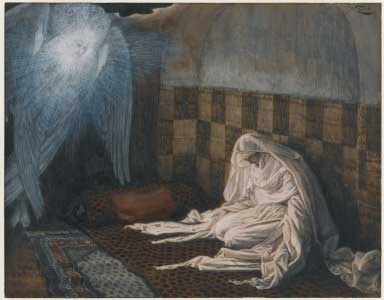
“The angel Gabriel was sent from God
to a town of Galilee called Nazareth,
to a virgin betrothed to a man named Joseph,
of the house of David,
and the virgin’s name was Mary.
And coming to her, he said,
“Hail, full of grace! The Lord is with you.”
But she was greatly troubled at what was said
and pondered what sort of greeting this might be.
Then the angel said to her,
“Do not be afraid, Mary,
for you have found favor with God.
Behold, you will conceive in your womb and bear a son,
and you shall name him Jesus.
He will be great and will be called Son of the Most High,
and the Lord God will give him the throne of David his father,
and he will rule over the house of Jacob forever,
and of his Kingdom there will be no end.”
But Mary said to the angel,
“How can this be,
since I have no relations with a man?”
And the angel said to her in reply,
“The Holy Spirit will come upon you,
and the power of the Most High will overshadow you.
Therefore the child to be born
will be called holy, the Son of God.
And behold, Elizabeth, your relative,
has also conceived a son in her old age,
and this is the sixth month for her who was called barren;
for nothing will be impossible for God.”
Mary said, “Behold, I am the handmaid of the Lord.
May it be done to me according to your word.”
Then the angel departed from her.”
Msgr. John A. Esseff is a Roman Catholic priest in the Diocese of Scranton. Msgr. Esseff served as a retreat director and confessor to St. Teresa of Calcutta. He continues to offer direction and retreats for the sisters of the Missionaries of Charity around the world. Msgr. Esseff encountered St. Padre Pio, who would become a spiritual father to him. He has lived in areas around the world, serving in the Pontifical missions, a Catholic organization established by Pope St. John Paul II to bring the Good News to the world, especially to the poor. Msgr. Esseff assisted the founders of the Institute for Priestly Formation and continues to serve as a spiritual director for the Institute. He continues to serve as a retreat leader and director to bishops, priests and sisters and seminarians, and other religious leaders around the world.
The 2nd Sunday of Advent – A Call to Wake Up, Repent, and Enter the Light of JesusBuilding a Kingdom of Love with Msgr. John Esseff
In this Advent reflection, Msgr. John Esseff turns to the figure of John the Baptist and the call to repentance that prepares the way for the Lord. He explains that John stands at the culmination of Old Testament prophecy, announcing the arrival of the Messiah and calling all people to conversion. Yet Jesus teaches that the least in the kingdom is greater than John, because Christians carry Christ within them. This means the true tragedy is not simply breaking commandments but failing to live as Christ in the world.
Msgr. Esseff then guides listeners through examples of interior patterns that separate the soul from union with Jesus. He speaks about judgmental attitudes, envy, lust, unforgiveness, gluttony, and other deep tendencies that distort the heart. Each one acts like a hidden disease that wounds the life of Christ within the person. Advent becomes a time to uncover these wounds through honest examination and to bring them to the Lord for healing.
He urges listeners to call upon the Holy Spirit, who reveals the core wound with gentleness, not accusation. The Spirit convicts with light and love, while the enemy accuses and discourages. Confession is offered as a powerful path to healing, where the cross penetrates the soul and restores union with Christ.
Msgr. Esseff encourages priests to open the confessional during Advent and calls all Christians to stop judging one another and instead direct loved ones to the Holy Spirit, who alone can reveal the truth of the heart. Advent is presented as a privileged time to awaken, repent, and prepare for the coming of the Lord, who desires to bring healing, renewal, and unity to every soul.
Discerning Hearts Reflection Questions
What interior pattern or tendency separates me most from Christ right now?
When I examine my heart, do I hear the accusing voice or the gentle clarity of the Holy Spirit?
Where have I allowed judgment, envy, or resentment to shape my thoughts or relationships?
What wound or habit is the Holy Spirit inviting me to bring to confession this Advent?
How can I prepare my heart to welcome Christ more deeply during this season?
Msgr. John A. Esseff is a Roman Catholic priest in the Diocese of Scranton. Msgr. Esseff served as a retreat director and confessor to St. Teresa of Calcutta. He continues to offer direction and retreats for the sisters of the Missionaries of Charity around the world. Msgr. Esseff encountered St. Padre Pio, who would become a spiritual father to him. He has lived in areas around the world, serving in the Pontifical missions, a Catholic organization established by Pope St. John Paul II to bring the Good News to the world, especially to the poor. Msgr. Esseff assisted the founders of the Institute for Priestly Formation and continues to serve as a spiritual director for the Institute. He continues to serve as a retreat leader and director to bishops, priests and sisters and seminarians, and other religious leaders around the world.
The 1st Sunday of Advent – A Call to Wake Up, Repent, and Enter the Light of JesusBuilding a Kingdom of Love with Msgr. John Esseff
On the First Sunday of Advent, Msgr. Esseff shares two deeply moving testimonies that reveal the power of love, faith, and the kingship of Christ. The first story follows a Christian couple who defied medical advice to abort their “defective” child, trusting instead in God’s providence. Their faith was rewarded with the birth of a healthy baby who grew into a successful firefighter.
In this first Sunday of Advent reflection, Msgr. John Esseff invites listeners into the season with a call to spiritual wakefulness. Drawing from the Gospel of Matthew, he explains Jesus’ warning that some will be united with him at his coming while others will be left behind. The key difference is union with Christ, a union formed through baptism, nourished by grace, and renewed through repentance.
Msgr. Esseff speaks about the early Church, the outpouring of the Holy Spirit, and the ongoing need for every Christian to “put on the Lord Jesus Christ.” He warns that sin separates the soul from Christ and dims the light God desires to radiate through us. Advent is presented as a time to return to that light, confront the shadows in our lives, and seek healing through confession, prayer, and intentional spiritual discipline.
The episode also explores Advent’s connection to peace. Drawing from Isaiah, Msgr. Esseff prays for a world where nations turn weapons into instruments of cultivation, and where each person commits to the peace Christ brings. He shares personal experiences of confession, transformation, and encounters with families seeking deeper union with God.
As the episode closes, he encourages listeners to begin an Advent journal, undertake a sincere spiritual inventory, and allow the Holy Spirit to reveal areas of darkness that need grace. For Msgr. Esseff, Advent is the doorway to a renewed life in Christ, a season where hearts awaken, grace deepens, and the soul prepares to welcome the light of Christmas.
Discerning Hearts Reflection Questions
What area of my life most needs the light of Christ as Advent begins?
Where have I allowed habits or attitudes to separate me from Jesus?
What specific action can I take this week to grow in holiness and peace?
How is God calling me to make room for deeper union with him this Advent?
What step toward reconciliation or virtue is the Holy Spirit prompting in my heart?
Gospel Matthew 27:37-44
Jesus said to his disciples:
“As it was in the days of Noah,
so it will be at the coming of the Son of Man.
In those days before the flood,
they were eating and drinking,
marrying and giving in marriage,
up to the day that Noah entered the ark.
They did not know until the flood came and carried them all away.
So will it be also at the coming of the Son of Man.
Two men will be out in the field;
one will be taken, and one will be left.
Two women will be grinding at the mill;
one will be taken, and one will be left.
Therefore, stay awake!
For you do not know on which day your Lord will come.
Be sure of this: if the master of the house
had known the hour of night when the thief was coming,
he would have stayed awake
and not let his house be broken into.
So too, you also must be prepared,
for at an hour you do not expect, the Son of Man will come.”
Msgr. John A. Esseff is a Roman Catholic priest in the Diocese of Scranton. Msgr. Esseff served as a retreat director and confessor to St. Teresa of Calcutta. He continues to offer direction and retreats for the sisters of the Missionaries of Charity around the world. Msgr. Esseff encountered St. Padre Pio, who would become a spiritual father to him. He has lived in areas around the world, serving in the Pontifical missions, a Catholic organization established by Pope St. John Paul II to bring the Good News to the world, especially to the poor. Msgr. Esseff assisted the founders of the Institute for Priestly Formation and continues to serve as a spiritual director for the Institute. He continues to serve as a retreat leader and director to bishops, priests and sisters and seminarians, and other religious leaders around the world.