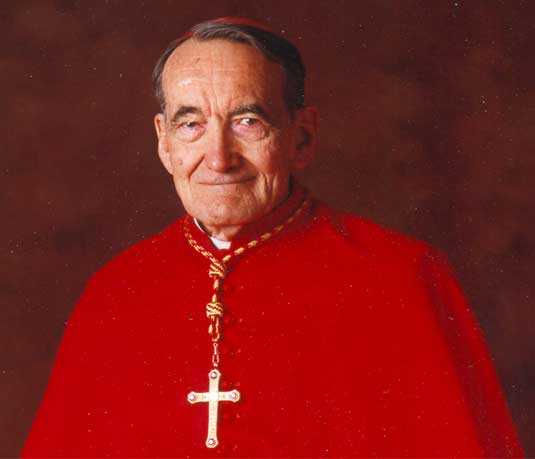
Bruce and I had the great blessing in 2005 of having a conversation with the late Cardinal Avery Dulles, one of the foremost American Catholic theologians of the post-Vatican II era about “A History of Apologetics”.
It seemed appropriate, especially during the Year of Faith, to listen once again to his words of wisdom about the importance of our individual Christian testimony over the winning of a “faith debate”. We also discuss the legacy of Bl. John Newman and Bl. John Paul II, and so much more. Cardinal Dulles died December, 27, 2008.
You can find the book here
From the description:“Written by one of American Catholicism’s leading theologians, A History of Apologetics also examines apologetics in the 20th and early 21st centuries including its decline among Catholics following Vatican II and its recent revival, as well as the contributions of contemporary Evangelical Protestant apologists. Dulles also considers the growing Catholic-Protestant convergence in apologetics. No student of apologetics and contemporary theology should be without this superb and masterful work”.
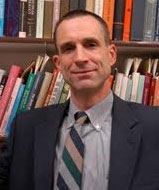
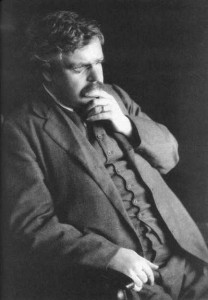
In this episode Dr. Reno discusses G. K. Chesterton his life and times, as well as his vigorous, fun, witty engagement with secular critics of Christianity which still resonate so well today.
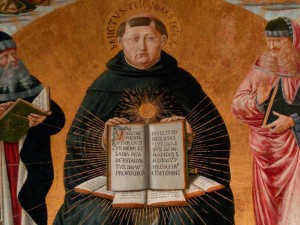
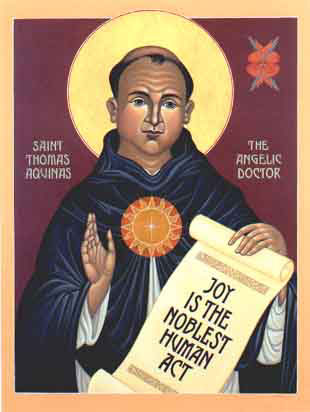
“Christian Apologetics with Dr. R. R. Reno” explores numerous facets of faith and reason in the life of the Church and the world. Grounded on the work of giants, such as St. Thomas Aquinas, St. Bonaventure, Blessed John Newman, Blessed John Paul II, G. K. Chesterton, Blaise Pascal and Stephen Barr, Dr. Reno helps us to open our minds to make the journey to our hearts.
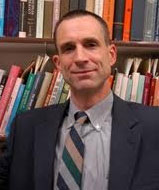
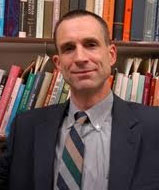
R. R. Reno is the editor at First Things: A Journal of Religion, Culture, and Public Life, and Professor of Theology, currently on leave from Creighton University. His theological work has been published in many academic journals. Essays and opinion pieces on religion, public life, contemporary culture, and current events have appeared in Commentary, and the Washington Post. In Fighting the Noonday Devil Reno suggests that putting ourselves at the disposal of what is real is what trains us for true piety. His other recent books include Genesis: Brazos Theological Commentary on the Bible and Sanctified Vision: An Introduction to Early Christian Interpretation of the Bible.
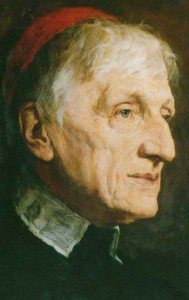
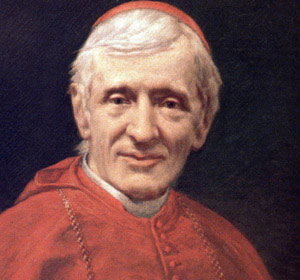
In this episode Dr. Reno examines Blessed John Henry Newman. We discuss the substance and influence of the “University Sermons” and in particular sermon #4 “The Usurpations of Reason”
“Christian Apologetics with Dr. R. R. Reno” explores numerous facets of faith and reason in the life of the Church and the world. Grounded on the work of giants, such as St. Thomas Aquinas, St. Bonaventure, Blessed John Newman, Blessed John Paul II, G. K. Chesterton, Blaise Pascal and Stephen Barr, Dr. Reno helps us to open our minds to make the journey to our hearts.
R. R. Reno is the editor at First Things: A Journal of Religion, Culture, and Public Life, and Professor of Theology, currently on leave from Creighton University. His theological work has been published in many academic journals. Essays and opinion pieces on religion, public life, contemporary culture, and current events have appeared in Commentary, and the Washington Post. In Fighting the Noonday Devil Reno suggests that putting ourselves at the disposal of what is real is what trains us for true piety. His other recent books include Genesis: Brazos Theological Commentary on the Bible and Sanctified Vision: An Introduction to Early Christian Interpretation of the Bible.
In this episode Dr. Reno examines Blessed John Henry Newman. We discuss the significance of his conversion and effect on intellectual and spiritual thought in the 19th century and today.
“Christian Apologetics with Dr. R. R. Reno” explores numerous facets of faith and reason in the life of the Church and the world. Grounded on the work of giants, such as St. Thomas Aquinas, St. Bonaventure, Blessed John Newman, Blessed John Paul II, G. K. Chesterton, Blaise Pascal and Stephen Barr, Dr. Reno helps us to open our minds to make the journey to our hearts.
R. R. Reno is the editor at First Things: A Journal of Religion, Culture, and Public Life, and Professor of Theology, currently on leave from Creighton University. His theological work has been published in many academic journals. Essays and opinion pieces on religion, public life, contemporary culture, and current events have appeared in Commentary, and the Washington Post. In Fighting the Noonday Devil Reno suggests that putting ourselves at the disposal of what is real is what trains us for true piety. His other recent books include Genesis: Brazos Theological Commentary on the Bible and Sanctified Vision: An Introduction to Early Christian Interpretation of the Bible.
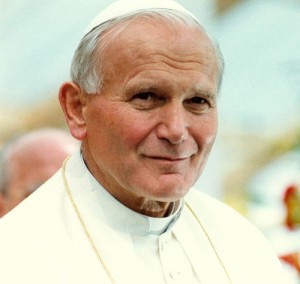
In this episode Dr. Reno examines Faith and Reason through Blessed John Paul II’s “Fides et Ratio”.
Faith and reason are like two wings on which the human spirit rises to the contemplation of truth; and God has placed in the human heart a desire to know the truth—in a word, to know himself—so that, by knowing and loving God, men and women may also come to the fullness of truth about themselves (cf. Ex 33:18; Ps 27:8-9; 63:2-3; Jn 14:8; 1 Jn 3:2).
INTRODUCTION
“KNOW YOURSELF”
1. In both East and West, we may trace a journey which has led humanity down the centuries to meet and engage truth more and more deeply. It is a journey which has unfolded—as it must—within the horizon of personal self-consciousness: the more human beings know reality and the world, the more they know themselves in their uniqueness, with the question of the meaning of things and of their very existence becoming ever more pressing. This is why all that is the object of our knowledge becomes a part of our life. The admonition Know yourself was carved on the temple portal at Delphi, as testimony to a basic truth to be adopted as a minimal norm by those who seek to set themselves apart from the rest of creation as “human beings”, that is as those who “know themselves”.
For an online version of “Fides et Ratio’ click here
“Christian Apologetics with Dr. R. R. Reno” explores numerous facets of faith and reason in the life of the Church and the world. Grounded on the work of giants, such as St. Thomas Aquinas, St. Bonaventure, Blessed John Newman, soon-to-be Blessed John Paul II, G. K. Chesterton, Blaise Pascal and Stephen Barr, Dr. Reno helps us to open our minds to make the journey to our hearts.
R. R. Reno is the editor at First Things: A Journal of Religion, Culture, and Public Life, and Professor of Theology, currently on leave from Creighton University. His theological work has been published in many academic journals. Essays and opinion pieces on religion, public life, contemporary culture, and current events have appeared in Commentary, and the Washington Post. In Fighting the Noonday Devil Reno suggests that putting ourselves at the disposal of what is real is what trains us for true piety. His other recent books include Genesis: Brazos Theological Commentary on the Bible and Sanctified Vision: An Introduction to Early Christian Interpretation of the Bible.
Objection 1: It seems this doctrine is not a matter of argument. For Ambrose says (De Fide 1): “Put arguments aside where faith is sought.” But in this doctrine, faith especially is sought: “But these things are written that you may believe” (Jn. 20:31). Therefore sacred doctrine is not a matter of argument.
Objection 2: Further, if it is a matter of argument, the argument is either from authority or from reason. If it is from authority, it seems unbefitting its dignity, for the proof from authority is the weakest form of proof. But if it is from reason, this is unbefitting its end, because, according to Gregory (Hom. 26), “faith has no merit in those things of which human reason brings its own experience.” Therefore sacred doctrine is not a matter of argument.
On the contrary, The Scripture says that a bishop should “embrace that faithful word which is according to doctrine, that he may be able to exhort in sound doctrine and to convince the gainsayers” (Titus 1:9).
I answer that, As other sciences do not argue in proof of their principles, but argue from their principles to demonstrate other truths in these sciences: so this doctrine does not argue in proof of its principles, which are the articles of faith, but from them it goes on to prove something else; as the Apostle from the resurrection of Christ argues in proof of the general resurrection (1 Cor. 15). However, it is to be borne in mind, in regard to the philosophical sciences, that the inferior sciences neither prove their principles nor dispute with those who deny them, but leave this to a higher science; whereas the highest of them, viz. metaphysics, can dispute with one who denies its principles, if only the opponent will make some concession; but if he concede nothing, it can have no dispute with him, though it can answer his objections. Hence Sacred Scripture, since it has no science above itself, can dispute with one who denies its principles only if the opponent admits some at least of the truths obtained through divine revelation; thus we can argue with heretics from texts in Holy Writ, and against those who deny one article of faith, we can argue from another. If our opponent believes nothing of divine revelation, there is no longer any means of proving the articles of faith by reasoning, but only of answering his objections—if he has any—against faith. Since faith rests upon infallible truth, and since the contrary of a truth can never be demonstrated, it is clear that the arguments brought against faith cannot be demonstrations, but are difficulties that can be answered.
Objection 1: It seems that this doctrine is not the same as wisdom. For no doctrine which borrows its principles is worthy of the name of wisdom; seeing that the wise man directs, and is not directed (Metaph. i). But this doctrine borrows its principles. Therefore this science is not wisdom.
Objection 2: Further, it is a part of wisdom to prove the principles of other sciences. Hence it is called the chief of sciences, as is clear in Ethic. vi. But this doctrine does not prove the principles of other sciences. Therefore it is not the same as wisdom.
Objection 3: Further, this doctrine is acquired by study, whereas wisdom is acquired by God’s inspiration; so that it is numbered among the gifts of the Holy Spirit (Is. 11:2). Therefore this doctrine is not the same as wisdom.
On the contrary, It is written (Dt. 4:6): “This is your wisdom and understanding in the sight of nations.”
I answer that, This doctrine is wisdom above all human wisdom; not merely in any one order, but absolutely. For since it is the part of a wise man to arrange and to judge, and since lesser matters should be judged in the light of some higher principle, he is said to be wise in any one order who considers the highest principle in that order: thus in the order of building, he who plans the form of the house is called wise and architect, in opposition to the inferior laborers who trim the wood and make ready the stones: “As a wise architect, I have laid the foundation” (1 Cor. 3:10). Again, in the order of all human life, the prudent man is called wise, inasmuch as he directs his acts to a fitting end: “Wisdom is prudence to a man” (Prov. 10: 23). Therefore he who considers absolutely the highest cause of the whole universe, namely God, is most of all called wise. Hence wisdom is said to be the knowledge of divine things, as Augustine says (De Trin. xii, 14). But sacred doctrine essentially treats of God viewed as the highest cause—not only so far as He can be known through creatures just as philosophers knew Him—“That which is known of God is manifest in them” (Rm. 1:19)—but also as far as He is known to Himself alone and revealed to others. Hence sacred doctrine is especially called wisdom.
Reply to Objection 1: Sacred doctrine derives its principles not from any human knowledge, but from the divine knowledge, through which, as through the highest wisdom, all our knowledge is set in order.
Reply to Objection 2: The principles of other sciences either are evident and cannot be proved, or are proved by natural reason through some other science. But the knowledge proper to this science comes through revelation and not through natural reason. Therefore it has no concern to prove the principles of other sciences, but only to judge of them. Whatsoever is found in other sciences contrary to any truth of this science must be condemned as false: “Destroying counsels and every height that exalteth itself against the knowledge of God” (2 Cor. 10:4,5).
Reply to Objection 3: Since judgment appertains to wisdom, the twofold manner of judging produces a twofold wisdom. A man may judge in one way by inclination, as whoever has the habit of a virtue judges rightly of what concerns that virtue by his very inclination towards it. Hence it is the virtuous man, as we read, who is the measure and rule of human acts. In another way, by knowledge, just as a man learned in moral science might be able to judge rightly about virtuous acts, though he had not the virtue. The first manner of judging divine things belongs to that wisdom which is set down among the gifts of the Holy Ghost: “The spiritual man judgeth all things” (1 Cor. 2:15). And Dionysius says (Div. Nom. ii): “Hierotheus is taught not by mere learning, but by experience of divine things.” The second manner of judging belongs to this doctrine which is acquired by study, though its principles are obtained by revelation.
For an online version of St. Thomas Aquinas’ “Summa” click here
“Christian Apologetics with Dr. R. R. Reno” explores numerous facets of faith and reason in the life of the Church and the world. Grounded on the work of giants, such as St. Thomas Aquinas, St. Bonaventure, Blessed John Newman, soon-to-be Blessed John Paul II, G. K. Chesterton, Blaise Pascal and Stephen Barr, Dr. Reno helps us to open our minds to make the journey to our hearts.
R. R. Reno is the editor at First Things: A Journal of Religion, Culture, and Public Life, and Professor of Theology, currently on leave from Creighton University. His theological work has been published in many academic journals. Essays and opinion pieces on religion, public life, contemporary culture, and current events have appeared in Commentary, and the Washington Post. In Fighting the Noonday Devil Reno suggests that putting ourselves at the disposal of what is real is what trains us for true piety. His other recent books include Genesis: Brazos Theological Commentary on the Bible and Sanctified Vision: An Introduction to Early Christian Interpretation of the Bible.
Objection 1: It seems that sacred doctrine is not a science. For every science proceeds from self-evident principles. But sacred doctrine proceeds from articles of faith which are not self-evident, since their truth is not admitted by all: “For all men have not faith” (2 Thess. 3:2). Therefore sacred doctrine is not a science.
Objection 2: Further, no science deals with individual facts. But this sacred science treats of individual facts, such as the deeds of Abraham, Isaac and Jacob and such like. Therefore sacred doctrine is not a science.
On the contrary, Augustine says (De Trin. xiv, 1) “to this science alone belongs that whereby saving faith is begotten, nourished, protected and strengthened.” But this can be said of no science except sacred doctrine. Therefore sacred doctrine is a science.
I answer that, Sacred doctrine is a science. We must bear in mind that there are two kinds of sciences. There are some which proceed from a principle known by the natural light of intelligence, such as arithmetic and geometry and the like. There are some which proceed from principles known by the light of a higher science: thus the science of perspective proceeds from principles established by geometry, and music from principles established by arithmetic. So it is that sacred doctrine is a science because it proceeds from principles established by the light of a higher science, namely, the science of God and the blessed. Hence, just as the musician accepts on authority the principles taught him by the mathematician, so sacred science is established on principles revealed by God.
Reply to Objection 1: The principles of any science are either in themselves self-evident, or reducible to the conclusions of a higher science; and such, as we have said, are the principles of sacred doctrine.
Reply to Objection 2: Individual facts are treated of in sacred doctrine, not because it is concerned with them principally, but they are introduced rather both as examples to be followed in our lives (as in moral sciences) and in order to establish the authority of those men through whom the divine revelation, on which this sacred scripture or doctrine is based, has come down to us.
For an online version of St. Thomas Aquinas’ “Summa” click here
“Christian Apologetics with Dr. R. R. Reno” explores numerous facets of faith and reason in the life of the Church and the world. Grounded on the work of giants, such as St. Thomas Aquinas, St. Bonaventure, Blessed John Newman, soon-to-be Blessed John Paul II, G. K. Chesterton, Blaise Pascal and Stephen Barr, Dr. Reno helps us to open our minds to make the journey to our hearts.
R. R. Reno is the editor at First Things: A Journal of Religion, Culture, and Public Life, and Professor of Theology, currently on leave from Creighton University. His theological work has been published in many academic journals. Essays and opinion pieces on religion, public life, contemporary culture, and current events have appeared in Commentary, and the Washington Post. In Fighting the Noonday Devil Reno suggests that putting ourselves at the disposal of what is real is what trains us for true piety. His other recent books include Genesis: Brazos Theological Commentary on the Bible and Sanctified Vision: An Introduction to Early Christian Interpretation of the Bible.

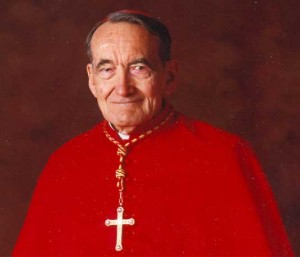 Dulles, one of the foremost American Catholic theologians of the post-Vatican II era about “A History of Apologetics”.